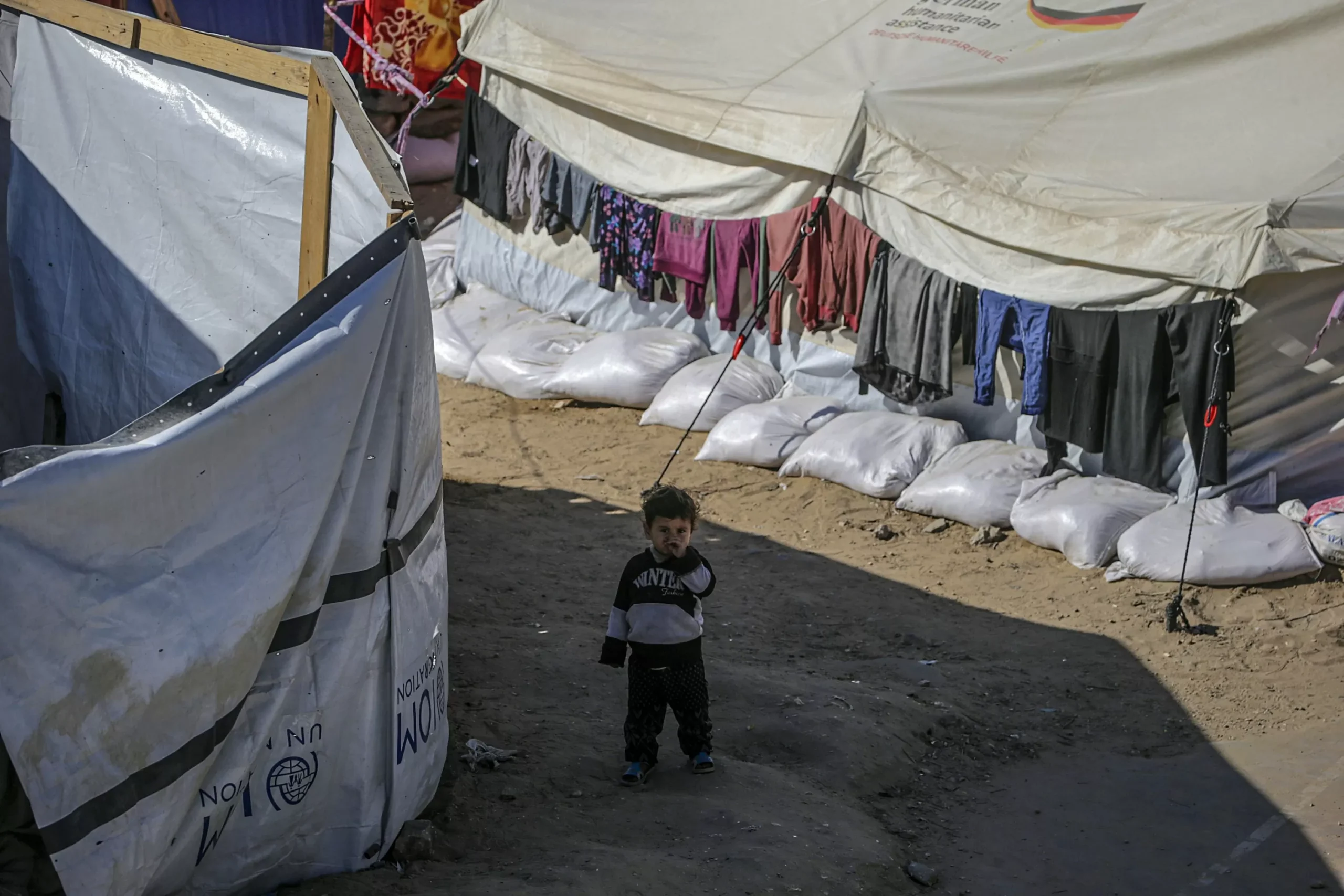
Hamas, the Palestinian militant group, has once again rejected cease-fire negotiations with Israel, calling them “pointless” and accusing Israel of conducting a “hunger war” against Gaza. This statement comes amid growing concerns of a looming famine and preparations for a possible expansion of Israeli settlements in the West Bank.
In a press conference on Tuesday, Hamas spokesperson Fawzi Barhoum stated that the group will not engage in any negotiations with Israel as long as it continues its “aggression” against the Palestinian people. He also accused Israel of imposing a “siege” on Gaza, which has led to a dire humanitarian situation and a looming famine.
The rejection of cease-fire negotiations by Hamas is not surprising, as the group has consistently refused to engage in any talks with Israel, which it considers an occupying force. However, this latest statement comes at a critical time when the people of Gaza are facing a humanitarian crisis.
The United Nations has warned that Gaza is on the brink of a “full-scale collapse” due to the ongoing blockade and the recent escalation of violence. The blockade, which has been in place since 2007, has severely restricted the movement of people and goods in and out of Gaza, leading to high unemployment rates and a shortage of essential supplies.
In addition to the blockade, the recent escalation of violence between Israel and Hamas has only worsened the situation. The Israeli military has carried out airstrikes on Gaza, while Hamas has launched rockets into Israel, resulting in the deaths of civilians on both sides.
Amidst this violence and humanitarian crisis, Hamas has accused Israel of conducting a “hunger war” against Gaza. The group claims that Israel is deliberately withholding essential supplies, such as food and medicine, in an attempt to weaken the Palestinian people.
Furthermore, Hamas has also expressed concerns over Israel’s plans to expand settlements in the West Bank. The Israeli government has recently approved the construction of over 2,000 new settlement units, which Hamas sees as a threat to the Palestinian people’s right to self-determination.
Hamas’s rejection of cease-fire negotiations with Israel is a clear indication of the group’s determination to continue its resistance against what it sees as Israeli aggression. However, this stance may also have negative consequences for the people of Gaza, who are already suffering from the effects of the ongoing blockade and recent violence.
The international community has called for an immediate cease-fire and the resumption of negotiations between Israel and Hamas to end the cycle of violence and address the humanitarian crisis in Gaza. However, with Hamas’s refusal to engage in talks, it remains to be seen how this situation will be resolved.
In the meantime, the people of Gaza continue to suffer, and the risk of a famine looms over the region. It is crucial for both Israel and Hamas to prioritize the well-being of the Palestinian people and find a peaceful resolution to the ongoing conflict.
In conclusion, Hamas’s rejection of cease-fire negotiations with Israel is a concerning development that could have severe consequences for the people of Gaza. It is essential for both sides to engage in meaningful dialogue and work towards a peaceful resolution that addresses the humanitarian crisis and the root causes of the conflict. The international community must also play a role in facilitating these negotiations and providing aid to the people of Gaza. Only through cooperation and compromise can a lasting solution be achieved for the benefit of all parties involved.