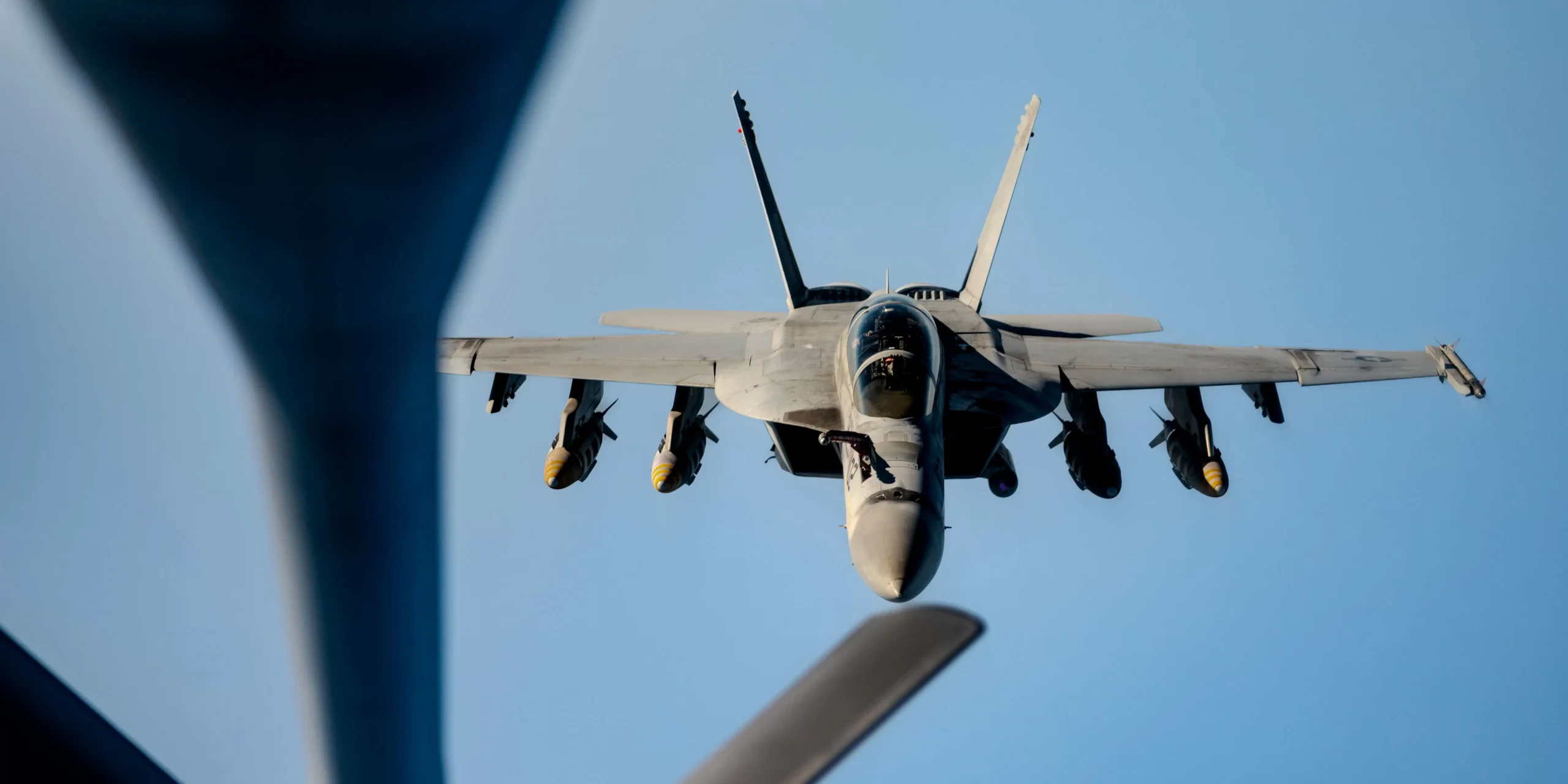
The United States has once again demonstrated its military might with the recent launch of 16 jets from the USS Harry S. Truman. The target? A cave complex in Somalia, believed to be a stronghold for Al-Shabaab militants. The result? A successful mission that has dealt a major blow to terrorism in the region.
The strike, which took place on Saturday, September 4th, has been hailed as the “largest airstrike in the history of the world” by some. However, let’s not get carried away with hyperbole. While the scale of the operation was certainly impressive, it is important to understand the context and the real impact of this mission.
Firstly, let’s address the numbers. 16 jets and 125,000 pounds of bombs may sound like a lot, but in the grand scheme of things, it is a drop in the ocean. The U.S. has conducted much larger airstrikes in the past, such as the “Shock and Awe” campaign in Iraq in 2003, which involved over 1,700 airstrikes in just the first week. So, while this may be the largest airstrike in Somalia, it is by no means the largest in the world.
But numbers aside, the real significance of this operation lies in its success. The target, a cave complex in the mountains of Puntland, was a known hideout for Al-Shabaab militants. The group has been responsible for numerous attacks and atrocities in Somalia, including the deadly 2019 attack on a U.S. military base that claimed the lives of three Americans. By eliminating this stronghold, the U.S. has not only dealt a major blow to the group’s capabilities but has also sent a strong message that terrorism will not be tolerated.
The success of this mission is also a testament to the skill and precision of the U.S. military. The jets were able to hit their target with incredible accuracy, minimizing collateral damage and civilian casualties. This is a crucial aspect of modern warfare and one that the U.S. takes very seriously. It is a clear demonstration of the U.S. military’s commitment to conducting operations with the utmost professionalism and respect for human life.
Of course, with any military operation, there will always be critics. Some have questioned the legality of the strike, arguing that it was not authorized by Congress. However, it is important to note that the U.S. has been conducting airstrikes in Somalia since 2007, with the approval of the Somali government. The U.S. has also made efforts to minimize civilian casualties, with the Pentagon reporting that no civilians were killed in this particular strike.
Furthermore, it is worth remembering that the U.S. has been involved in the fight against terrorism in Somalia for many years. The country has been plagued by violence and instability, with Al-Shabaab controlling large swathes of territory. The U.S. has been a key partner in the efforts to bring stability and security to the region, providing training and support to the Somali National Army and conducting targeted operations against terrorist groups.
In light of these facts, it is clear that the recent airstrike was not just a show of strength, but a necessary and justified action in the fight against terrorism. It was a calculated and precise mission that has dealt a significant blow to a dangerous and ruthless group. And while the numbers may not make it the largest airstrike in the history of the world, its impact on the ground cannot be underestimated.
In conclusion, the recent U.S. airstrike on a cave complex in Somalia was a successful and necessary operation. It has dealt a major blow to terrorism in the region and sent a strong message that the U.S. will not hesitate to take action to protect its citizens and allies. Let us not get caught up in exaggerated claims and instead focus on the real impact of this mission – a safer and more secure world for all.