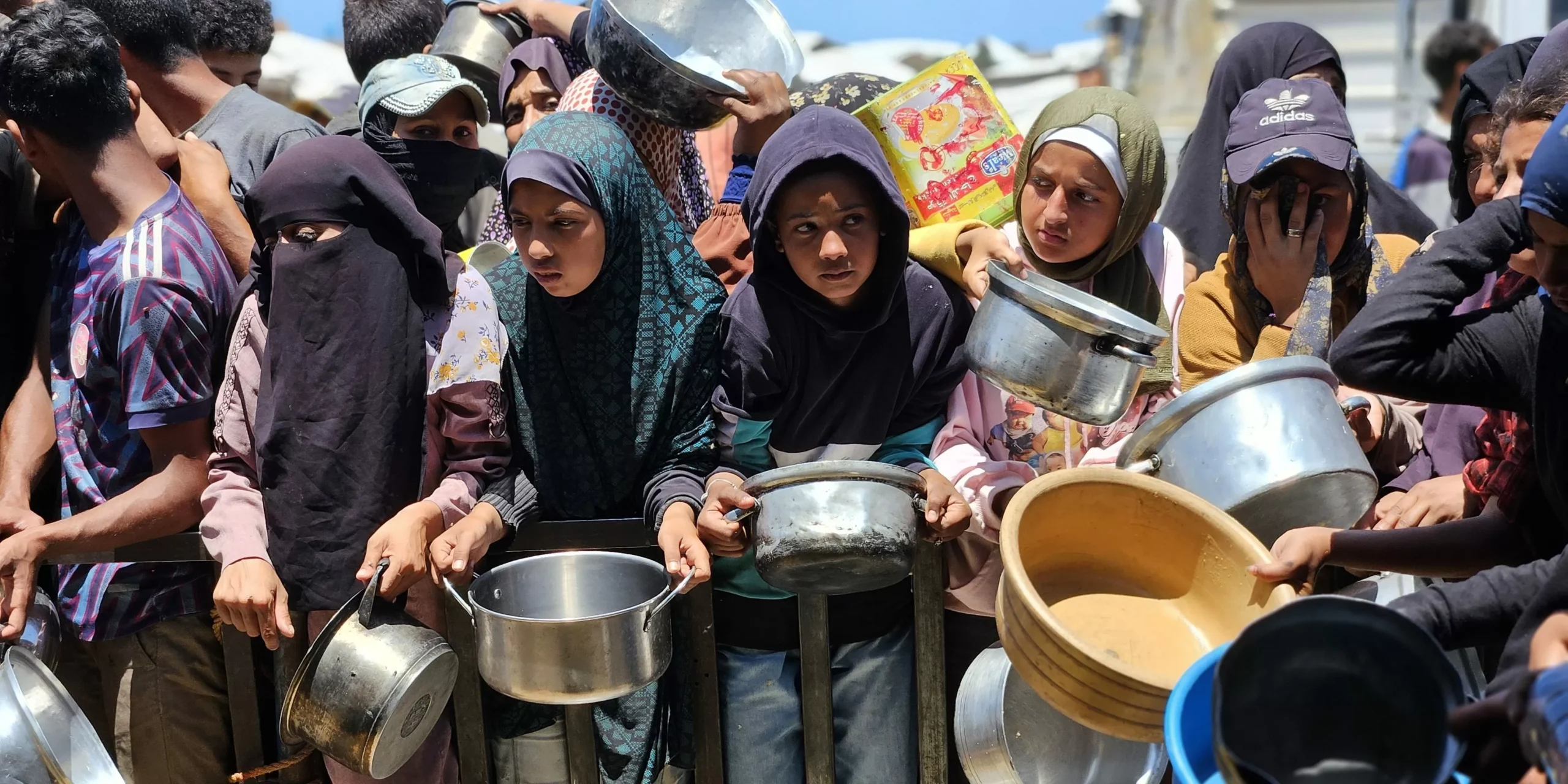
Amid Israel’s blockade on Gaza, death can come from the lack of food — or from trying to find food.
In the Gaza Strip, one of the most densely populated places on earth, the ongoing Israeli blockade has had a devastating impact on the lives of the Palestinian people. The blockade, which has been in place since 2007, has severely restricted the movement of people and goods in and out of Gaza, crippling the economy and leaving the population in a constant state of crisis.
While the blockade has been justified by Israel as a necessary security measure, the reality on the ground tells a different story. The blockade has not only crippled the economy, but it has also resulted in a dire humanitarian situation. The people of Gaza are facing a daily struggle for survival, with access to basic necessities such as food and water becoming increasingly difficult.
One of the most alarming consequences of the blockade is the widespread food insecurity in Gaza. According to the United Nations, more than half of the population of Gaza is currently food insecure, with many families unable to afford or access enough food to meet their daily needs. This has resulted in a sharp increase in malnutrition, particularly among children and pregnant women.
The blockade has also severely limited the ability of farmers and fishermen in Gaza to earn a living. Israeli restrictions on fishing zones and agricultural land have made it nearly impossible for these communities to support themselves. As a result, many families have been forced to rely on aid and handouts just to survive.
But even aid is not a reliable source of sustenance in Gaza. The Israeli government has been accused of using food as a weapon in its ongoing conflict with Hamas, the ruling party in Gaza. According to reports, Israel has been intentionally limiting the amount of food and other essential supplies allowed into Gaza, in an attempt to pressure the population and undermine Hamas.
This manipulation of aid has had devastating consequences for the people of Gaza. In some cases, aid has been used as a bargaining tool, with Israel withholding essential supplies as a form of collective punishment. This has resulted in a vicious cycle of dependency, where the people of Gaza are forced to rely on aid, which is then used as a means of control by the Israeli government.
But aid is not the only weapon being used against the people of Gaza. In their desperate search for food and other essential supplies, many Palestinians risk their lives by attempting to breach the blockade. The Israeli military has responded with lethal force, using live ammunition against unarmed civilians. This has resulted in countless deaths and injuries, including among children.
In Gaza, death can come from the lack of food, or from trying to find food. The blockade has created a humanitarian crisis that is not only causing immense suffering, but also pushing the people of Gaza to the brink of starvation. It is a cruel and inhumane tactic that is not only a violation of international law, but also goes against the most basic principles of human decency.
But amidst this dire situation, there is still hope. Despite the ongoing blockade, there are many organizations and individuals working tirelessly to provide much-needed aid and support to the people of Gaza. These dedicated individuals are risking their own safety to ensure that the most vulnerable in Gaza have access to food, water, and other essential supplies.
In addition, there are numerous grassroots initiatives that have emerged within Gaza itself, with people coming together to support each other and find creative solutions to the challenges they face. These initiatives not only provide much-needed assistance, but also demonstrate the resilience and determination of the Palestinian people in the face of adversity.
It is clear that the blockade on Gaza is not a sustainable solution to the conflict. It is causing immeasurable harm to innocent civilians and perpetuating a cycle of violence and suffering. The international community must take a stand against this inhumane tactic and work towards finding a just and lasting solution for the people of Gaza.
In the meantime, it is crucial that aid continues to flow into Gaza and that the people of Gaza are not left to suffer in silence. We must stand in solidarity with the people of Gaza and demand an end to the blockade and the use of food as a weapon. Only then can we hope to see a future where the people of Gaza can live in peace and dignity, with access to the basic necessities of life.