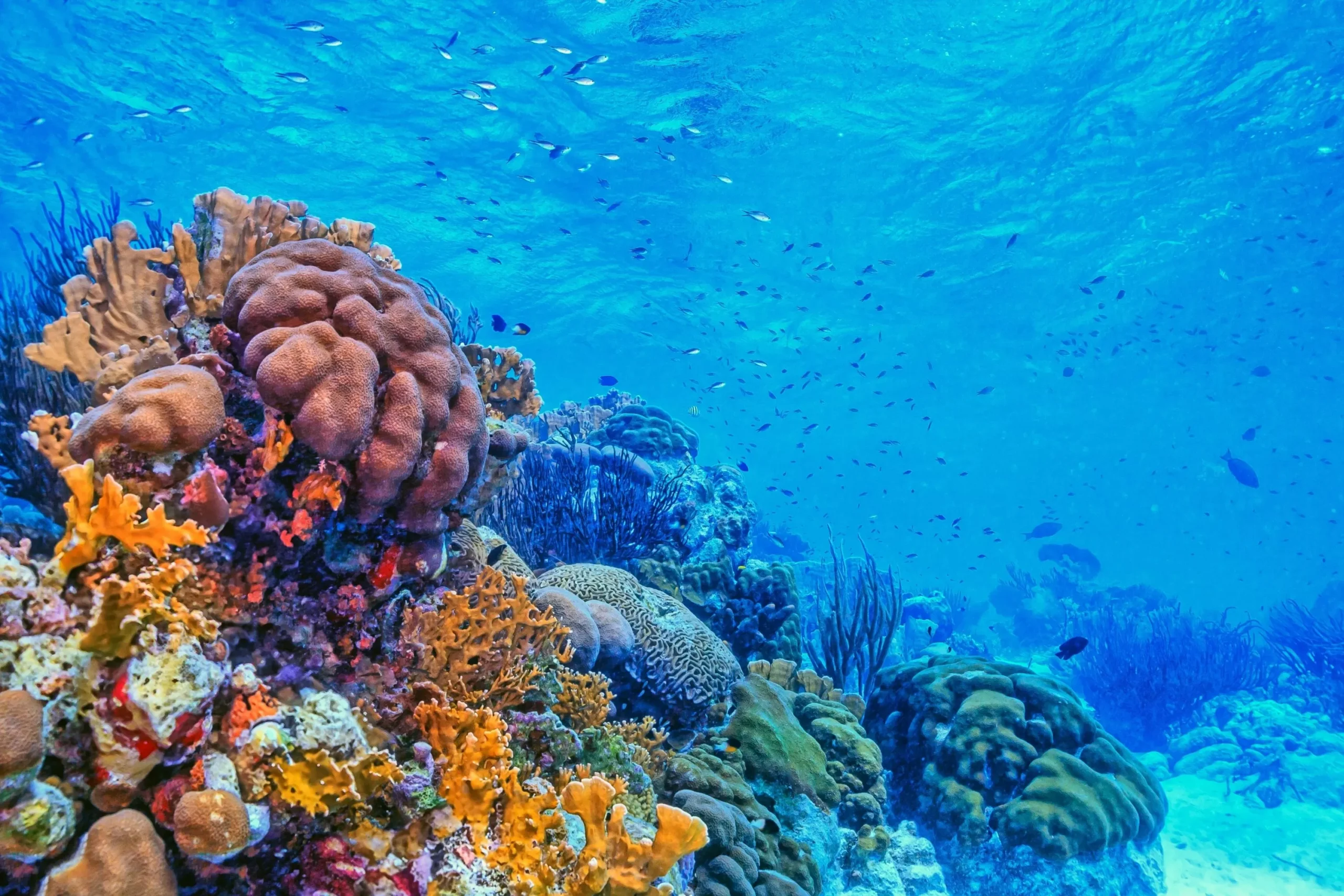
The fate of coral reefs has been a topic of concern for many years now. These beautiful and diverse ecosystems are home to a vast array of marine life and play a crucial role in the health of our oceans. However, with the increasing threat of climate change, the future of coral reefs is at stake. Scientists have been studying the impact of rising global temperatures on these fragile structures, and the results are alarming. It has been predicted that at 1.5 degrees Celsius (2.7 degrees Fahrenheit) of global warming, most coral reefs will face devastating consequences. But it’s not too late to change this fate.
Coral reefs are often referred to as the “rainforests of the sea” due to their incredible biodiversity. They cover only 0.2% of the ocean floor, but they are home to 25% of all marine life. These reefs are built by tiny organisms called coral polyps, which secrete a hard calcium carbonate skeleton. Over time, these skeletons form the intricate structures we see on the ocean floor. However, these delicate organisms are highly sensitive to changes in temperature and other environmental factors.
The main threat to coral reefs is the increasing levels of carbon dioxide (CO2) in our atmosphere. CO2 is a greenhouse gas that traps heat in the Earth’s atmosphere, causing global temperatures to rise. As a result, oceans absorb more heat, leading to a rise in ocean temperatures. This rise in temperature has a direct impact on coral reefs, causing a phenomenon known as coral bleaching. When the water becomes too warm, the algae living within the coral polyps, which give them their vibrant colors, are expelled. This process weakens the coral and makes it more susceptible to disease and death.
Scientists have been closely monitoring the effects of climate change on coral reefs, and their findings have been alarming. It is estimated that at 1.5 degrees Celsius of global warming, 70-90% of coral reefs will suffer from severe bleaching. This means that most of the world’s coral reefs will be at risk of dying. This is not just a concern for the marine life that calls these reefs home, but also for the millions of people who rely on them for their livelihoods. Coral reefs provide a vital source of food, income, and protection against storms and erosion for many coastal communities.
The fate of coral reefs may seem bleak, but there is still hope. The Paris Agreement, signed by 195 countries in 2015, aims to limit global warming to well below 2 degrees Celsius, with a target of 1.5 degrees Celsius. This agreement recognizes the urgent need to reduce carbon emissions and transition to a more sustainable future. If we can achieve this goal, we can save a significant number of coral reefs from destruction.
But it’s not just up to governments and policymakers to take action. We all have a role to play in protecting coral reefs. One of the most effective ways to do this is by reducing our carbon footprint. This can be done through simple actions such as using public transportation, switching to renewable energy sources, and reducing our consumption of meat and dairy products. We can also support organizations and initiatives that work towards protecting and restoring coral reefs.
Another crucial step is to raise awareness about the importance of coral reefs and the threats they face. By educating ourselves and others, we can inspire change and encourage more people to take action. We can also support coral reef conservation efforts by volunteering, donating, or participating in beach cleanups.
The fate of coral reefs may seem uncertain, but we have the power to change it. It’s time for us to take action and make a positive impact on our planet. By working together, we can ensure that future generations get to experience the beauty and diversity of coral reefs. Let’s not let the fate of these magnificent ecosystems be written with certainty. Let’s write a new chapter, one of hope and resilience.