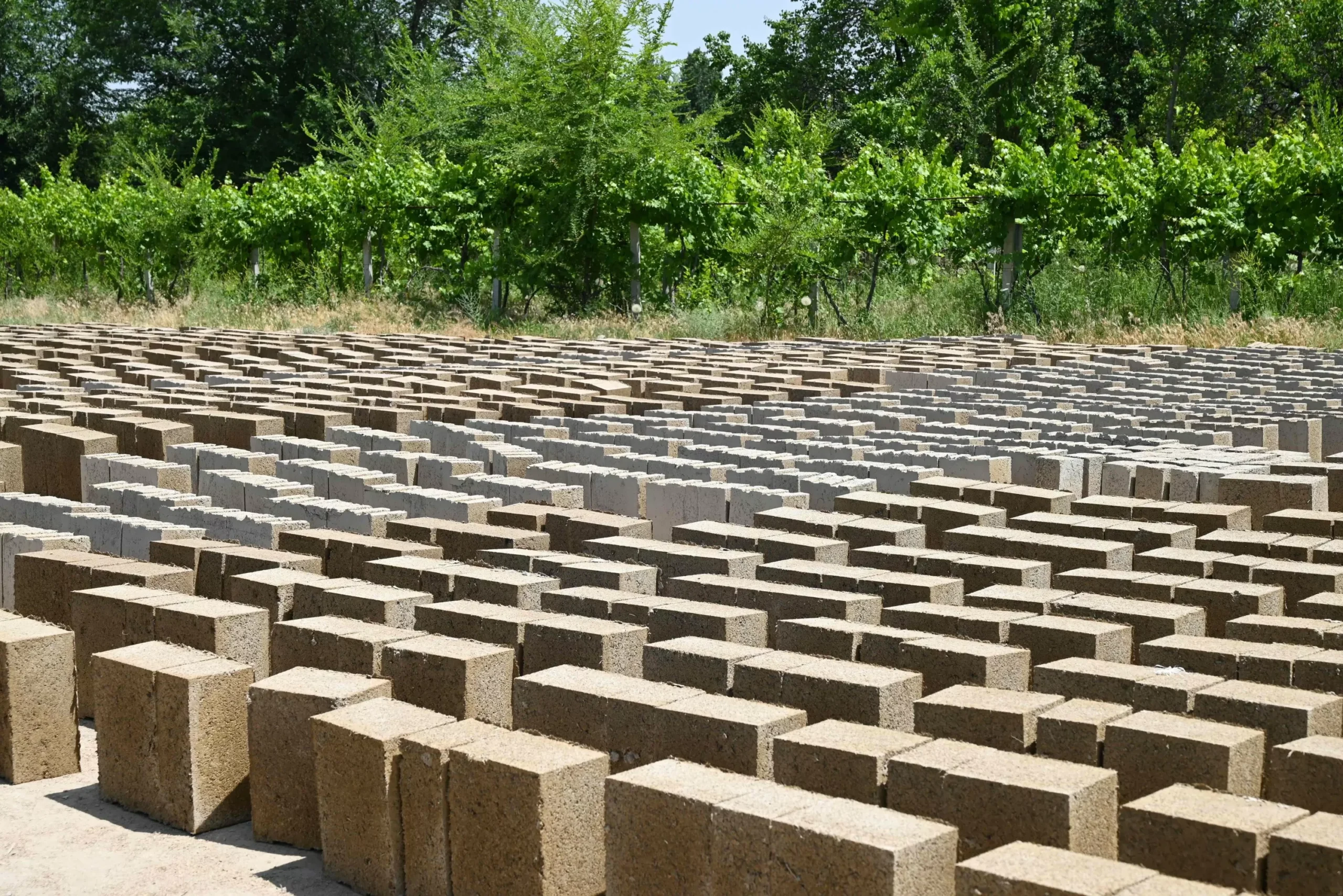
It may seem like an ordinary building site, with workers bustling around and materials being transported, but Akmatbek Uraimov’s new house in Kyrgyzstan is anything but ordinary. What sets it apart from other houses in the neighborhood is that it is being built with blocks made from rice – a sustainable and eco-friendly alternative to conventional construction materials.
Uraimov, a native of Kyrgyzstan, has always been passionate about preserving the environment. As a civil engineer, he has witnessed first-hand the negative impact of traditional building materials on the environment. Cement and concrete, the most commonly used materials in construction, are responsible for a significant amount of carbon emissions and pollution. This motivated Uraimov to find a better, more sustainable solution for building homes.
After years of research and experimentation, Uraimov came across a revolutionary building material – rice blocks. These blocks are made from a mixture of rice husks, sand, and a small amount of cement. The rice husks, which are discarded as waste after the rice has been harvested, are abundant in Kyrgyzstan. By using them as a primary ingredient in the construction material, Uraimov not only found a way to reduce waste but also provided a cost-effective solution for building homes.
The process of making rice blocks is simple and requires minimal energy. The rice husks are first dried and then mixed with sand and cement. The mixture is then compressed into blocks using a hydraulic press. The blocks are left to dry for a few days, after which they are ready to be used in construction.
One of the major advantages of using rice blocks is its thermal insulating properties. These blocks have a lower thermal conductivity compared to traditional materials, which means they can keep the house cooler in the summer and warmer in the winter. This not only reduces the need for artificial cooling and heating but also cuts down on energy costs.
Moreover, rice blocks are also known for their sound insulation properties. They can significantly reduce noise from outside, creating a peaceful and quiet living environment. This is especially beneficial for urban areas where noise pollution is a major issue.
In addition to being sustainable and energy-efficient, rice blocks are also strong and durable. They have a compressive strength of up to 10 MPa, making them suitable for building multi-story structures. The blocks are also resistant to fire, pests, and mold, making them a safe and healthy choice for homes.
Uraimov’s new house is not only a testament to his commitment to the environment but also a source of inspiration for others. His use of rice blocks has caught the attention of the local community, and many are now considering using this eco-friendly material in their construction projects. This is a positive step towards reducing the carbon footprint of the construction industry in Kyrgyzstan.
But Uraimov’s efforts don’t stop at just building his own house. He has also started a company to produce and sell rice blocks to other builders and homeowners. This not only creates job opportunities but also promotes sustainable building practices in the country.
The use of rice blocks in construction has gained popularity in many countries, including India, Vietnam, and the Philippines. And it’s no surprise why – this eco-friendly material not only addresses the environmental concerns of the construction industry but also provides a cost-effective and efficient solution for building homes.
In a world where climate change is a pressing issue, it is refreshing to see individuals like Akmatbek Uraimov taking the initiative to make a positive impact. His use of rice blocks in his new house is a small step towards a greener and more sustainable future. And with more people embracing this alternative building material, we can hope to see a significant reduction in carbon emissions and a healthier planet for future generations.