Gaza’s Tribal Leaders Condemn Aid Distribution Centers Run by Israel and the US: A Call for Dignity and Justice
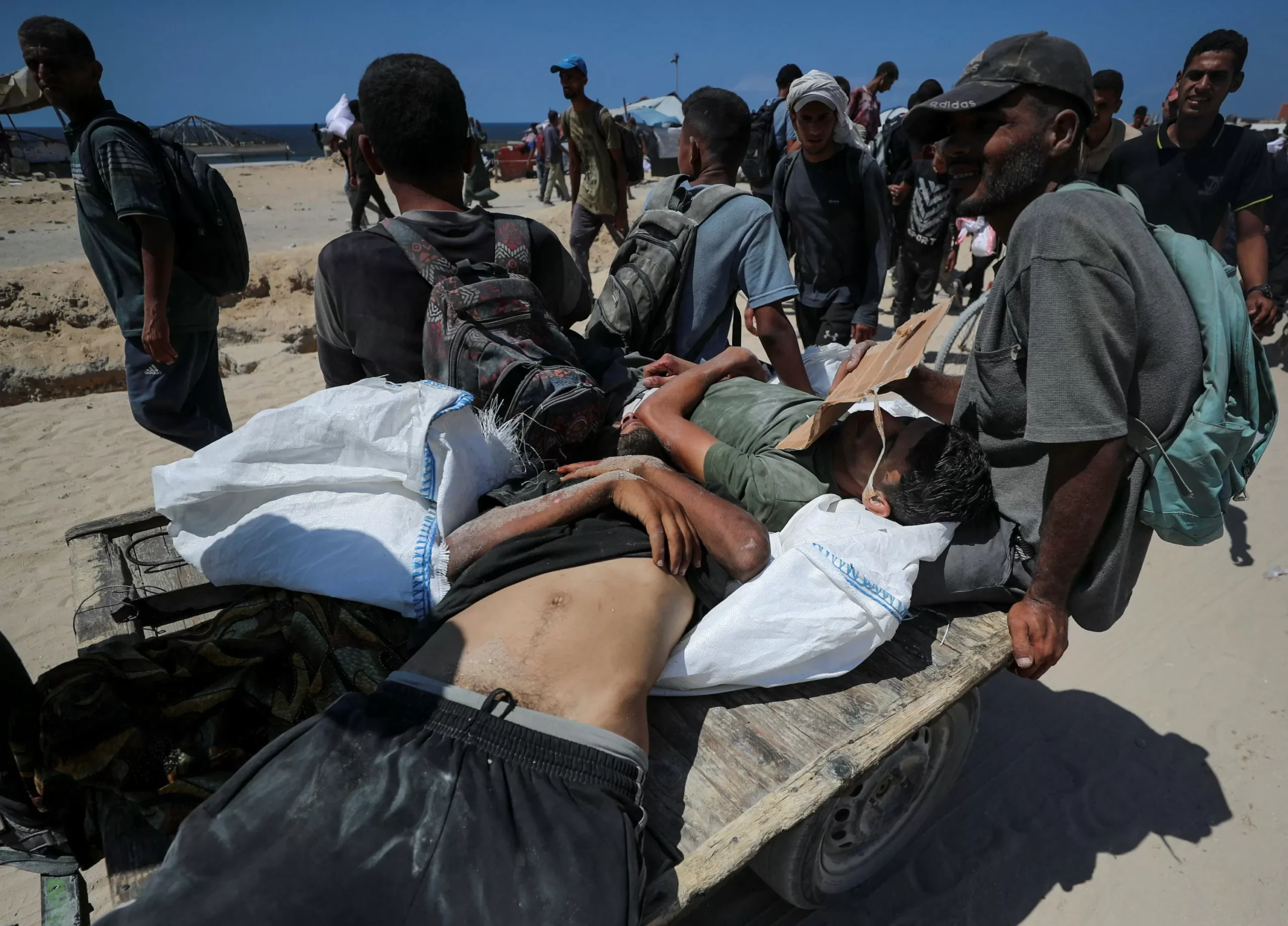
In the war-torn and impoverished Gaza Strip, where every day is a struggle for survival, the people have long relied on aid from international organizations and countries to meet their basic needs. However, the recent opening of aid distribution centers run by Israel and the United States has sparked outrage among Gaza’s tribal leaders. They have condemned these centers as degrading and have held them responsible for worsening the suffering of the Palestinian people.
The Gaza Strip, a small strip of land located on the eastern coast of the Mediterranean Sea, has been under Israeli blockade for over a decade. This blockade has severely restricted the flow of goods and resources into the region, leading to a dire humanitarian crisis. The people of Gaza have been forced to live in dire conditions, with limited access to food, water, electricity, and healthcare. In such a dire situation, the aid provided by international organizations and countries has been a lifeline for the people of Gaza.
However, the recent opening of aid distribution centers by Israel and the United States has caused an uproar among Gaza’s tribal leaders. These centers, which are run by the Israeli army and the US Agency for International Development (USAID), have been touted as a way to provide aid directly to the people of Gaza, bypassing the Hamas government. However, the tribal leaders see them as a means to exert control and undermine the authority of the local government.
The tribal leaders have strongly condemned these centers, stating that they are degrading and humiliating for the Palestinian people. They argue that the people of Gaza are not beggars, and they do not need to be treated as such. They see the aid distribution centers as a way for Israel and the US to assert their dominance and further oppress the Palestinian people.
Moreover, the tribal leaders hold these distribution centers responsible for worsening the suffering of the Palestinian people. They argue that the aid provided by these centers is not sufficient to meet the needs of the people and that it only serves to create a false sense of security. The people of Gaza need sustainable solutions to their problems, not temporary aid that only perpetuates their dependence on foreign assistance.
The tribal leaders also point out that the aid provided by these centers is not without strings attached. They claim that the aid comes with political conditions that aim to weaken the Palestinian government and divide the people. This further fuels their belief that the distribution centers are not meant to help the people of Gaza but to serve the political interests of Israel and the US.
In the face of such blatant injustice, the tribal leaders of Gaza have called for dignity and justice for their people. They demand that the aid distribution centers be shut down immediately, and the Palestinian government be given the responsibility to provide for its people. They also call on the international community to hold Israel and the US accountable for their actions and demand that they lift the blockade on Gaza.
The condemnation of the aid distribution centers by Gaza’s tribal leaders is not just about rejecting foreign aid but about reclaiming the dignity and sovereignty of the Palestinian people. They refuse to be reduced to mere recipients of aid and demand to be treated as equals in the international community. They believe that the people of Gaza deserve better than handouts and deserve to live in a just and dignified society.
In conclusion, the condemnation of aid distribution centers by Gaza’s tribal leaders is a call for dignity and justice for the Palestinian people. These centers are seen as a violation of the rights and sovereignty of the Palestinian people and a means to further oppress and control them. It is time for the international community to listen to the voices of Gaza’s tribal leaders and take action to end the suffering of the Palestinian people. Only then can we truly work towards a just and peaceful resolution to the ongoing conflict in the region.