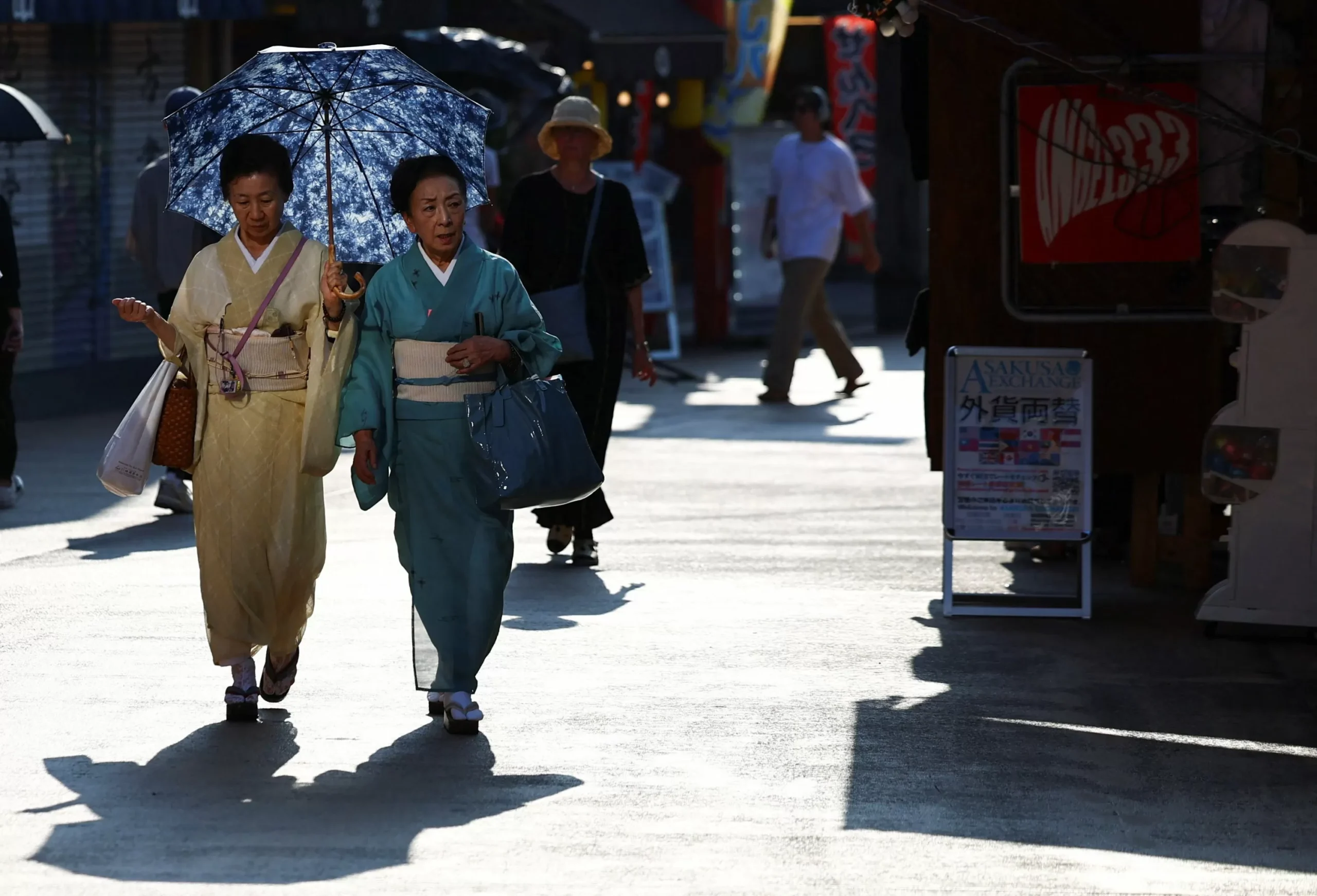
Japan is known for its hot and humid summers, but this year, the country is experiencing record-breaking heat. On Tuesday, Japan logged two new heat records in a single day, with the mercury reaching 41.6 degrees Celsius (106.88 degrees Fahrenheit) and then 41.8 degrees Celsius. This is a cause for concern, but it also serves as a reminder of the importance of taking care of our planet and ourselves.
The first record was set in Kumagaya, a city located in the Saitama prefecture, which is about 65 kilometers (40 miles) northwest of Tokyo. The previous record for the hottest temperature ever recorded in Japan was 41.0 degrees Celsius (105.8 degrees Fahrenheit), which was set in the same city in 2013. However, this year, Kumagaya surpassed its own record by 0.6 degrees Celsius.
Just a few hours later, the city of Tajimi, located in the Gifu prefecture, broke the record again with a temperature of 41.8 degrees Celsius (107.24 degrees Fahrenheit). This is the highest temperature ever recorded in Japan, surpassing the previous record by 0.8 degrees Celsius.
These new records are a clear indication of the impact of climate change on our planet. Japan is not the only country experiencing extreme heat this summer. Europe, North America, and other parts of Asia have also been hit by heatwaves, with temperatures reaching unprecedented levels. This is a wake-up call for all of us to take action and make changes to protect our planet.
The Japanese government has already taken steps to address the issue of climate change. In 2015, Japan signed the Paris Agreement, a global effort to reduce greenhouse gas emissions and limit the rise in global temperatures. The country has also set a goal to reduce its carbon emissions by 26% by 2030. However, it is clear that more needs to be done to combat the effects of climate change.
Apart from the impact on the environment, extreme heat also poses a threat to our health. Heatstroke, dehydration, and other heat-related illnesses are common during heatwaves. It is important for everyone to take precautions and stay hydrated during these hot days. The elderly, children, and those with pre-existing health conditions are especially vulnerable and should take extra care.
The Japanese government has issued heat advisories and urged people to stay indoors and avoid outdoor activities during the hottest hours of the day. They have also advised people to wear light and loose-fitting clothing, use sunscreen, and drink plenty of water. It is also important to check on family, friends, and neighbors, especially those who are more susceptible to heat-related illnesses.
Despite the challenges posed by the extreme heat, there is still a positive side to this situation. The Japanese people have shown resilience and unity in the face of this heatwave. Many have come together to help those in need, such as distributing water and setting up cooling stations. This sense of community and support is a testament to the strength and spirit of the Japanese people.
In addition, the record-breaking temperatures have also brought attention to the importance of renewable energy sources. Japan has been heavily reliant on fossil fuels, but the government has been making efforts to increase the use of renewable energy. This heatwave serves as a reminder of the urgency to transition to cleaner and more sustainable energy sources.
In conclusion, the new heat records set in Japan on Tuesday are a cause for concern, but they also serve as a reminder of the impact of climate change and the need for action. It is important for individuals, communities, and governments to work together to combat the effects of climate change and protect our planet. Let us use this opportunity to make positive changes and create a better future for ourselves and the generations to come.