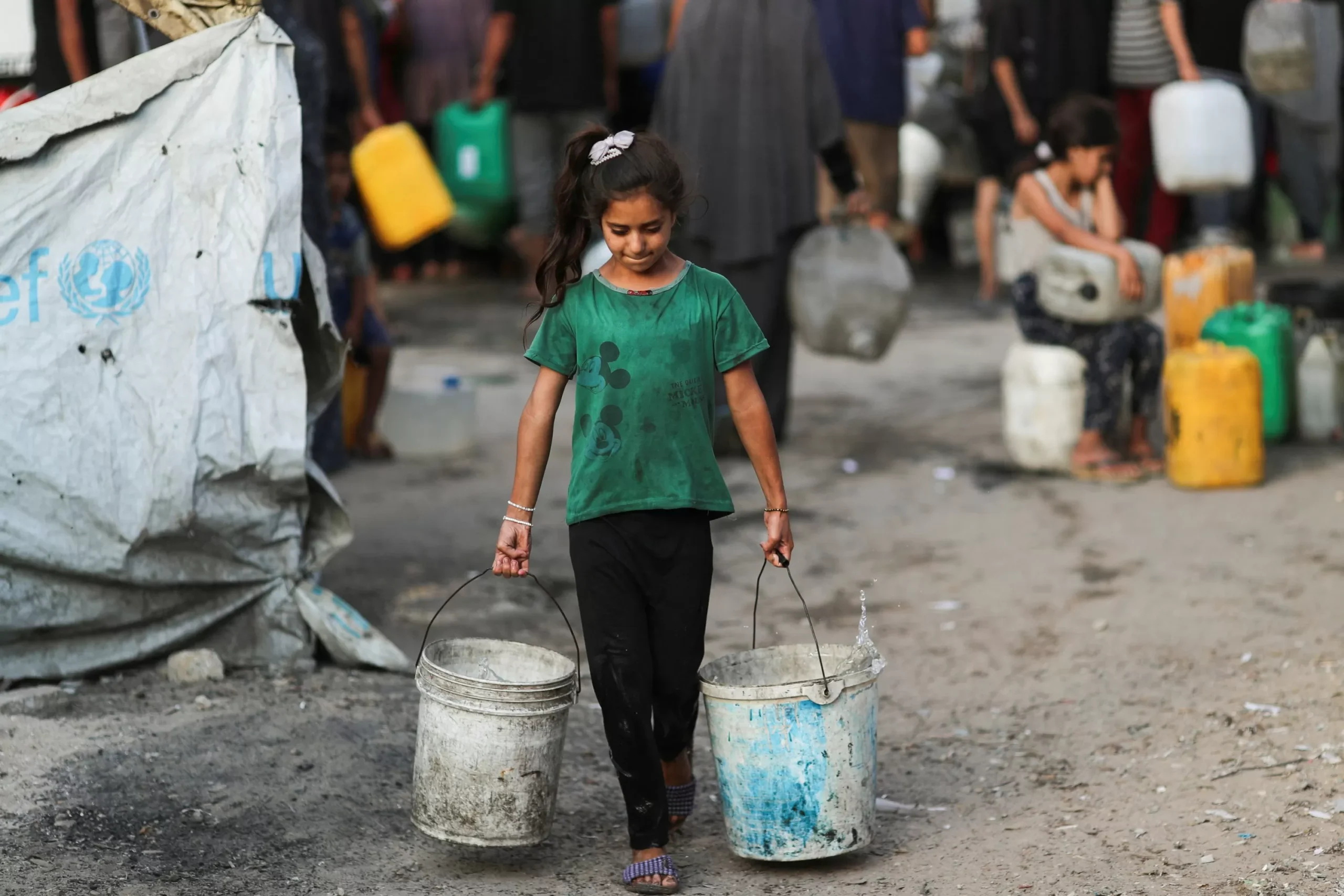
Driven by Thirst and Hunger: The Struggle for Water in Gaza
The Gaza Strip, a small territory wedged between Israel and Egypt, has been a hotbed of conflict and suffering for decades. The constant cycle of violence has taken its toll on the people of Gaza, particularly in terms of their basic needs. One of the most pressing issues facing the population is the lack of access to clean and safe drinking water.
According to the United Nations, 97% of Gaza’s water supply is unfit for human consumption. This dire situation has left many Gazans with no choice but to rely on underground aquifers. However, due to over-extraction and poor management, these aquifers have become depleted and contaminated, leaving the most vulnerable members of society at risk.
The consequences of this scarcity of water are devastating. Driven by thirst and weakened by hunger, many Gazans embark on daily treks across a landscape shattered by years of conflict to collect what little water they can find. A typical journey involves carrying heavy jugs and cans for several kilometers in the sweltering heat. This ordeal not only requires physical strength but also takes a severe toll on their mental and emotional well-being.
The people of Gaza are resilient, but this daily struggle for water is taking its toll. Imagine being denied the most basic human need – water – and having to fight for it every single day. The stress and desperation that come with this reality are unimaginable. Children, pregnant women, and the elderly are the most affected by this crisis, and their health is at risk every time they drink contaminated water.
The minimum recommended daily water consumption is 100 liters per person, but in Gaza, the average is only 88 liters per day, and this number drops significantly in some areas. This means that many Gazans are forced to make difficult choices, often sacrificing meals to meet their families’ water needs. The already dire situation is compounded by frequent power cuts, which disrupt the water supply, making it even more challenging to meet this basic need.
It’s not just the physical and emotional toll that this water crisis is taking; it’s also stunting potential and limiting opportunities. Children, especially girls, are often responsible for collecting water, leaving them with no time for education or playing. In Gaza, water scarcity not only affects daily life but also has long-term consequences on the population’s health, education, and economy.
The lack of access to water is not a new issue in Gaza. Decades of conflict and political instability have hindered efforts to address this crisis, leaving the population to face the consequences. However, amidst this challenging situation, there is hope. Organizations like Oxfam, UNICEF, and World Vision have been working tirelessly to provide sustainable solutions and improve water and sanitation conditions in Gaza.
Through emergency water trucking, rehabilitation of damaged water infrastructure, and enhancing water storage systems, these organizations are making a significant impact on the lives of Gazans. Additionally, they are also conducting awareness campaigns to promote water conservation and better hygiene practices, which can significantly reduce water consumption and prevent the spread of diseases.
Moreover, local initiatives have also emerged to address the water crisis in Gaza. Community-led projects such as rooftop water harvesting and waste-water treatment systems have played a crucial role in providing clean and safe water for communities. These initiatives not only address the immediate needs but also contribute to building long-term resilience in the face of recurring emergencies.
The struggles and sacrifices made by the people of Gaza in their daily quest for water are heartbreaking and unacceptable. It’s time for us all to take action and help address this crisis. Whether through donations, advocating for policy changes, or simply raising awareness, every effort counts.
We cannot turn a blind eye to the water crisis in Gaza any longer. We must join forces and stand in solidarity with those who are suffering. Together, we can make a difference and ensure that every Gazan has access to clean and safe water. Let us not forget the resilience and determination of the Gazan people, who despite all odds, continue to fight for their basic human right – the right to water.