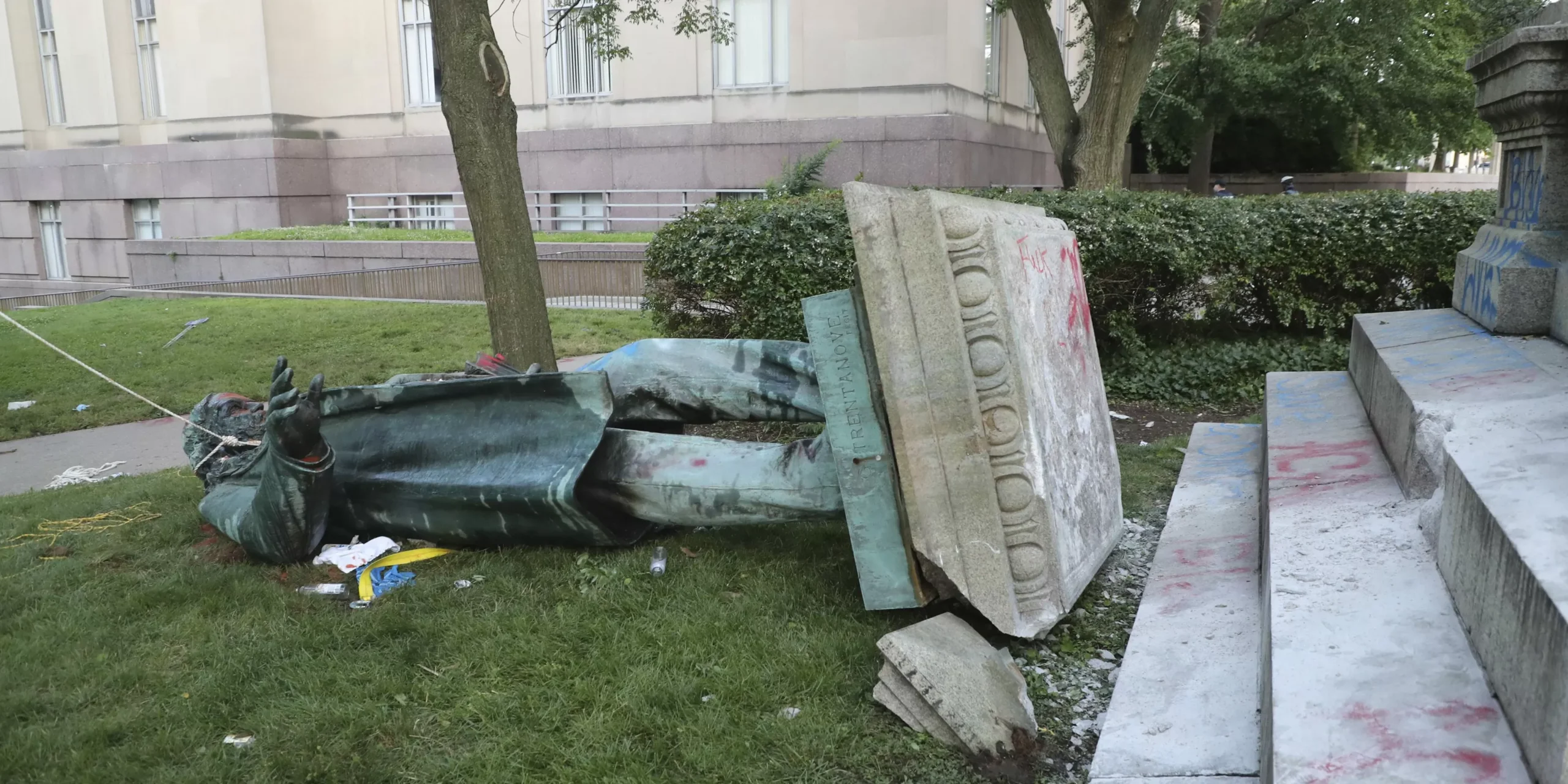
Monuments to Racism: A Call for Change
In recent years, the issue of Confederate monuments has sparked heated debates and protests across the United States. While some argue that these statues are a part of history and should be preserved, others see them as symbols of racism and oppression. The truth is, these monuments not only glorify a dark past, but they also serve as a license for racist violence. And now, with the current administration’s decision to put these statues back up, it is more important than ever to understand why they must fall again.
The history of Confederate monuments dates back to the late 19th and early 20th centuries, when they were erected as a way to honor and remember the soldiers who fought for the Confederacy during the Civil War. However, what many fail to acknowledge is that these monuments were also used as a means to intimidate and oppress African Americans during the Jim Crow era. They were strategically placed in public spaces, such as town squares and courthouses, to remind black communities of their place in society.
These monuments were not simply innocent tributes to fallen soldiers, but rather deliberate symbols of white supremacy. They were a way for the white elite to assert their power and maintain the racial hierarchy in the South. And unfortunately, this legacy of racism and oppression continues to this day.
White supremacists, for their part, understand the significance of these monuments all too well. They see them as a rallying point for their hateful ideologies and a justification for their violent actions. The recent rise in hate crimes and white supremacist rallies is a clear indication that these monuments are not just harmless relics of the past, but they continue to fuel racism and hatred in our society.
The decision to put these statues back up, particularly by the current administration, is a blatant disregard for the pain and suffering of marginalized communities. It sends a message that the government is more concerned with preserving a distorted version of history than addressing the systemic racism that still plagues our country. It also emboldens white supremacists and gives them a sense of legitimacy for their actions.
But it’s not just about the statues themselves, it’s about the values they represent. These monuments glorify individuals who fought to preserve the institution of slavery, a system that dehumanized and oppressed millions of people. By allowing these statues to stand, we are sending a message that we are willing to overlook the atrocities committed in the name of white supremacy.
It’s time for us to acknowledge the harm these monuments have caused and take action to remove them. This is not about erasing history, but rather acknowledging the truth and taking a stand against racism. We cannot move forward as a society if we continue to glorify a past that was built on the backs of enslaved people.
Some argue that removing these statues is an attempt to erase our heritage and culture. But the truth is, our heritage and culture are not defined by these monuments. They are defined by the people who have fought for justice and equality, the people who have built our communities and shaped our nation. It’s time to honor and celebrate these individuals instead of those who fought to maintain a system of oppression.
The removal of Confederate monuments is not a new concept. In fact, many cities and states have already taken steps to remove these symbols of hate. And while some may argue that it’s just a symbolic gesture, it’s an important step towards acknowledging and addressing the deep-rooted racism in our society.
We must also take this opportunity to educate ourselves and future generations about the true history of these monuments and the harm they have caused. We cannot continue to turn a blind eye to the systemic racism that still exists in our country. It’s time to have difficult conversations and work towards creating a more just and equal society for all.
In conclusion, the decision to put Confederate statues back up is a step in the wrong direction. These monuments serve as a license for racist violence and have no place in our society. It’s time for us to come together and demand their removal, not just for the sake of our present, but for the future of our country. Let’s not repeat the mistakes of the past, but instead, let’s work towards a better and more inclusive future.