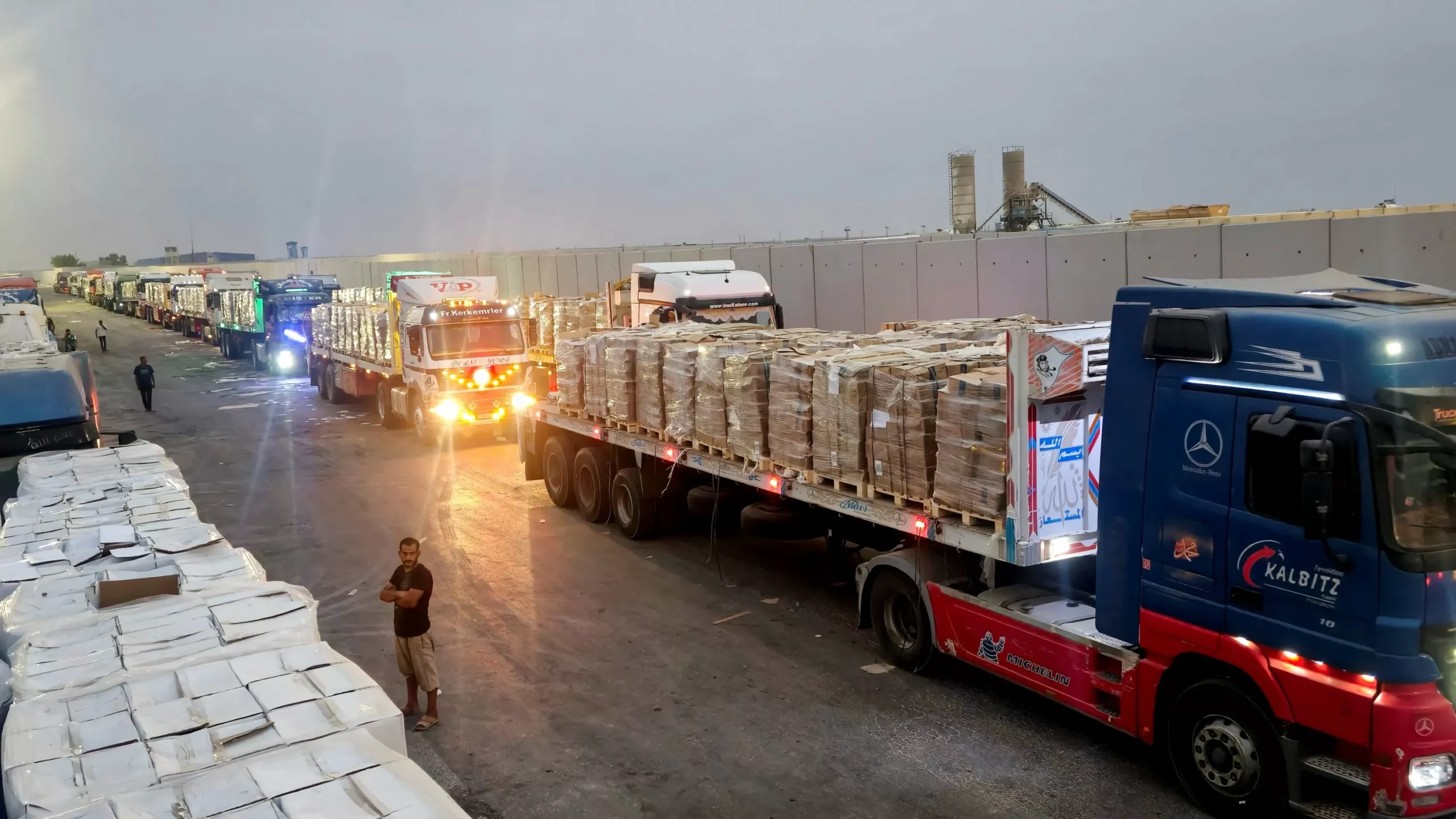
Boxes of aid destined for Gaza sat stranded atop a truck and flatbed trailer Sunday, just meters from Egypt’s Rafah border, as frustrated drivers and U.N. officials criticized delays in the delivery process.
The shipment of much-needed humanitarian aid, including food, medical supplies, and hygiene kits, had been organized by the United Nations Relief and Works Agency (UNRWA) to provide assistance to the people of Gaza who have been suffering from a dire humanitarian crisis for years.
However, despite all the efforts and resources put into this aid, it remained stuck at the Rafah border, waiting for clearance to enter Gaza. This delay not only added to the mounting frustration of the drivers and U.N. officials but also jeopardized the lives of thousands of Palestinians who are in urgent need of this aid.
According to the UNRWA, the delay was due to ongoing security concerns at the border, which had caused a backlog of aid shipments. However, this explanation did not sit well with those who were directly affected by the delay.
One of the drivers, who had been waiting for days with his truckload of aid, shared his frustration, saying, “We have been waiting here for hours, and now it’s been days. Our trucks are inspected multiple times, and we have all the necessary permits, yet we are still not being allowed to enter Gaza. This is unacceptable.”
The situation was equally frustrating for U.N. officials who had been tirelessly working to provide assistance to the people of Gaza. In a statement, Matthias Schmale, the Director of UNRWA Operations in Gaza, expressed his disappointment, saying, “We understand the security concerns, but the delay in delivering this aid is causing more harm than good. The people of Gaza are in dire need of this aid, and every minute that it is delayed, the situation becomes more critical.”
The ongoing conflict in Gaza has had a devastating impact on the lives of its people. With a failing economy, limited access to resources, and a severe shortage of basic necessities, the people of Gaza have been struggling to survive. The blockade imposed by Israel has only made the situation worse, leaving the people of Gaza dependent on humanitarian aid for their basic needs.
In this dire situation, the delayed aid shipment was a glimmer of hope for the people of Gaza. However, with each passing day, that hope was fading away, and the frustration and desperation were growing.
It is crucial to remember that this aid is not just a shipment of goods; it represents a lifeline for the people of Gaza. It is a symbol of humanity and compassion, reminding the people of Gaza that they are not alone in their struggle.
Therefore, it is imperative that the aid is delivered without any further delay. The U.N. has already appealed for $95 million in emergency funding to address the humanitarian crisis in Gaza, and this aid is a crucial part of that effort.
The delay in delivering this aid also highlights the need for a long-term solution to the crisis in Gaza. The people of Gaza cannot continue to rely on aid shipments to survive; they need sustainable solutions that will enable them to rebuild their lives and communities.
It is also essential for all parties involved to prioritize the well-being of the people of Gaza over any political or security concerns. The delay in delivering this aid is not only a violation of the fundamental human rights of the people of Gaza but also a failure of our collective responsibility towards our fellow human beings.
In the midst of this frustrating situation, there were glimmers of hope as well. Several local organizations and individuals stepped up to provide assistance to the drivers and UNRWA officials, offering food and support to help them endure the long wait.
This act of kindness and solidarity is a testament to the resilience and compassion of the human spirit. It serves as a reminder that even in the darkest of times, there is always hope, and there are always people who are willing to lend a helping hand.
In conclusion, the delayed aid shipment destined for Gaza is a stark reminder of the urgent need for a lasting solution to the humanitarian crisis in the region. The people of Gaza cannot be left to suffer in silence while political and security concerns take precedence. It is time for all parties involved to prioritize the well-being of the people of Gaza and work towards a sustainable solution. And until that happens, we must continue to support and provide aid to our fellow human beings who are in dire need of our help and compassion.