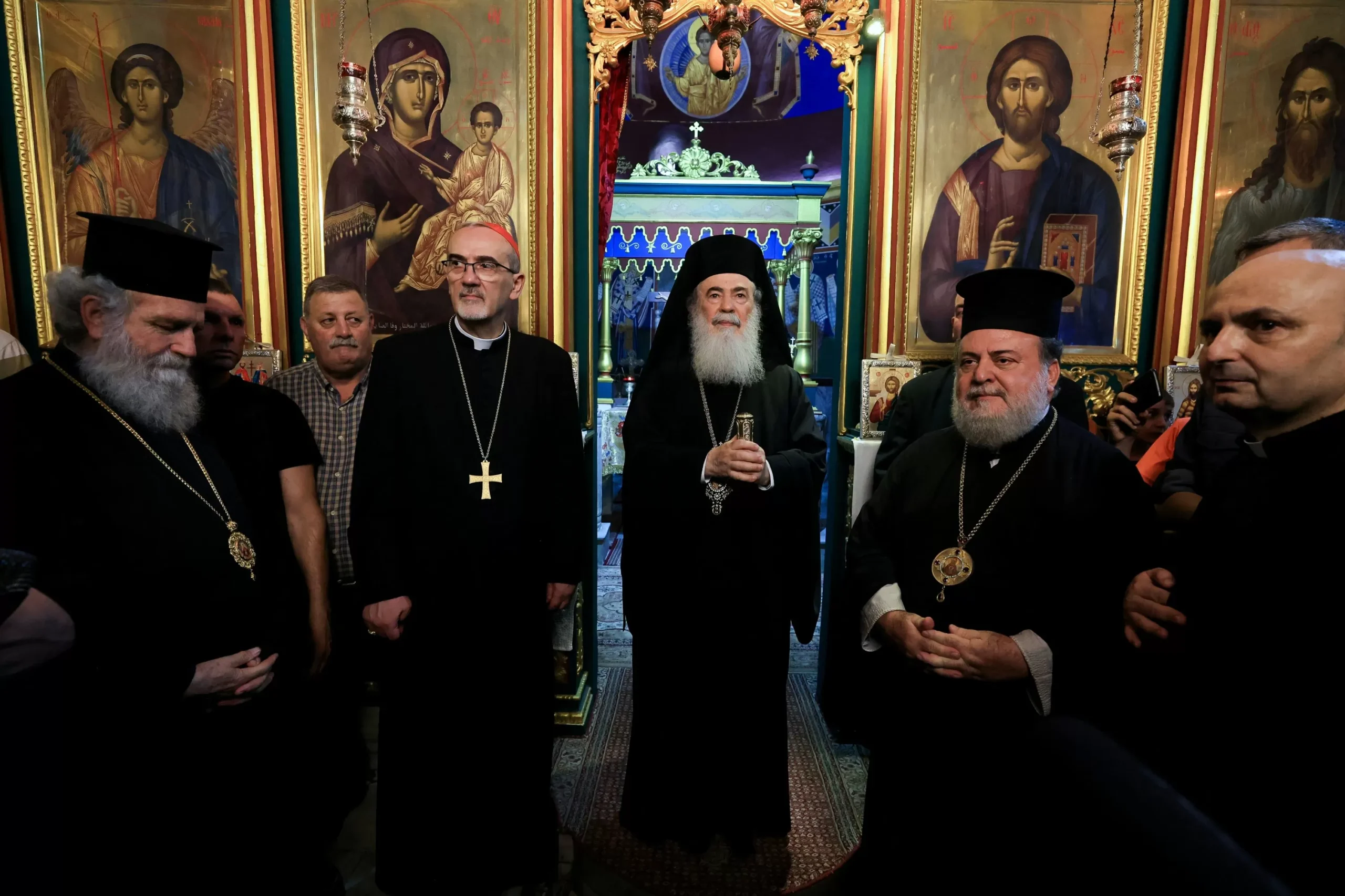
Israeli authorities have recently frozen all bank accounts of the Greek Orthodox Patriarchate in Jerusalem, sparking tensions with Christian institutions in the region. The move comes amid a property tax dispute between the patriarchate and the Israeli government, and has raised concerns about the treatment of religious institutions in the holy city.
The Greek Orthodox Patriarchate in Jerusalem is one of the oldest and most prominent Christian institutions in the world. It has been a symbol of Christian presence in the holy land for centuries, and its leaders have played a significant role in preserving Christian heritage and traditions in Jerusalem.
However, the patriarchate has recently found itself at odds with the Israeli government over a property tax dispute. The Israeli authorities claim that the patriarchate owes millions of dollars in unpaid property taxes on its vast land holdings in Jerusalem. The patriarchate, on the other hand, argues that it is exempt from paying taxes on its religious properties, as per a longstanding agreement with the Israeli government.
The dispute has been ongoing for several years, but it took a dramatic turn when the Israeli authorities froze all of the patriarchate’s bank accounts. This move has effectively paralyzed the patriarchate’s operations, as it is unable to pay its employees, maintain its properties, or carry out its charitable activities.
This action by the Israeli government has been met with widespread condemnation from Christian leaders around the world. The heads of the Catholic, Armenian, and Coptic churches in Jerusalem have all expressed their solidarity with the Greek Orthodox Patriarchate and called for a resolution to the dispute.
The situation has also sparked protests and demonstrations by the local Christian community in Jerusalem. They see this as yet another attempt by the Israeli government to undermine the presence and influence of Christians in the holy city.
The Greek Orthodox Patriarchate has been a target of similar actions in the past. In 2018, the Israeli government attempted to impose a new property tax law on religious institutions, which would have resulted in the patriarchate owing millions of dollars in taxes. The patriarchate and other Christian institutions in Jerusalem united in opposition to this law, and it was eventually suspended.
The current situation, however, is more severe, as it directly affects the patriarchate’s ability to function and provide essential services to the Christian community. The patriarchate runs schools, hospitals, and other charitable organizations that serve not only Christians but also Muslims and Jews in Jerusalem. The freeze on its bank accounts has put all of these services at risk.
The Greek Orthodox Patriarchate has called on the Israeli government to reverse its decision and engage in dialogue to find a solution to the dispute. It has also appealed to the international community to intervene and help resolve the issue.
The Israeli government, on the other hand, maintains that it is simply enforcing the law and that the patriarchate must pay its taxes like any other institution. It has also accused the patriarchate of mismanaging its finances and using its tax-exempt status to amass wealth.
Regardless of the reasons behind the dispute, it is clear that the freeze on the patriarchate’s bank accounts is causing harm to the Christian community in Jerusalem. It is also damaging the reputation of Israel as a country that respects and protects religious freedom.
The holy city of Jerusalem is a sacred place for Christians, Jews, and Muslims alike. It is a place where people of different faiths have coexisted for centuries, and it is crucial that this coexistence is maintained. The actions of the Israeli government in freezing the patriarchate’s bank accounts only serve to create further division and tension in the city.
It is time for all parties involved to come to the table and find a peaceful and just resolution to this dispute. The Greek Orthodox Patriarchate is a vital institution in Jerusalem, and its continued existence and functioning are in the best interest of all communities in the city. Let us hope that a solution can be reached soon, and the patriarchate’s bank accounts can be unfrozen, allowing it to continue its important work in Jerusalem.