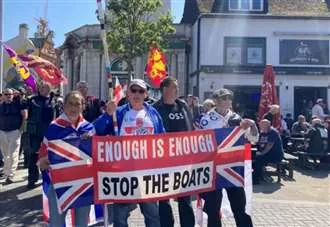
Despite the government’s promises to control the number of small boat crossings, the crisis continues to escalate. This issue has been a hot topic in recent years, with many debates and discussions surrounding it. But why is it so difficult to control? In this article, we will delve into the reasons behind this ongoing crisis and explore potential solutions.
Firstly, let’s understand what small boat crossings are. These are journeys made by migrants and refugees across the English Channel in small, overcrowded boats. These individuals are often fleeing war, persecution, and poverty in their home countries, seeking a better life in the UK. The number of small boat crossings has been steadily increasing in recent years, with a record-breaking 8,417 people making the journey in 2020 alone.
One of the main reasons for the surge in small boat crossings is the lack of safe and legal routes for migrants and refugees to enter the UK. Many of these individuals have no other option but to risk their lives in these dangerous journeys. The lengthy and complicated asylum process also adds to the desperation of these individuals, pushing them towards these risky crossings.
Moreover, the ongoing conflicts and crises in countries such as Syria, Afghanistan, and Eritrea have forced millions of people to flee their homes. With limited options for resettlement and a lack of support from neighboring countries, many of these individuals see the UK as their only hope for a better future.
Another factor contributing to the crisis is the rise of human trafficking and smuggling networks. These criminal organizations exploit vulnerable individuals, charging exorbitant fees for these dangerous journeys. The lack of effective border control measures also makes it easier for these networks to operate.
Despite the government’s efforts to tackle the issue, the crisis remains a complex and challenging one to control. The UK government has implemented various measures, including increased patrols and surveillance, to deter small boat crossings. However, these measures have not been entirely successful in reducing the number of crossings.
One of the main challenges faced by the government is the sheer number of individuals attempting these crossings. With limited resources and manpower, it is difficult to monitor and intercept every small boat that sets off from the French coast. The vast expanse of the English Channel also makes it challenging to patrol effectively.
Moreover, the government’s tough stance on immigration has also been criticized by many. The hostile environment policies and the use of detention centers have been deemed inhumane and ineffective in addressing the root causes of the crisis. This has led to a lack of trust and cooperation from the migrant and refugee communities, making it harder for the government to address the issue.
So, what can be done to control the small boat crossings crisis? Firstly, there needs to be a shift in the government’s approach towards immigration. Instead of focusing on deterrence and punishment, there needs to be a more compassionate and humane approach. This includes providing safe and legal routes for migrants and refugees to enter the UK, as well as addressing the root causes of migration.
Furthermore, there needs to be better cooperation and coordination between the UK and its neighboring countries. This includes working with France to dismantle human trafficking and smuggling networks and providing support to countries facing conflicts and crises.
Additionally, the government needs to invest in more resources and manpower to effectively patrol and monitor the English Channel. This could include increasing the number of Border Force vessels and working closely with the French authorities to share intelligence and coordinate efforts.
In conclusion, the small boat crossings crisis is a complex and challenging issue that requires a multifaceted approach to address it effectively. The government’s promises to control the crisis must be backed by concrete actions and a more compassionate approach towards immigration. By working together with neighboring countries and addressing the root causes of migration, we can hope to see a significant reduction in the number of small boat crossings in the future. Let us not forget that behind these numbers are real people, with hopes and dreams for a better life. It is our responsibility to provide them with a safe and welcoming environment.