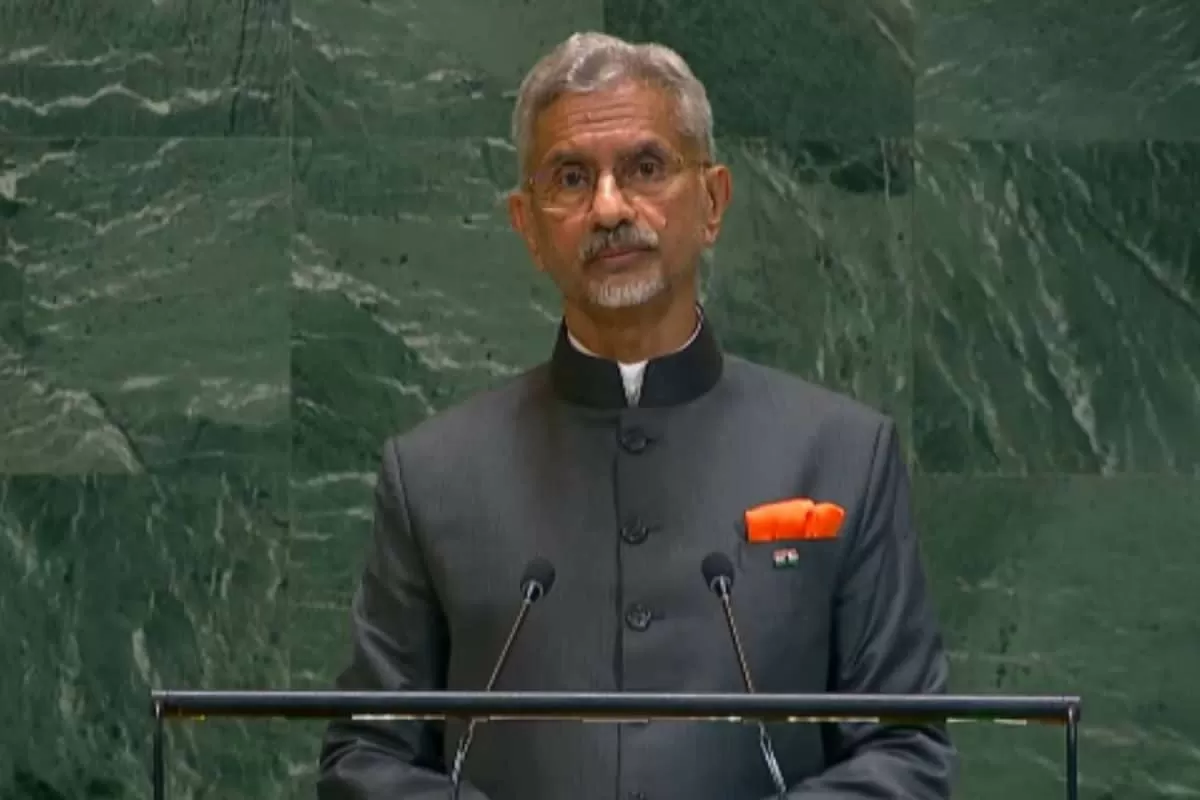
In a recent address at the United Nations Security Council, India’s External Affairs Minister, S Jaishankar, highlighted the country’s long-standing concern over state-sponsored terrorism emanating from across its western border. His powerful speech underscored the urgent need for the international community to come together and take decisive action against this growing threat.
India has been a victim of cross-border terrorism for decades, with its neighbor Pakistan being the main perpetrator. The use of terrorism as a tool of state policy by Pakistan has caused immense suffering and loss of innocent lives in India. Despite repeated calls for action, Pakistan has failed to take any meaningful steps to curb the activities of terrorist groups operating from its soil.
In his address, S Jaishankar reiterated India’s commitment to fighting terrorism in all its forms and manifestations. He emphasized that terrorism is a global problem that requires a global solution. The minister also highlighted the need for a united front against state-sponsored terrorism, stating that “terrorism cannot be justified as a means of achieving any political or strategic objective.”
India’s concerns over state-backed terrorism are not limited to its own borders. The country has been at the forefront of the fight against terrorism at the international level. It has been a victim of numerous terror attacks, including the 2008 Mumbai attacks, which claimed the lives of over 160 people, including foreign nationals. These attacks have only strengthened India’s resolve to combat terrorism and its sponsors.
S Jaishankar’s address at the UNSC also shed light on the growing threat of radicalization and the use of social media by terrorist organizations to spread their ideology and recruit vulnerable individuals. He stressed the need for a coordinated effort to counter this menace and called for stricter measures to regulate the use of social media platforms by terrorist groups.
The minister also highlighted the role of state actors in providing safe havens and support to terrorist organizations. He urged the international community to hold such states accountable and take necessary actions to prevent them from aiding and abetting terrorism.
India’s concerns over state-sponsored terrorism have been echoed by many other countries, including the United States, France, and the United Kingdom. These countries have also been victims of terror attacks orchestrated by state-sponsored actors. The international community must come together to address this issue and take concrete steps to dismantle the infrastructure of terrorism.
S Jaishankar’s address at the UNSC serves as a wake-up call for the international community to take decisive action against state-sponsored terrorism. It is a reminder that terrorism knows no boundaries and can only be defeated through collective efforts.
India has always been a strong advocate of peace and has consistently called for a peaceful resolution of conflicts. However, it will not hesitate to take necessary measures to protect its citizens and safeguard its sovereignty. The country has shown remarkable resilience in the face of terror attacks and has emerged as a global leader in the fight against terrorism.
In conclusion, S Jaishankar’s address at the UNSC has once again brought to the forefront India’s concerns over state-sponsored terrorism. It is a call to action for the international community to unite and take decisive steps to eradicate this menace. India remains committed to working with its global partners to create a world free from the scourge of terrorism. As the minister rightly said, “the fight against terrorism is not a confrontation against any religion or culture, but against the enemies of humanity.”