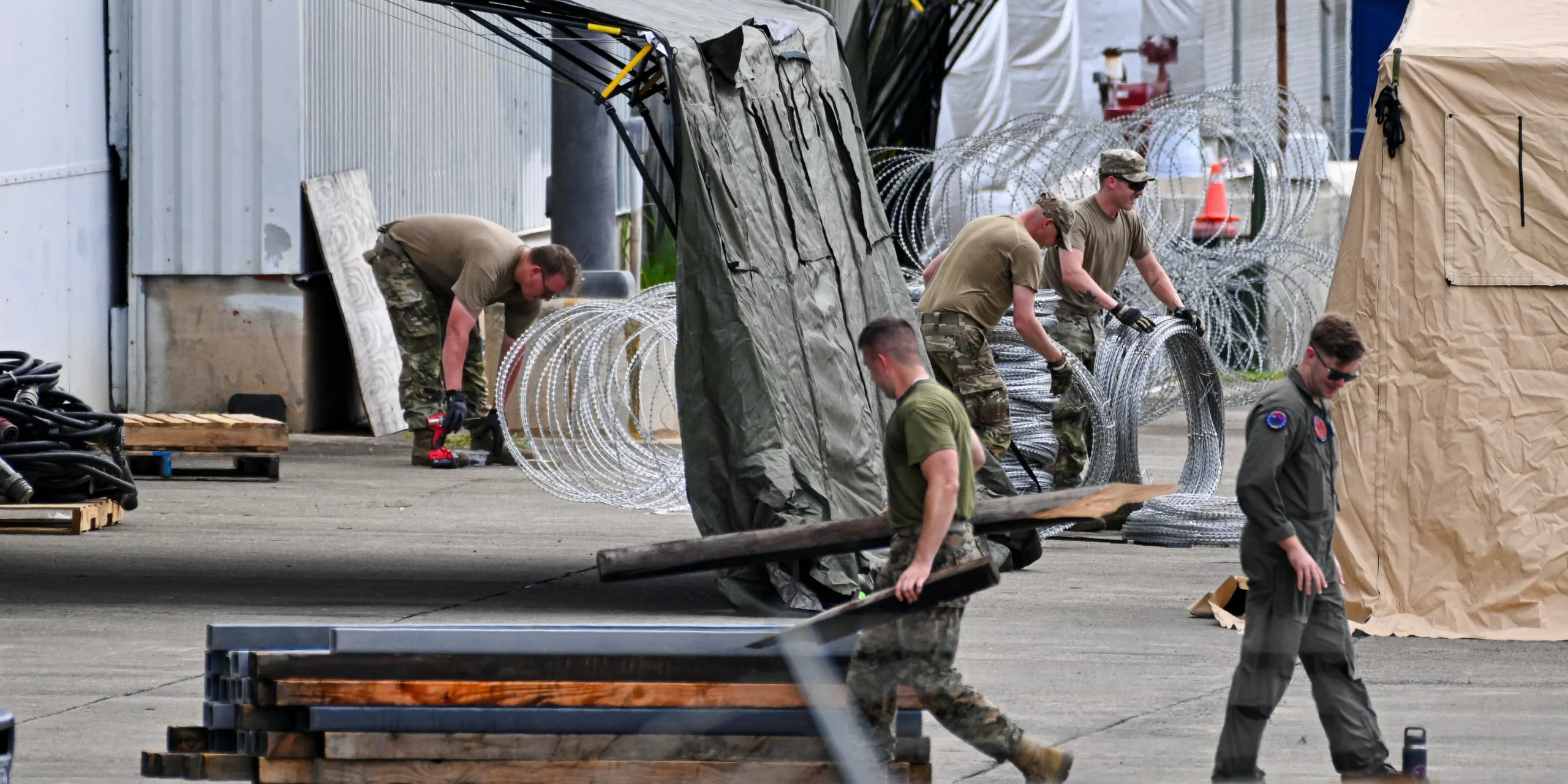
As tensions between the United States and Venezuela continue to escalate, recent military documents have shed light on the U.S. government’s plans to maintain a strong military presence in the Caribbean region for years to come. These documents, obtained by The Intercept, reveal a long-term strategy to feed a buildup of troops in the region, with plans extending all the way to 2028.
The revelation of these plans comes at a time when rumors of a potential U.S. war on Venezuela have been swirling, causing concern and fear among the Venezuelan people and the international community. The U.S. government has repeatedly denied any plans for military intervention in Venezuela, but these documents paint a different picture.
According to the documents, the U.S. military has been quietly working on a strategy to maintain a significant presence in the Caribbean region, with a focus on Venezuela. This includes the deployment of troops, ships, and aircraft to the region, as well as the establishment of military bases and training facilities.
The documents also reveal that the U.S. military has been conducting joint exercises with other countries in the region, including Colombia, Brazil, and Guyana. These exercises, which have been described as routine training, have raised concerns among neighboring countries and have been seen as a show of force by the U.S.
The U.S. government has justified these actions by citing the need to combat drug trafficking and other transnational threats in the region. However, many experts believe that the real motive behind these plans is to exert pressure on the Venezuelan government and potentially intervene in the country’s internal affairs.
The timing of these plans is particularly concerning, as they come at a time when the U.S. has been ramping up its rhetoric against the Venezuelan government. The Trump administration has imposed harsh economic sanctions on Venezuela and has openly supported opposition leader Juan Guaidó, who has declared himself the country’s interim president.
These actions have only served to further escalate tensions between the two countries and have been met with strong condemnation from the international community. Many see the U.S. military’s plans as a direct threat to Venezuela’s sovereignty and a potential precursor to military intervention.
The U.S. government has not officially commented on the leaked documents, but they have sparked widespread concern and outrage among the Venezuelan people and their allies. The idea of a foreign power maintaining a long-term military presence in their region is seen as a violation of their sovereignty and a threat to their security.
The U.S. military’s plans also raise questions about the country’s foreign policy and its commitment to democracy and self-determination. The U.S. has long prided itself on being a champion of democracy and human rights, but these plans seem to contradict those values.
Furthermore, the U.S. government’s actions in Venezuela have been met with criticism and accusations of hypocrisy, as it has turned a blind eye to human rights abuses and authoritarian regimes in other parts of the world. This has only added to the skepticism and mistrust towards the U.S. and its intentions in the region.
In light of these revelations, it is imperative that the U.S. government addresses these concerns and reassures the international community that it has no plans for military intervention in Venezuela. The people of Venezuela deserve to live in peace and determine their own future without the interference of foreign powers.
The U.S. government must also be transparent about its military plans in the region and engage in open dialogue with neighboring countries to address any concerns and alleviate tensions. It is crucial that all parties involved work towards a peaceful resolution to the crisis in Venezuela, rather than resorting to military force.
In conclusion, the leaked military documents have raised serious concerns about the U.S. government’s intentions in the Caribbean region and its potential involvement in Venezuela. It is time for the U.S. to prioritize diplomacy and respect the sovereignty of other nations, rather than resorting to military tactics. The world is watching, and it is up to the U.S. to prove that it is a true champion of democracy and human rights.