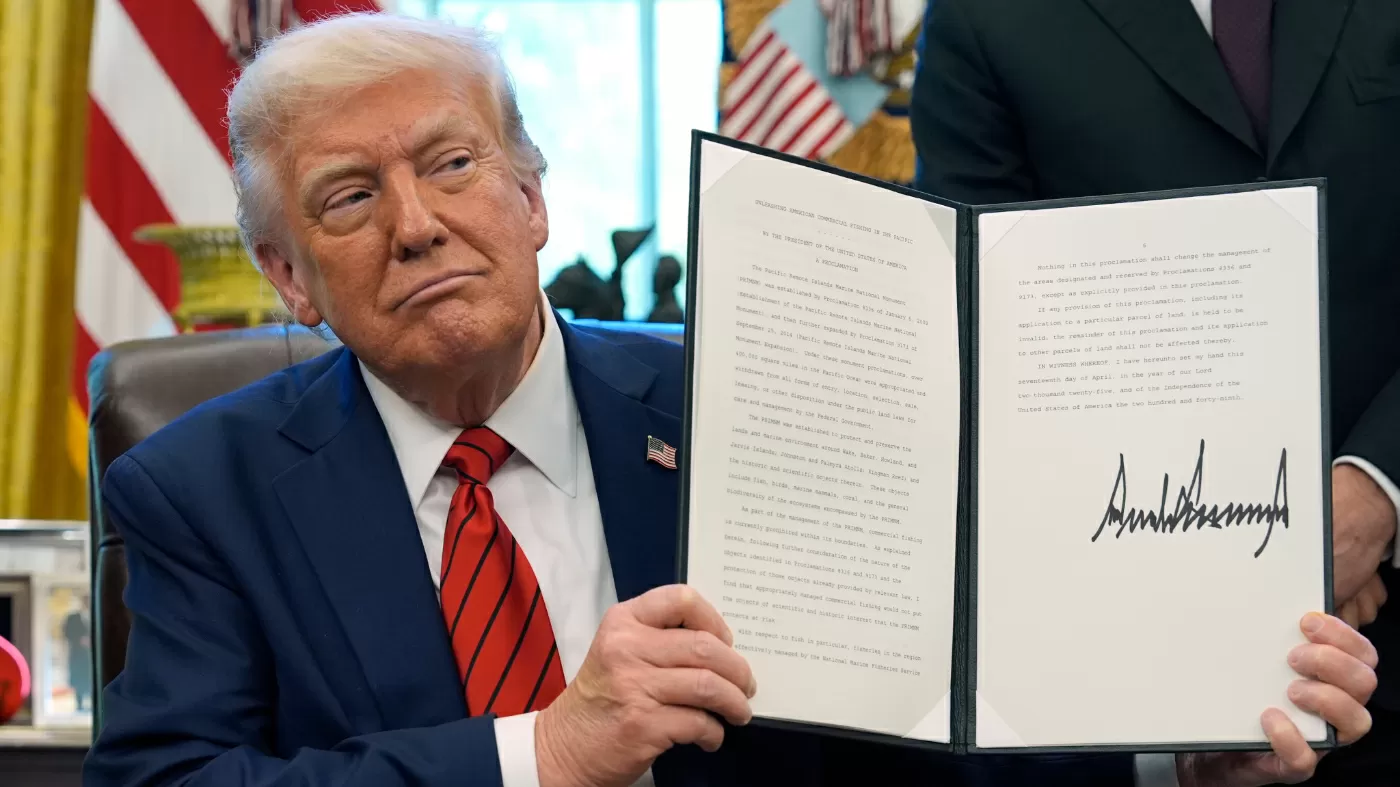
President Trump has once again made a controversial decision that has sparked debates and concerns among environmentalists and fishermen alike. On Friday afternoon, he issued a proclamation to open up the Northeast Canyons and Seamounts Marine National Monument to commercial fishing. This monument, which covers a vast area of nearly 5,000 square miles southeast of Cape Cod, Mass, was previously closed off to commercial fishing in 2016 by the Obama administration.
The Northeast Canyons and Seamounts Marine National Monument was established by President Obama under the Antiquities Act, as a way to protect the unique and fragile ecosystem of the Atlantic Ocean. This area is home to a variety of marine life, including several species of dolphins, whales, and other marine mammals. It also serves as an important feeding ground for endangered species such as the North Atlantic right whale.
President Trump’s decision to open up this monument to commercial fishing has been met with criticism and concern from environmental groups. They argue that commercial fishing will have a detrimental impact on the marine life and ecosystem in this area. They fear that the delicate balance of this underwater world will be disrupted, leading to the decline of important species and the destruction of their habitats.
However, the Trump administration argues that this decision is necessary to boost the struggling fishing industry in the Northeast. They believe that allowing commercial fishing in this area will create jobs and economic opportunities for fishermen who have been struggling to make ends meet. The proclamation states that “fishing activities conducted in accordance with applicable laws and regulations will not pose a threat of significant harm to the objects of the monument.”
The decision to open up the Northeast Canyons and Seamounts Marine National Monument to commercial fishing has been met with mixed reactions from fishermen. While some see it as a positive step towards reviving their industry, others are concerned about the long-term effects on the marine life and the sustainability of their livelihoods.
However, the Trump administration has assured that strict regulations and monitoring will be put in place to ensure that fishing activities do not harm the environment and marine life in this area. This includes limiting the types of fishing gear that can be used and implementing strict catch limits to prevent overfishing.
This move by President Trump is in line with his administration’s efforts to roll back environmental regulations and promote economic growth. It is also seen as a win for states like Maine and New Hampshire, where the fishing industry is a significant part of the economy.
In his proclamation, President Trump stated that “it is important that we promote economic growth while protecting our natural resources.” This decision has been applauded by many in the fishing industry who have been struggling to make a living due to strict regulations and declining fish stocks in other areas.
While the debate over the impact of commercial fishing in the Northeast Canyons and Seamounts Marine National Monument continues, it is clear that this decision has both positive and negative implications. It remains to be seen how this will affect the delicate ecosystem and the fishing industry in the long run.
In the meantime, it is important for all stakeholders to work together to find a balance between economic growth and environmental conservation. The Trump administration must ensure that strict regulations are enforced to protect the marine life and the environment in this area. At the same time, fishermen must also be responsible and follow sustainable fishing practices to ensure the long-term viability of their industry.
In conclusion, President Trump’s decision to open up the Northeast Canyons and Seamounts Marine National Monument to commercial fishing is a controversial one. It has raised concerns among environmentalists and fishermen, but it is also seen as a much-needed boost for the struggling fishing industry. It is now up to all stakeholders to work together towards finding a balance between economic growth and environmental conservation in this unique and fragile marine ecosystem.