

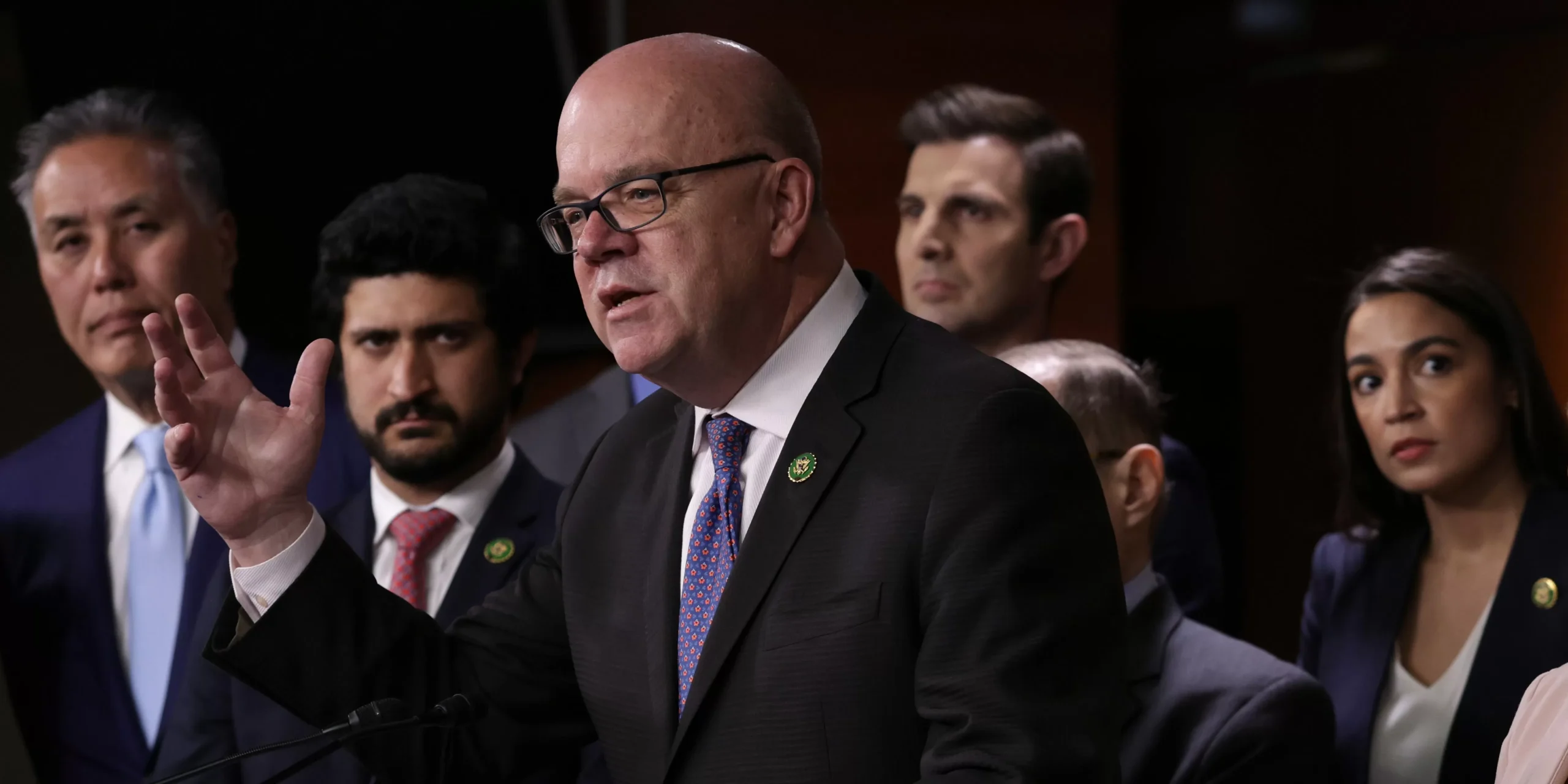
The recent political turmoil in Venezuela has captured the attention of the world, with tensions rising between the United States and the South American nation. In the midst of this crisis, a bipartisan House resolution has been introduced to prevent President Donald Trump from launching any military action against Venezuela without congressional approval. This war powers legislation is a crucial step in ensuring that the United States does not engage in any further hostilities with Venezuela without proper oversight.
The resolution, introduced by Representatives David Cicilline (D-RI) and Mark Meadows (R-NC), seeks to block any potential military intervention by the Trump administration in Venezuela. It specifically states that the President cannot “launch hostilities within or against Venezuela” without first obtaining authorization from Congress. This is a significant move, as it would prevent the President from taking any unilateral action that could potentially escalate the situation in Venezuela.
The need for this legislation is clear. President Trump has repeatedly expressed his desire for a regime change in Venezuela, and has not ruled out the possibility of military intervention. This has raised concerns among lawmakers and the public, as any military action could have disastrous consequences for both countries and the region as a whole. The resolution serves as a necessary check on the President’s power and ensures that any decision to engage in hostilities with Venezuela is made with careful consideration and oversight.
The resolution has garnered support from both sides of the political aisle, with a total of 92 co-sponsors from both parties. This shows that there is a growing consensus among lawmakers that any military action in Venezuela must be approved by Congress. It is heartening to see bipartisan cooperation in such a critical issue, as it reflects a united front in safeguarding the principles of democracy and the rule of law.
Furthermore, the resolution sends a strong message to the Trump administration that any military intervention in Venezuela would not be tolerated without proper authorization. This serves as a warning to the President that he cannot act unilaterally and must work with Congress to address the situation in Venezuela. It also reaffirms the importance of the checks and balances system in our government, which is crucial in preventing any abuse of power.
The introduction of this resolution also highlights the role of Congress in foreign policy decisions. As the branch of government responsible for declaring war, Congress has a vital role in overseeing any military action taken by the United States. This resolution serves as a reminder that the power to declare war lies with Congress, and not with the President alone.
In addition to preventing any unauthorized military action, the resolution also calls for a peaceful and diplomatic resolution to the crisis in Venezuela. It urges the Trump administration to work with the international community to find a peaceful solution that respects the sovereignty of Venezuela and its people. This is a crucial step in de-escalating tensions and promoting stability in the region.
The bipartisan House resolution is a significant step towards preventing a potential war with Venezuela. It demonstrates the commitment of our lawmakers to uphold the principles of democracy and the rule of law. It also serves as a reminder to the Trump administration that any military action must be carefully considered and approved by Congress.
In conclusion, the introduction of the bipartisan House resolution to block any military intervention in Venezuela without congressional approval is a positive and necessary move. It reflects the unity of our government in safeguarding the principles of democracy and the importance of congressional oversight in foreign policy decisions. Let us hope that this resolution will serve as a deterrent to any potential military action and pave the way for a peaceful resolution to the crisis in Venezuela.



