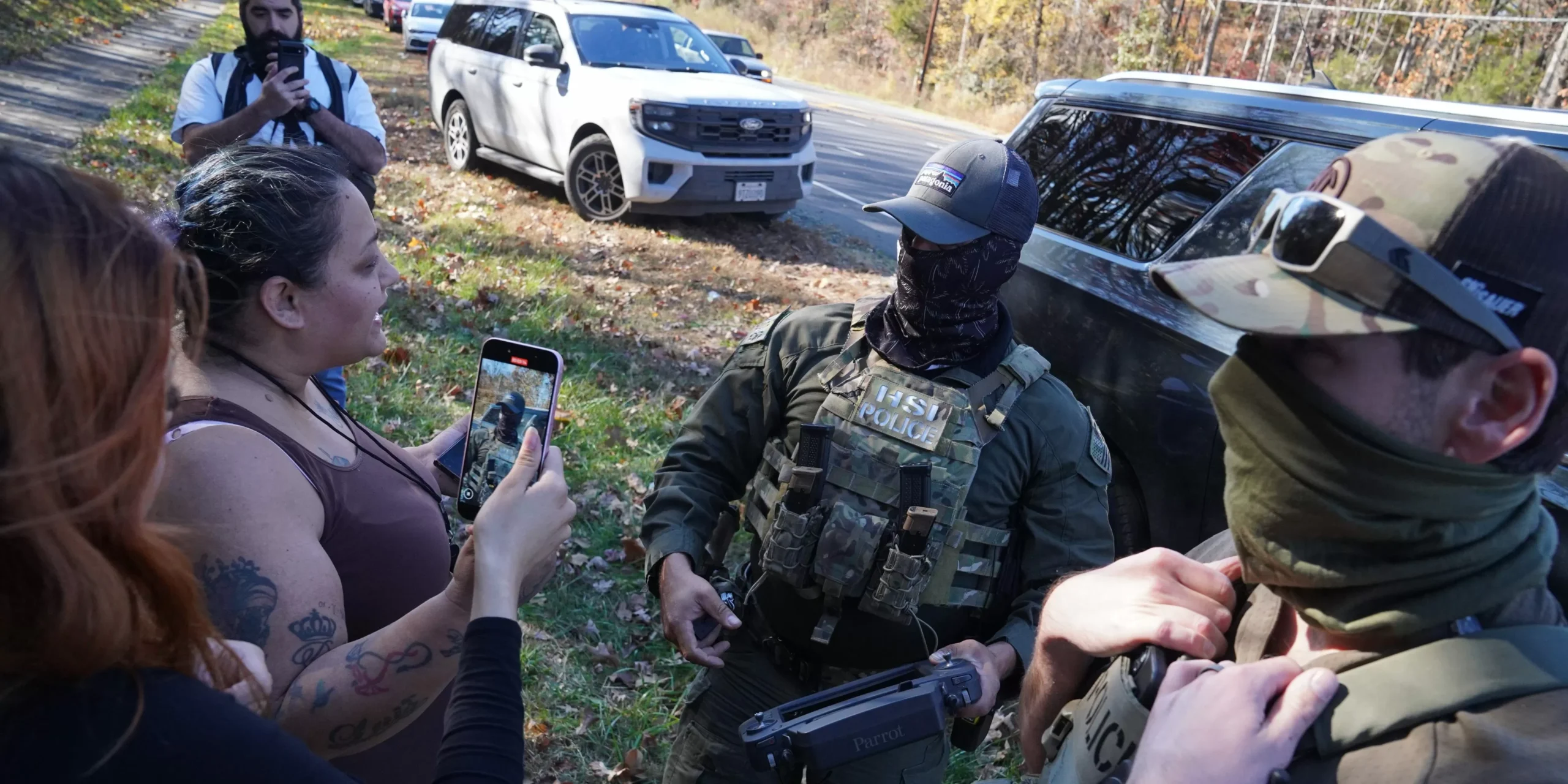
In recent years, the issue of immigration and the actions of the United States Immigration and Customs Enforcement (ICE) have been at the forefront of national debate. While the Trump administration has taken a hardline stance on immigration, there is a growing movement of everyday Americans in Appalachia and the Southeast who are standing up and resisting ICE’s mass deportation regime. This movement is showing that the resistance against ICE is no longer the exception, but rather the rule in “real” America.
For far too long, the voices and experiences of those living in rural areas have been overlooked and dismissed. However, the actions of these everyday Americans in Appalachia and the Southeast are proving that they are not only paying attention, but they are also taking a stand against the injustices being carried out by ICE.
One of the most prominent examples of this resistance is the case of Clive and Deborah Collins, a couple from rural Georgia who have been fighting against the deportation of their adopted daughter, Sarah. Sarah, who was brought to the United States from South Korea as a child, is now facing deportation under the Trump administration’s crackdown on immigration. The Collins family has been vocal in their opposition to ICE’s actions and have garnered widespread support from their community and beyond.
But it’s not just individual families who are standing up against ICE. Entire communities are coming together to resist the agency’s tactics. In the small town of Burnsville, North Carolina, residents have formed a “Sanctuary City” movement to protect their immigrant neighbors from ICE raids. This movement has gained momentum and has spread to other towns and cities in the Southeast, showing that the resistance against ICE is not limited to one specific area.
The actions of these everyday Americans in Appalachia and the Southeast are not only a response to the Trump administration’s policies, but also a reflection of their values and beliefs. These communities have a strong sense of community and compassion, and they are not willing to stand by and watch their neighbors and friends be torn apart from their families and homes.
Furthermore, the resistance against ICE is also an economic issue for these communities. Many small towns and rural areas in Appalachia and the Southeast rely on immigrant labor for their agriculture and other industries. The deportation of these workers not only affects the individuals and their families, but also has a ripple effect on the entire community. This is why many business owners and community leaders are joining the resistance against ICE, recognizing the importance of immigrant workers to their local economies.
The growing resistance against ICE in “real” America is also a reflection of the changing demographics of these areas. While they may have been traditionally seen as predominantly white and conservative, the reality is that these communities are becoming more diverse and progressive. This shift is evident in the recent midterm elections, where we saw a record number of women, people of color, and LGBTQ+ candidates running for office and winning in these areas.
It’s clear that the resistance against ICE is not just limited to big cities and liberal strongholds. Everyday Americans in Appalachia and the Southeast are showing that they are not afraid to stand up for what they believe in and protect their communities from the harmful actions of ICE. This movement is a powerful reminder that the fight for justice and equality knows no boundaries and that the power of unity and solidarity can overcome any obstacle.
In conclusion, the actions of everyday Americans in Appalachia and the Southeast are a beacon of hope and a testament to the resilience of the human spirit. They are showing that the resistance against ICE is becoming the rule, rather than the exception, in “real” America. It’s time for the rest of the country to take notice and follow their lead in standing up against injustice and fighting for a more inclusive and compassionate society.