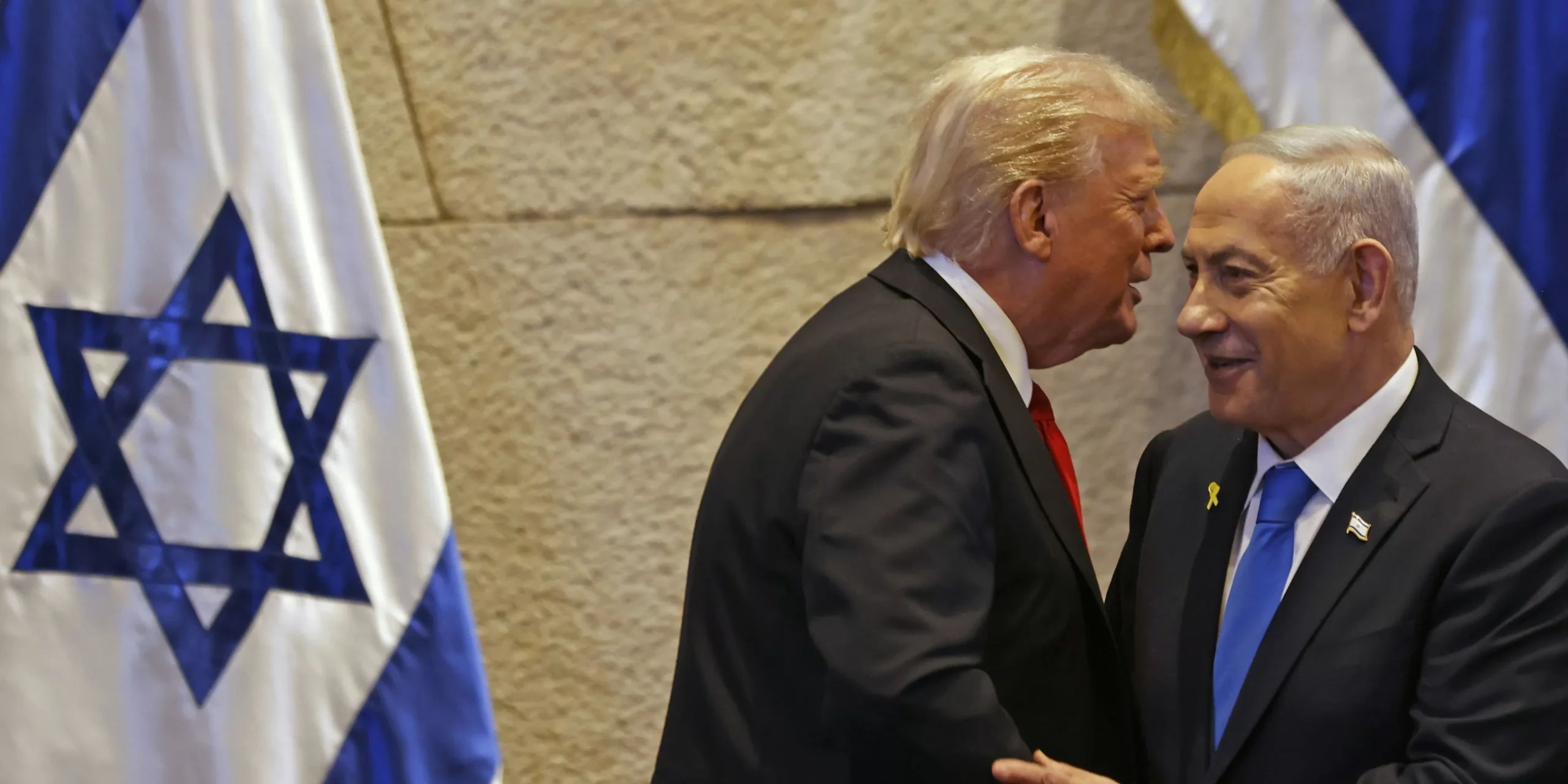
After months of escalating violence and tension in the Gaza Strip, the world watched with bated breath as former US President Donald Trump unveiled his plan for the region. Many hoped that this long-awaited proposal would bring about much-needed stability and peace in the troubled area. However, as the days passed and the plan went into effect, it became clear that the international community was once again turning a blind eye to the plight of the Palestinian people.
Trump’s plan, which was heavily skewed in favor of Israel, was met with widespread criticism and condemnation from several countries and organizations. The proposal, which aimed to resolve the decades-long conflict between Israel and Palestine, was seen as a blatant disregard for the rights and aspirations of the Palestinian people. It proposed giving Israel control over all of Jerusalem, annexing large parts of the West Bank, and denying the Palestinian people their right to self-determination.
Despite the outcry from various corners of the world, including the UN, the European Union, and the Arab League, the plan was put into effect in January 2020. As the world watched, it became apparent that this was yet another attempt to maintain the status quo, rather than seeking a just and lasting solution to the conflict.
But in the months leading up to the implementation of Trump’s plan, there was a glimmer of hope. The international community had started to take notice of the ongoing human rights violations and injustices faced by the Palestinian people. There was a growing momentum to hold Israel accountable for its actions, and calls for sanctions and boycotts were gaining traction.
The United Nations had released a scathing report in February 2019, stating that Israel’s policies towards the Palestinian people amounted to apartheid. The report called for the international community to take action and hold Israel accountable for its violations of international law.
In November 2019, the European Court of Justice ruled that products made in Israeli settlements in the occupied Palestinian territories must be labeled as such, in order to prevent consumers from being misled. This decision was seen as a significant step towards holding Israel accountable for its illegal settlements in the West Bank.
Even the United States, a staunch ally of Israel, seemed to be shifting its stance. Several Democratic presidential candidates, including Bernie Sanders and Elizabeth Warren, had pledged to withhold aid from Israel if it continued its illegal settlement activities.
This growing pressure seemed to be pushing Israel towards a tipping point, and the possibility of real change was on the horizon. However, with the implementation of Trump’s plan, the international community once again seemed to lose its focus and shift its attention elsewhere.
The COVID-19 pandemic, which hit the world shortly after the plan’s implementation, served as a convenient distraction from the ongoing conflict in the Middle East. Governments and organizations were forced to redirect their resources and efforts towards fighting the virus, leaving little room for addressing other important issues.
Moreover, the normalization of relations between Israel and several Arab countries, brokered by the Trump administration, further served to divert attention away from the plight of the Palestinian people. While the agreements may have brought about some economic benefits for the countries involved, they have done little to address the root cause of the conflict and the systematic oppression of the Palestinian people.
As the world continues to grapple with the pandemic, it is crucial that we do not forget about the injustices faced by the Palestinian people. The international community must not let Trump’s plan become the new status quo. We must continue to put pressure on Israel to end its illegal policies and hold it accountable for its actions.
It is also crucial that we support and amplify the voices of the Palestinian people, who have been fighting for their rights and their freedom for decades. We must stand in solidarity with them and call for a just and lasting solution to the conflict.
In conclusion, while the implementation of Trump’s plan may have seemed to bring an end to the international pressure to hold Israel accountable, it is essential that we do not let it become a forgotten issue. We must continue to push for a more just and equitable future for the Palestinian people, and not settle for the mere maintenance of the status quo. As the saying goes, “Injustice anywhere is a threat to justice everywhere.” We must not let the Palestinian people continue to suffer in silence.