Ahmed Bin Hassan, a Somali American, was simply trying to make a living as an Uber driver in Minneapolis. Little did he know that one day, his ethnicity and accent would become the target of harassment by federal agents.
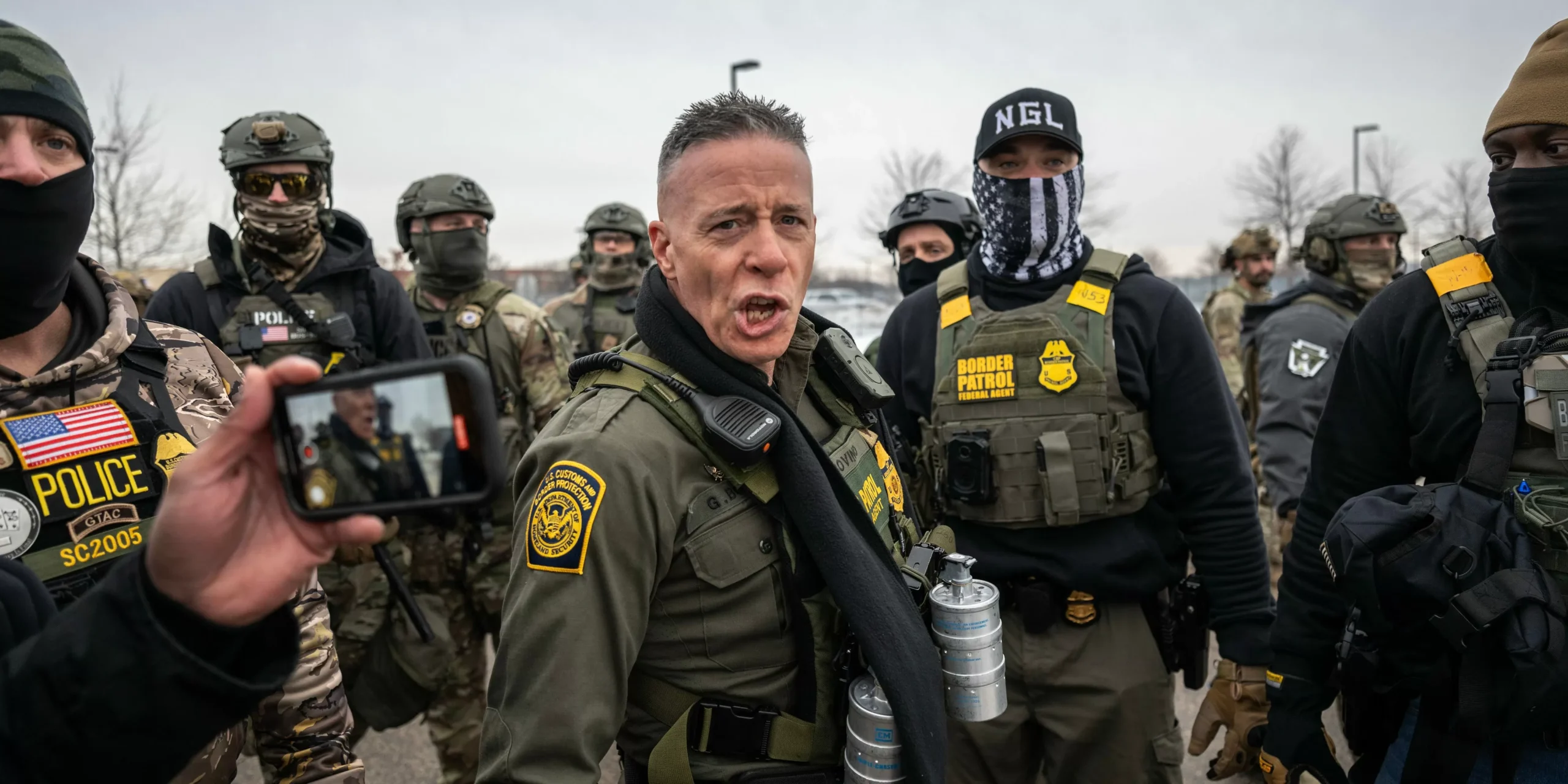
On a seemingly ordinary day, Ahmed found himself surrounded by more than a dozen masked federal agents, who were bombarding him with questions about his accent. Feeling confused and intimidated, Ahmed realized that he was being accused of being an illegal immigrant.
“They could see my color,” Ahmed said in an interview with The Intercept. “It was clear to them that I was not a white American, and that’s why they targeted me.”
The incident, which took place in May 2019, has since sparked outrage and raised concerns about racial profiling and discrimination by border patrol agents. Ahmed’s story is just one of the many instances where individuals have been targeted based on their race or ethnicity, despite being citizens or legal residents of the United States.
For Ahmed, the experience was not only humiliating but also a reminder of the struggles he has faced as a Somali American. Born and raised in Somalia, Ahmed and his family fled the country in search of safety and a better life. After spending years in a refugee camp in Kenya, they were finally able to immigrate to the United States.
Like many immigrants, Ahmed came to the US with hopes and dreams of a better future. He worked hard to learn the language and culture, and eventually became a US citizen. However, despite his efforts to assimilate, he has faced discrimination and racism throughout his life.
But the incident with the border patrol was a new low for Ahmed. He had never been targeted by law enforcement before, and the experience left him feeling violated and targeted for simply being different.
“I am an American citizen, and I have the right to live and work here without being harassed or discriminated against,” Ahmed stated. “But that day, I felt like I was being treated as a criminal.”
Ahmed’s story sheds light on the ongoing issue of racial profiling and discrimination in the United States. Despite being a nation built on the ideals of diversity and equality, incidents like this continue to occur, reminding us that there is still a long way to go towards achieving true equality for all.
In response to the incident, the American Civil Liberties Union (ACLU) has filed a complaint on Ahmed’s behalf, stating that the border patrol agents violated his constitutional rights. The complaint also highlights the larger issue of racial profiling and calls for accountability and reform within the border patrol agency.
Since the incident, Ahmed has received an outpouring of support from the community, with many expressing their outrage and solidarity with him. He hopes that by speaking out about his experience, he can bring attention to the issue and spark change.
“I don’t want anyone else to go through what I went through,” Ahmed said. “No one should be targeted or discriminated against because of their race or ethnicity.”
Ahmed’s story serves as a reminder that we must continue to fight against discrimination and racism in all forms. As a nation, we must strive towards creating an inclusive and welcoming society for all individuals, regardless of their background or ethnicity.
As for Ahmed, he remains defiant in the face of adversity. Despite the traumatic experience, he continues to drive for Uber and is determined to not let this incident define him. He hopes that one day, he can look back on this and see it as a turning point towards a more just and equal society.
In the end, Ahmed’s story is not just about one individual’s experience, but a reflection of the larger issue of racial profiling and discrimination in our society. It is a call to action for us all to stand up against injustice and work towards a more inclusive and equitable future.