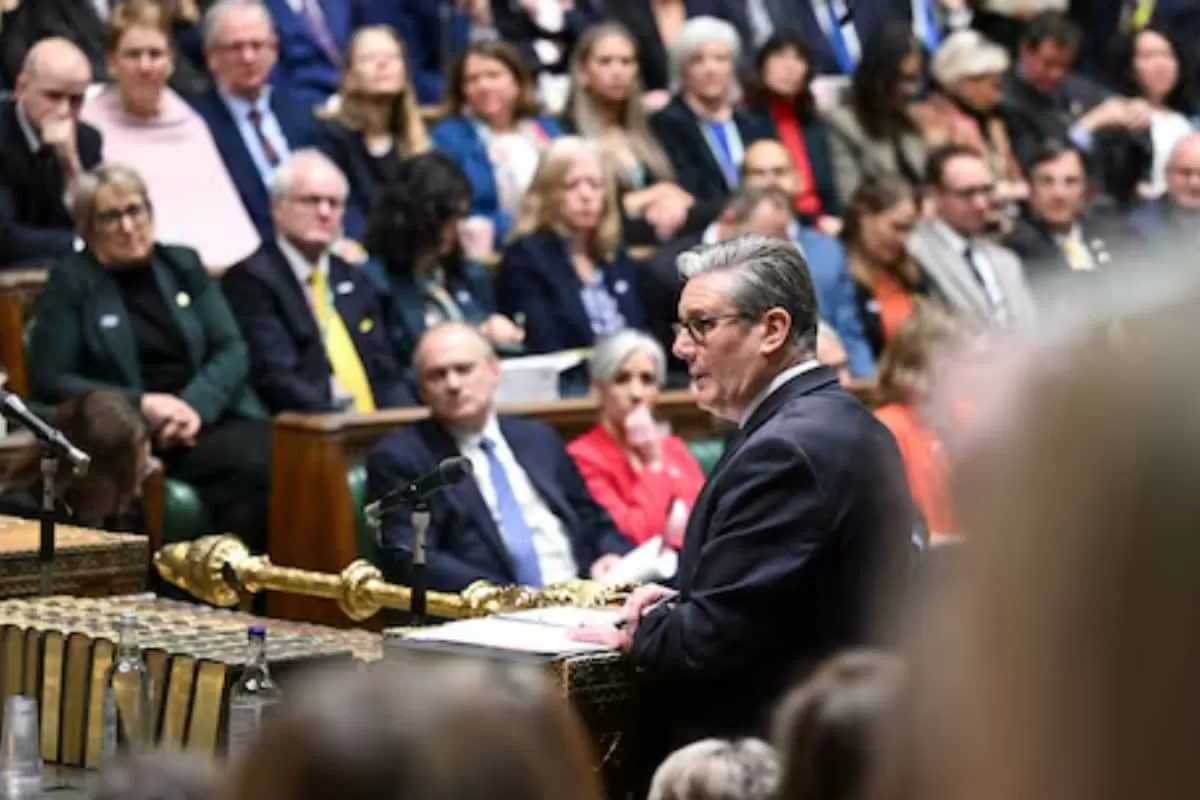
On Tuesday, UK Members of Parliament (MPs) gathered to debate the potential economic partnership between India and the UK, in the form of a Free Trade Agreement (FTA). The debate was triggered by Conservative MP Andrew Griffith, who referred to the trade deal as “soggy poppadoms”. However, Labour MP Chris Bryant was quick to defend the agreement, highlighting the support it has received from leading organizations such as HSBC and EY.
The debate on the India-UK FTA has been a topic of discussion for quite some time now. With both countries looking to strengthen their economic ties, the agreement holds great potential for boosting trade, investment, and job creation. However, there have been concerns raised by some MPs, including Andrew Griffith, about the impact of the FTA on the UK’s economy.
During the debate, Griffith referred to the trade agreement as “soggy poppadoms”, suggesting that it lacked substance and would not benefit the UK. However, Chris Bryant wasted no time in countering this statement by highlighting the positive impact the FTA would have on the UK’s economy. He cited the support of HSBC and EY, two of the world’s leading financial and professional services organizations, as a testament to the potential of the India-UK FTA.
Bryant further explained that the FTA would not only benefit the UK’s economy but also have a positive impact on the lives of its citizens. The agreement would lead to an increase in trade, creating numerous job opportunities and boosting economic growth. This would ultimately result in a better standard of living for the people of the UK.
The India-UK FTA has been in the works for some time now, with both countries keen to build a stronger economic partnership. India, with its growing economy and large consumer base, presents enormous opportunities for the UK. Similarly, the UK, with its advanced technology and expertise in various sectors, can provide valuable contributions to India’s development.
One of the main concerns raised by critics of the FTA is the potential impact on the UK’s agricultural sector. However, Bryant clarified that the agreement would not lead to a flood of cheap imports from India. In fact, the FTA includes measures to protect the UK’s agricultural industry, ensuring fair competition and trade.
Furthermore, the FTA would also pave the way for greater cooperation between the two countries in various sectors such as healthcare, education, and science and technology. This would not only benefit the two nations but also have a positive global impact, setting an example for other countries to follow.
The debate on the India-UK FTA has shed light on the potential benefits it holds for both countries. It is essential to acknowledge that the FTA is a mutually beneficial agreement, with both India and the UK set to gain from it. As Bryant rightly pointed out, it is a chance for both nations to move away from the constraints of the EU and forge a new, stronger partnership.
Moreover, with the current economic climate created by the COVID-19 pandemic, the India-UK FTA could not have come at a better time. It provides an opportunity for both countries to bounce back from the economic slowdown and set themselves on a path towards sustainable growth.
In conclusion, the India-UK FTA has the potential to be a game-changer for both countries. It is a chance for the UK to strengthen its economic ties with one of the world’s fastest-growing economies and for India to benefit from the UK’s expertise and advanced technology. The support of leading organizations such as HSBC and EY further highlights the positive impact this trade agreement could have. It is a step in the right direction, and as Bryant rightfully said, “the soggy poppadoms” will only lead to a more flavorful and successful partnership between India and the UK.