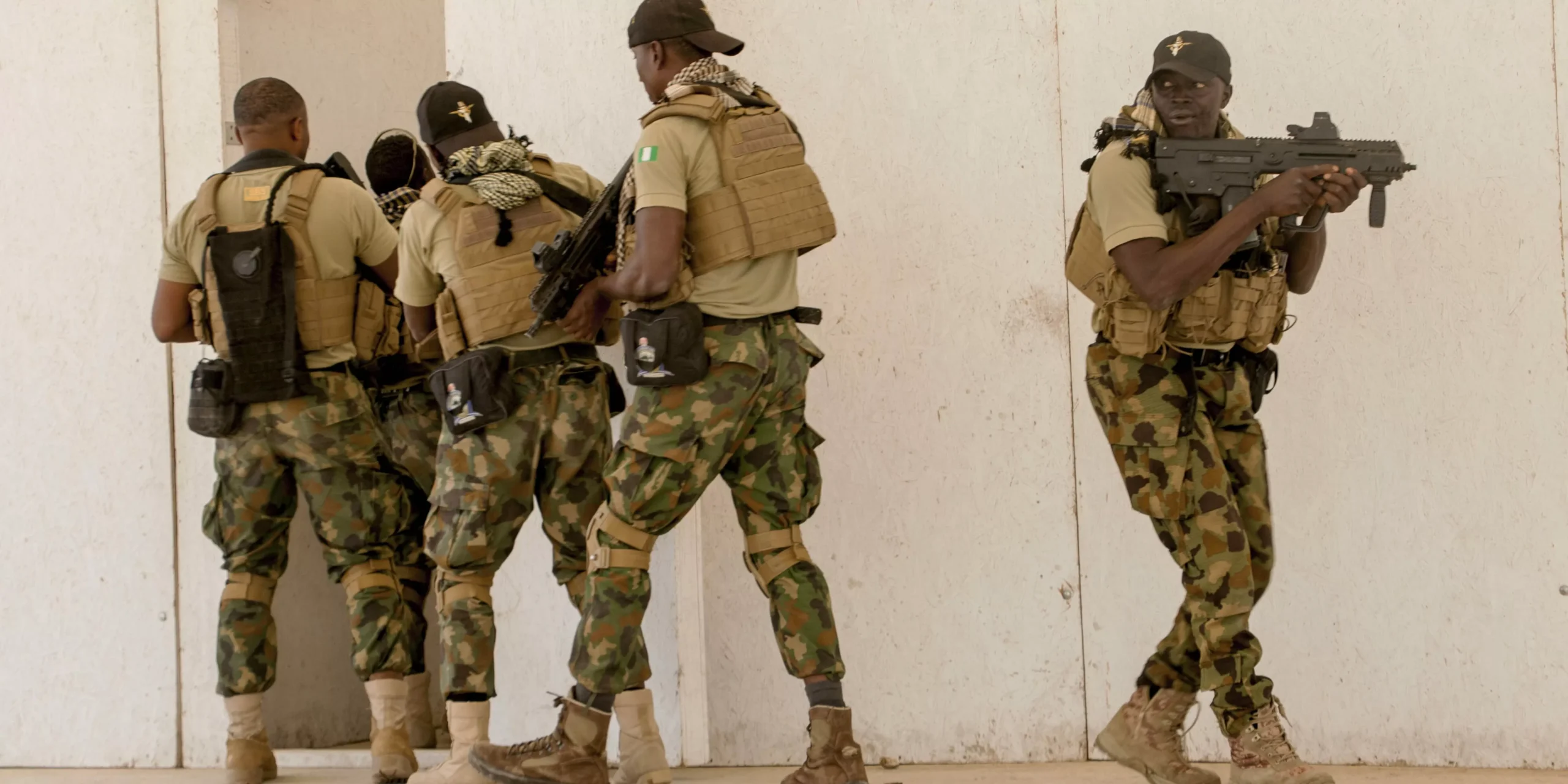
The Trump administration is doubling down on its military presence in Nigeria, despite growing concerns over the government’s human rights abuses and a recent spike in violence in the region.
In a move that has raised eyebrows and sparked criticism, the U.S. Department of Defense announced last Thursday that it will be sending more troops to Nigeria, citing a need to combat the threat of terrorism and protect American interests in the region.
This decision comes at a time when U.S. military presence in Nigeria has been under scrutiny for its potential role in fueling violence and human rights violations. The country has suffered from years of insurgency from the terrorist group Boko Haram and ongoing clashes between farmers and herders. But instead of addressing the root causes of these issues and supporting local efforts towards peace and stability, the U.S. has opted for a military strategy that has only exacerbated the situation.
Nigeria, a country rich in natural resources and economic potential, has long been a key partner for the U.S. in Africa. However, the U.S. has a history of prioritizing its own political and economic interests over the well-being of the Nigerian people. This has been most evident in the U.S. government’s support for corrupt and oppressive leaders in Nigeria, who have often been complicit in human rights abuses and have failed to address the economic and social issues facing the country.
The U.S. military presence in Nigeria has also been a contentious issue, with critics arguing that it has played a major role in the country’s ongoing struggles with violence and insecurity. Since the U.S. began training and equipping Nigerian security forces in 2014 under the auspices of the African Union’s counterterrorism mission, there has been a noticeable escalation in both the frequency and severity of attacks carried out by Boko Haram.
In April 2018, the Trump administration designated Nigeria as a “primary battlefield” in the global fight against terrorism and authorized the deployment of U.S. drones to gather intelligence and support Nigerian military operations. However, this has not led to any significant improvement in security and has instead resulted in an increase in civilian casualties and human rights abuses by Nigerian security forces.
Amidst this backdrop, the decision to send more troops to Nigeria is a cause for concern. It is a misguided and short-sighted approach that fails to address the underlying issues and will likely only result in more violence and instability in the region.
The U.S. should instead focus on supporting sustainable and inclusive solutions that address the root causes of conflict in Nigeria. This means investing in economic development, promoting good governance and human rights, and empowering local communities to take charge of their own security.
The U.S. can also leverage its influence to pressure the Nigerian government to address the issues of corruption and marginalization that have fueled the rise of Boko Haram and other insurgent groups. This could involve conditioning military aid and support on the government’s commitment to human rights and accountability, as well as working with civil society organizations to promote dialogue and reconciliation among different groups in Nigeria.
Moreover, bringing an end to the U.S.’s militaristic approach in Nigeria would also be in the best interest of American taxpayers. Sending troops and equipment to a country thousands of miles away is an expensive undertaking and has not yielded the desired results. Instead, it has only served to further entrench the U.S. military-industrial complex and perpetuate the cycle of violence in Nigeria.
The U.S. government must recognize that military interventions alone cannot bring stability and security to a country. Only by addressing the underlying issues and supporting local efforts towards peace and development can lasting peace be achieved in Nigeria.
In conclusion, the decision to send more troops to Nigeria is a concerning and counterproductive move by the Trump administration. It is imperative that the U.S. shifts its approach and prioritizes supporting sustainable and inclusive solutions that address the root causes of conflict in Nigeria. The future of Nigeria and the well-being of its people must be paramount, not the U.S.’s own political and economic interests.