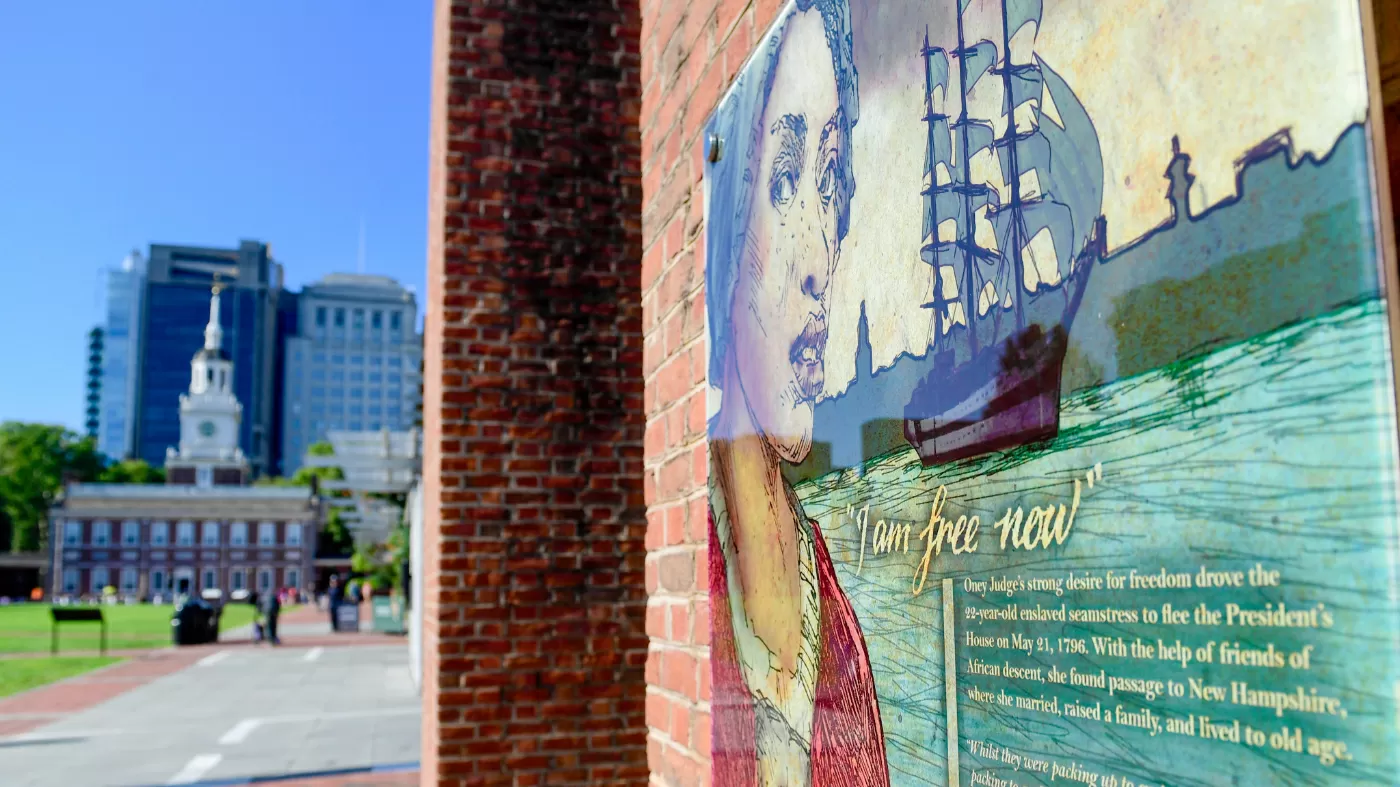
A significant piece of history has been restored in Philadelphia as the National Park Service (NPS) has brought back the slavery exhibit at the historic President’s House. This comes after a federal judge, Cynthia Rufe, ordered the agency to restore the exhibit by Friday, following its removal of “historic truths” from the site.
The President’s House, located in Independence National Historical Park, was once the home of George Washington and John Adams during their presidencies. However, it is also a site that holds a dark history of slavery. The exhibit, which was first installed in 2010, aimed to shed light on the nine enslaved Africans who lived and worked at the President’s House in the late 1700s.
The decision to remove the exhibit in 2019 sparked outrage and protests from the community, as it was seen as an erasure of an important part of American history. The NPS claimed that the exhibit was removed due to structural issues and that it would be reinstalled at a later date. However, this delay prompted a lawsuit from the city and community groups, resulting in Judge Rufe’s ruling.
The restoration of the slavery exhibit is a significant victory for those who have fought to preserve this important piece of history. It serves as a reminder of the struggles and sacrifices of the enslaved Africans who were forced to live and work in the President’s House. It also highlights the complexity of the founding of our nation and the role that slavery played in it.
The exhibit features a video installation that tells the stories of the nine enslaved individuals, including Oney Judge, who escaped from the President’s House and lived as a fugitive for the rest of her life. It also includes interactive displays and artifacts that provide a glimpse into the daily lives of the enslaved Africans.
The restoration of the exhibit is not only a victory for the community but also a step towards acknowledging and confronting the uncomfortable truths of our nation’s past. As Judge Rufe stated in her ruling, “The President’s House is a place of historical significance, and it is important that the public have access to the full history of the site.”
The NPS has also committed to creating a permanent exhibit at the President’s House, which will include the stories of both the enslaved Africans and the presidents who lived there. This will provide a more comprehensive and accurate representation of the site’s history.
The restoration of the slavery exhibit at the President’s House is a reminder that our nation’s history is not always easy to confront, but it is necessary to do so in order to move forward. It is a testament to the power of community activism and the importance of preserving and sharing all aspects of our history.
The exhibit serves as a powerful educational tool, especially for younger generations, to learn about the realities of slavery and its impact on our country. It also serves as a tribute to the resilience and strength of the enslaved Africans who were able to persevere and leave a lasting impact on our nation’s history.
In conclusion, the restoration of the slavery exhibit at the President’s House is a significant step towards acknowledging and preserving an important part of American history. It is a reminder that the truth, no matter how uncomfortable, must be told and that we must continue to learn from our past in order to create a better future. Let us celebrate this victory and continue to strive towards a more inclusive and truthful representation of our nation’s history.