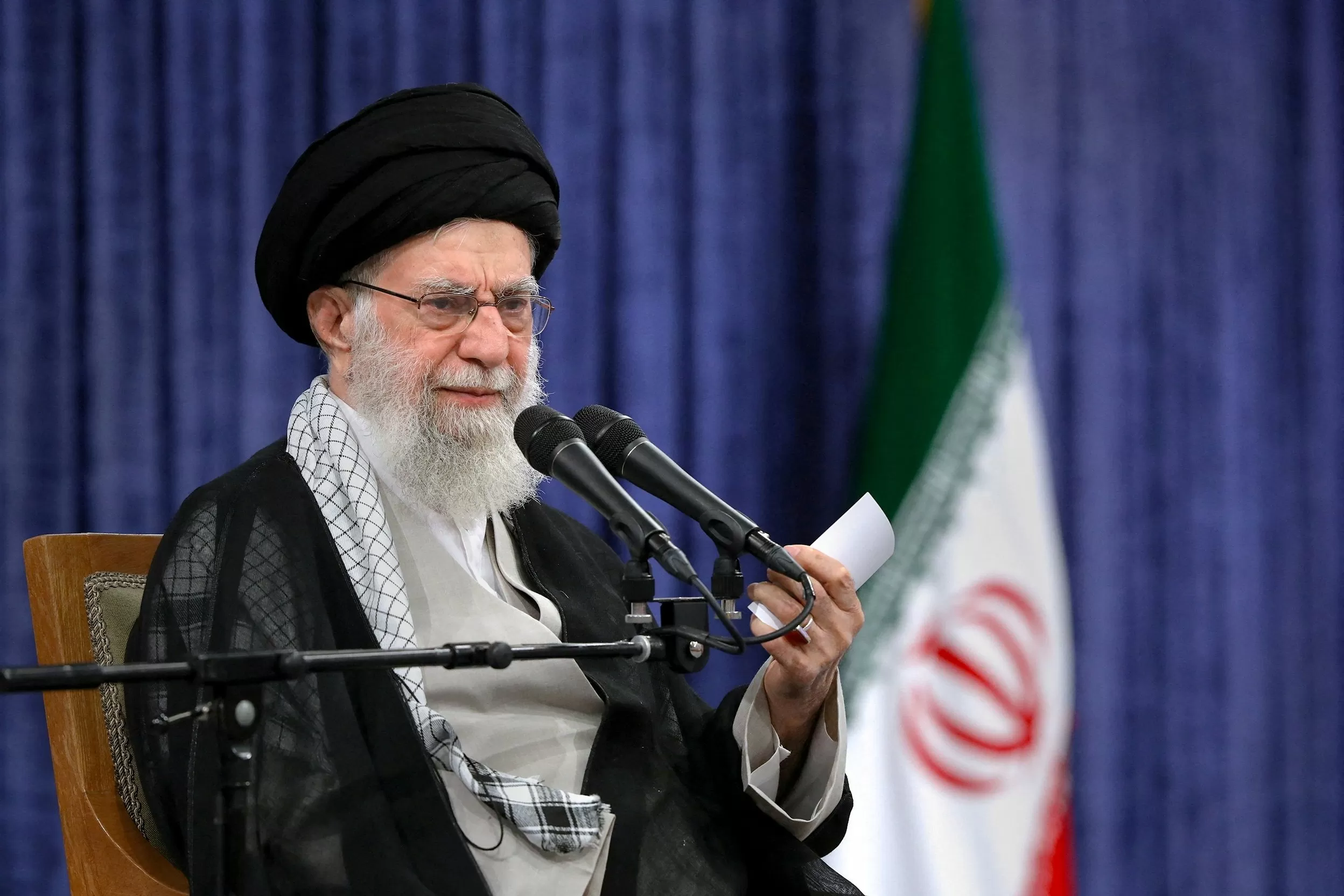
Iran’s Supreme Leader Ayatollah Ali Khamenei has once again reaffirmed his commitment to protecting his country’s national interests by rejecting a recent U.S. proposal for a nuclear deal. The decision, made on Wednesday, has deepened the ongoing standoff between Tehran and Washington.
In a televised speech, Ayatollah Khamenei stated that the U.S. proposal was not in line with Iran’s national interests and would not be accepted. He also emphasized that Iran would not be pressured into accepting any deal that goes against its sovereignty and security.
This strong stance by the Supreme Leader comes as no surprise, as Iran has consistently maintained its position of not negotiating with the United States until all sanctions imposed on the country are lifted. The U.S. proposal, which was presented by Secretary of State Antony Blinken, was seen as a way to revive the 2015 nuclear deal that was abandoned by the U.S. in 2018.
However, Ayatollah Khamenei’s rejection of the proposal sends a clear message that Iran will not be swayed by external pressure and will only engage in negotiations that are beneficial to the country. This decision has been met with support from the Iranian people, who have long suffered under the weight of crippling sanctions imposed by the U.S.
The Supreme Leader’s rejection of the U.S. proposal also highlights the unity and strength of Iran’s leadership in the face of external threats. Despite facing immense pressure and attempts at destabilization, Iran’s leaders have remained steadfast in their commitment to protecting the country’s national interests.
Furthermore, Ayatollah Khamenei’s decision serves as a reminder to the international community that Iran will not be dictated to or bullied into accepting deals that do not serve its best interests. This is a clear indication that Iran will continue to stand up for its rights and will not bow down to any external pressure.
The U.S. proposal has been met with skepticism by many in Iran, who see it as a ploy to gain control over the country’s nuclear program. The 2015 nuclear deal, also known as the Joint Comprehensive Plan of Action (JCPOA), was seen as a major victory for Iran, as it lifted sanctions in exchange for limitations on its nuclear activities.
However, the U.S.’s withdrawal from the deal and the subsequent re-imposition of sanctions have caused great harm to Iran’s economy and its people. The U.S. proposal, which offers limited sanctions relief, falls far short of what Iran needs to fully recover from the damage caused by the previous administration.
In his speech, Ayatollah Khamenei also addressed the issue of Iran’s nuclear program, stating that the country has no intention of developing nuclear weapons and that its nuclear activities are solely for peaceful purposes. This reaffirms Iran’s commitment to the Non-Proliferation Treaty and its stance against weapons of mass destruction.
The Supreme Leader’s rejection of the U.S. proposal is a clear indication that Iran will not compromise on its principles and will continue to defend its sovereignty and national interests. It also sends a strong message to the U.S. and other countries that Iran will not be used as a bargaining chip in political games.
In conclusion, Ayatollah Khamenei’s rejection of the U.S. proposal for a nuclear deal is a bold and principled decision that reflects the strength and unity of Iran’s leadership. It serves as a reminder that Iran will not be swayed by external pressure and will only engage in negotiations that are beneficial to the country. The Iranian people stand behind their leaders in this decision, and it is a testament to their unwavering determination to protect their country’s national interests.