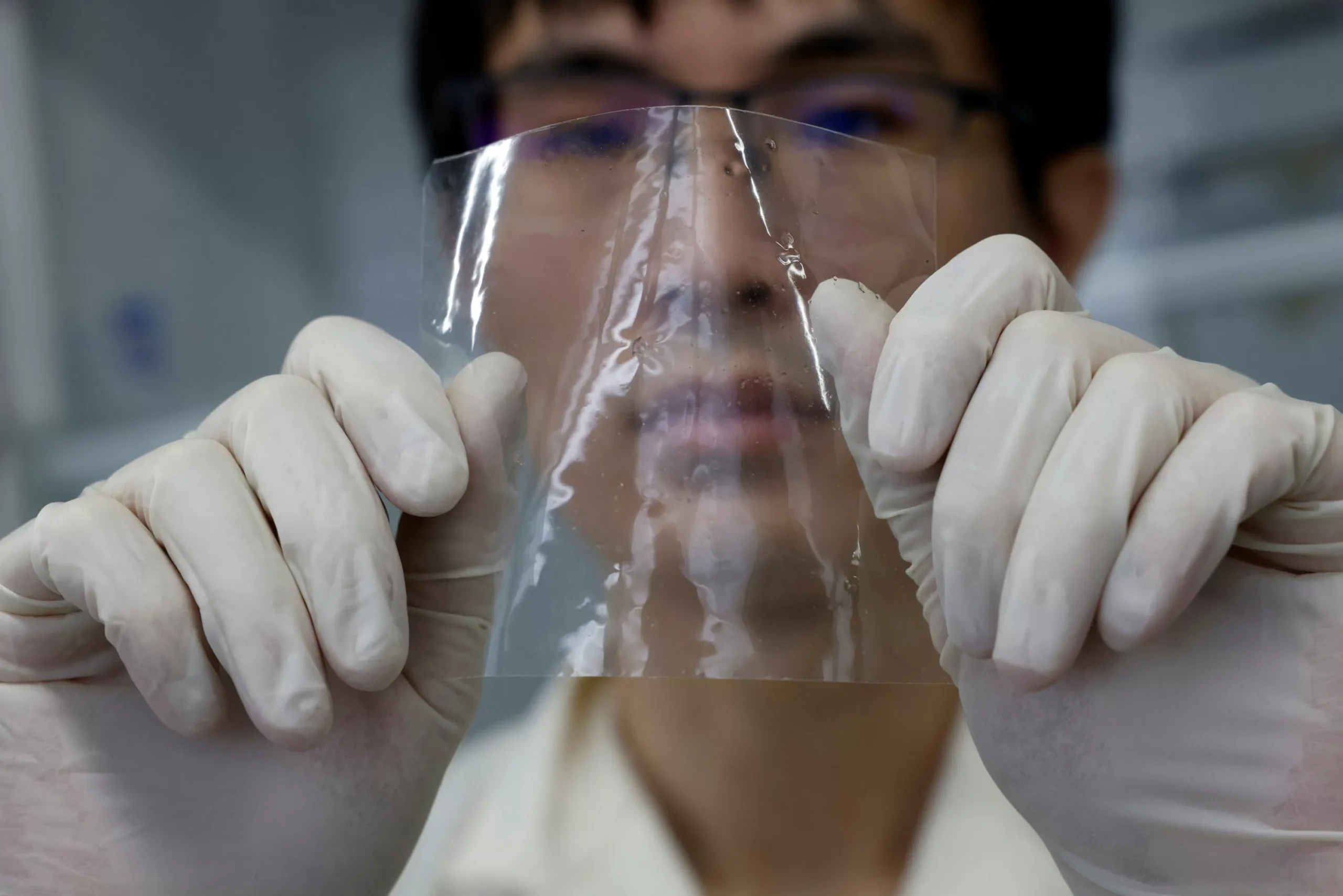
Researchers in Japan have made a groundbreaking discovery in the fight against ocean pollution. A team of scientists from the University of Kyoto have developed a new type of plastic that dissolves in seawater within hours, offering a potential solution to the modern-day scourge that is harming our oceans and wildlife.
Plastic pollution has become a major environmental issue in recent years, with an estimated 8 million tons of plastic waste entering our oceans every year. This not only poses a threat to marine life, but also to human health as microplastics make their way into our food chain. The need for a sustainable solution to this problem has never been more urgent.
The new plastic, called “sea plastic”, is made from a combination of starch and cellulose, making it completely biodegradable. Unlike traditional plastics that can take hundreds of years to decompose, sea plastic breaks down into natural components that are harmless to the environment. This means that even if it ends up in the ocean, it will not harm marine life or contribute to the growing problem of plastic pollution.
What makes this discovery even more remarkable is that the plastic dissolves in seawater within hours, making it a game-changer in the fight against ocean pollution. This means that even if it is accidentally or intentionally discarded in the ocean, it will not have a lasting impact on the marine ecosystem. This is a significant step towards a cleaner and healthier ocean for future generations.
The team of researchers behind this breakthrough spent years developing and testing the sea plastic, ensuring that it meets all the necessary safety and environmental standards. They have also made the formula for the plastic available to other companies, encouraging widespread adoption and use of this eco-friendly alternative.
The potential uses for sea plastic are endless. It can be used to make a wide range of products, from single-use items like straws and cutlery to more durable items like packaging materials and even clothing. This means that not only will it help reduce plastic pollution in our oceans, but it also has the potential to reduce our overall plastic consumption.
The development of sea plastic is a significant step towards a more sustainable future. It not only addresses the issue of plastic pollution, but it also promotes a circular economy where waste is minimized and resources are reused. This aligns with the United Nations’ Sustainable Development Goals, specifically Goal 14 which aims to conserve and sustainably use the oceans, seas, and marine resources.
The potential impact of this discovery cannot be overstated. It has the power to transform the way we think about and use plastic, and to make a positive impact on our environment. The team of researchers in Japan should be commended for their dedication and hard work in developing this innovative solution.
However, the responsibility does not solely lie with scientists and researchers. As individuals, we also have a role to play in reducing plastic pollution. We can start by making small changes in our daily lives, such as using reusable bags and water bottles, and properly disposing of our waste. By making conscious choices, we can collectively make a big difference in protecting our oceans and the creatures that call it home.
In conclusion, the development of sea plastic by researchers in Japan is a significant step towards a cleaner and healthier ocean. It offers a sustainable solution to the problem of plastic pollution and has the potential to make a positive impact on our environment. Let us all do our part in supporting this innovation and work towards a more sustainable future for our planet.