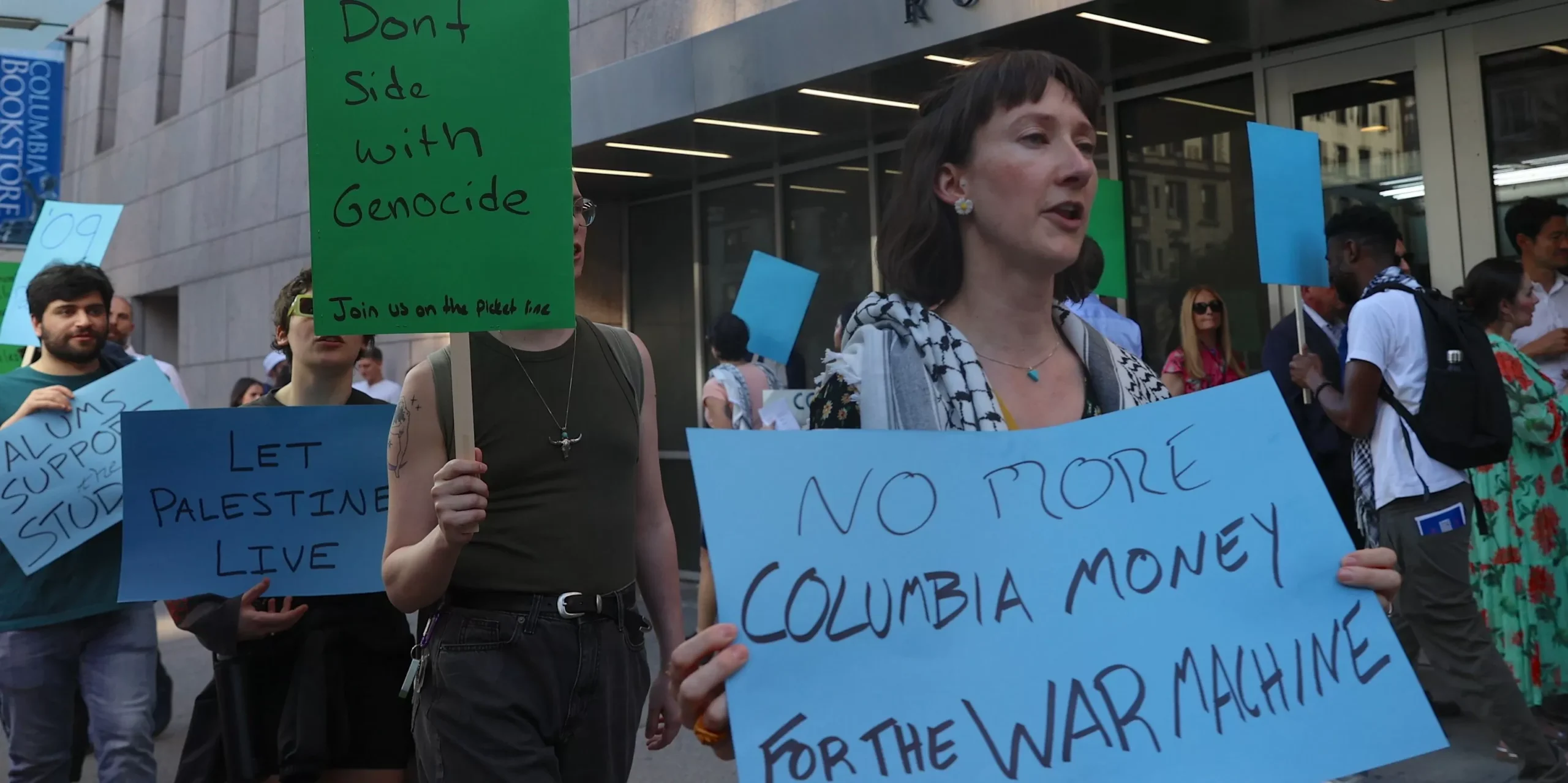
New court documents have shed light on the recent controversy surrounding the Federal Bureau of Investigation’s (FBI) attempt to unmask the identities of Columbia University students involved in protests. The documents reveal how the feds sought a warrant to search the Instagram accounts of these students, but were ultimately blocked by federal judges on First Amendment grounds.
The Intercept, a renowned online news publication, has obtained these court documents and has reported on the details of the case. The documents show that the FBI was investigating a series of protests that took place at Columbia University in 2017. These protests were in response to a speech given by controversial right-wing speaker, Mike Cernovich.
During the protests, a group of students had their faces covered with bandanas and were holding signs that read “No Cernovich, No Fascism.” The FBI became interested in these students and their activities, and sought a warrant to search their Instagram accounts in order to identify them.
However, the federal judges who reviewed the warrant application were not convinced. They believed that the warrant was a violation of the students’ First Amendment rights to free speech and assembly. The judges argued that the students had a right to express their opinions and participate in peaceful protests without fear of government surveillance.
This decision by the federal judges is a significant victory for the students and their right to protest. It sets a precedent for future cases where the government may try to use social media as a means of identifying and tracking individuals involved in protests.
The Intercept’s report also highlights the concerns raised by civil liberties advocates regarding the FBI’s actions. They argue that the government’s attempt to unmask the identities of these students is a form of intimidation and could have a chilling effect on free speech and peaceful assembly.
The court documents also reveal that the FBI had been monitoring the students’ social media activity prior to the protests. This raises questions about the extent of government surveillance on individuals and their online activities.
The Intercept’s report has sparked a debate on the balance between national security and individual rights. While the government has a responsibility to protect its citizens, it must also respect their constitutional rights. The court’s decision to block the warrant shows that the judiciary is committed to upholding these rights and ensuring that they are not violated.
The case has also brought attention to the role of social media in modern-day protests. With the rise of platforms like Instagram, protesters have found new ways to organize and express their views. However, this also means that their online activities are vulnerable to government surveillance.
In response to the court’s decision, the FBI has stated that it will continue to investigate the protests and the individuals involved. However, it is clear that the agency will have to find alternative means of gathering evidence without violating the students’ First Amendment rights.
The Intercept’s report has shed light on an important issue and has sparked a much-needed conversation on the protection of civil liberties in the digital age. It serves as a reminder that the government must always respect the rights of its citizens, even in the pursuit of national security.
The students involved in the protests at Columbia University have shown great courage in standing up for their beliefs and exercising their right to protest. Their actions have not only sparked a national conversation, but also set a precedent for protecting the rights of individuals to peacefully express their opinions.
In conclusion, the court’s decision to block the FBI’s warrant to search the Instagram accounts of Columbia University students is a victory for free speech and assembly. It sends a strong message that the government cannot use social media as a means of surveillance and intimidation. The case serves as a reminder that the protection of civil liberties is crucial in maintaining a free and democratic society.