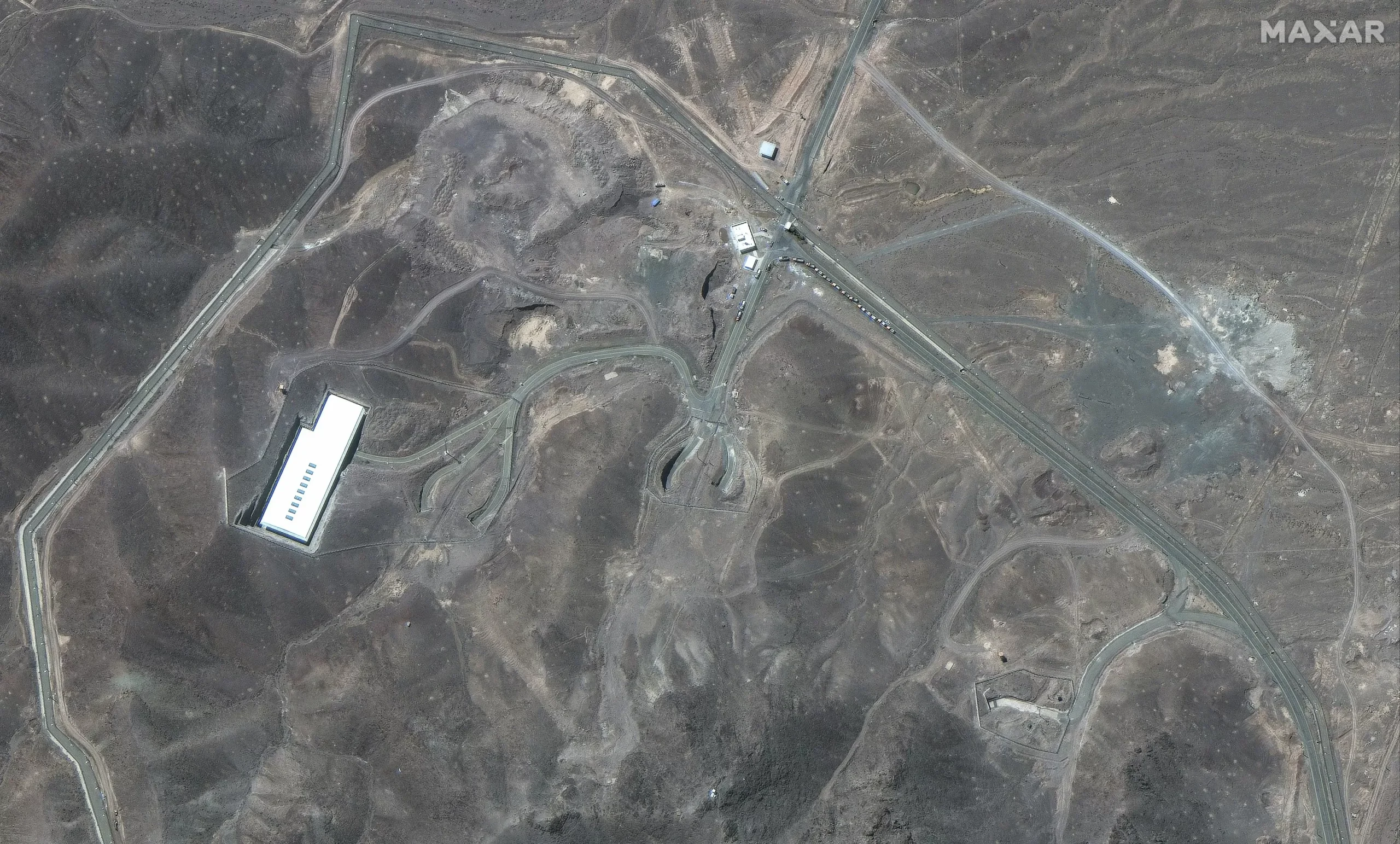
The United States has officially joined Israel’s war on Iran, as President Donald Trump announced on Sunday that the U.S. airstrikes had successfully “totally obliterated” Iran’s main nuclear sites. This marks a significant turning point in the ongoing conflict between the two nations, and has sparked both praise and criticism from around the world.
The airstrikes, which were carried out in the early hours of Sunday morning, targeted several key nuclear facilities in Iran, including the Natanz uranium enrichment plant and the Fordow nuclear facility. According to President Trump, these strikes were necessary to prevent Iran from developing nuclear weapons, which he has repeatedly stated is a threat to both the U.S. and its allies.
The decision to join Israel’s war on Iran was not taken lightly by the U.S. government. It came after months of escalating tensions between the two countries, with Iran’s continued development of its nuclear program and its aggressive actions in the region causing concern for the U.S. and its allies. The U.S. had previously imposed strict economic sanctions on Iran in an attempt to curb its nuclear ambitions, but these measures were deemed insufficient by President Trump.
In his address to the nation, President Trump made it clear that the U.S. would not stand idly by while Iran posed a threat to global security. He stated, “We cannot allow Iran to develop nuclear weapons. It is a danger not only to the United States, but to the entire world. We have a responsibility to protect our citizens and our allies, and we will not hesitate to take action when necessary.”
The U.S. airstrikes have been met with both praise and criticism from the international community. Israel, a long-time ally of the U.S., has welcomed the move and expressed its gratitude for the support in its ongoing conflict with Iran. Israeli Prime Minister Benjamin Netanyahu stated, “We thank President Trump and the U.S. for their strong and decisive action against Iran. This sends a clear message that the U.S. stands with Israel in our fight against the Iranian threat.”
On the other hand, Iran and its allies have condemned the U.S. airstrikes, calling them a violation of international law and an act of aggression. Iranian Foreign Minister Javad Zarif stated, “The U.S. has once again shown its disregard for international law and its commitment to bullying and aggression. We will not back down in the face of such actions and will continue to defend our sovereignty and our right to develop nuclear technology for peaceful purposes.”
The U.S. has also faced criticism from some of its own citizens, who are concerned about the potential consequences of joining Israel’s war on Iran. However, President Trump has assured the American people that all necessary precautions have been taken to ensure the safety of both U.S. troops and civilians.
The decision to join Israel’s war on Iran has also raised questions about the future of the U.S.’s relationship with other countries in the region, particularly Iran’s neighbor and U.S. ally, Iraq. The Iraqi government has expressed its concern over the U.S. airstrikes, stating that it was not consulted before the attack and that it could have negative consequences for the region.
Despite these concerns, the U.S. remains committed to its goal of preventing Iran from obtaining nuclear weapons. President Trump has made it clear that the U.S. will continue to take whatever action is necessary to protect its citizens and its allies from the threat posed by Iran.
In conclusion, the U.S.’s decision to join Israel’s war on Iran marks a significant moment in the ongoing conflict between the two nations. While it has been met with both praise and criticism, the U.S. remains steadfast in its commitment to preventing Iran from developing nuclear weapons. As the situation continues to unfold, the world will be watching closely to see how this latest development will impact the already tense relationship between the U.S. and Iran.