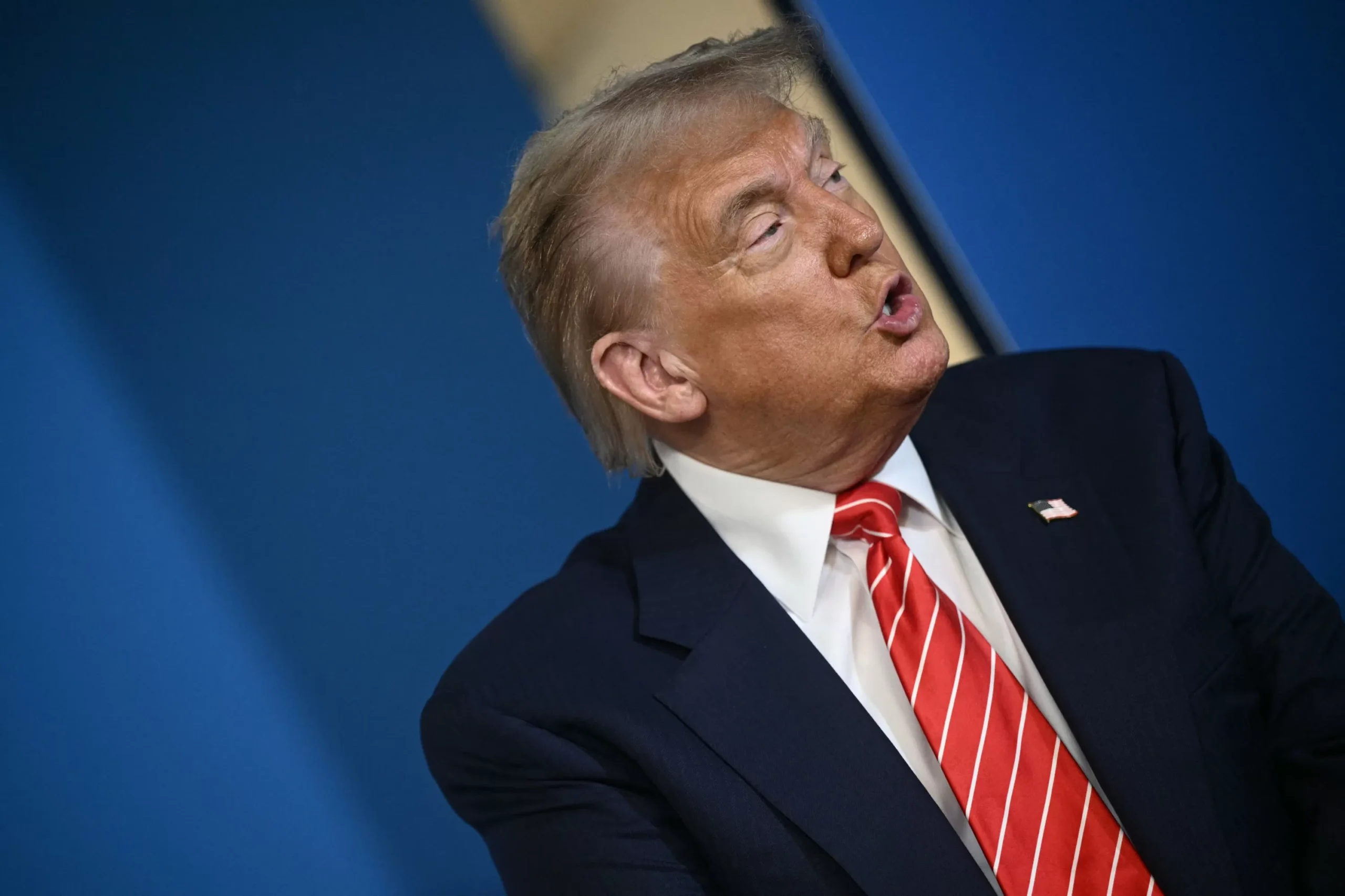
U.S. President Donald Trump recently made headlines when he compared the recent strikes on Iranian nuclear facilities to the end of World War II. In a press conference on Wednesday, Trump claimed that these strikes caused massive damage despite inconclusive evidence. This statement has caused quite a stir among political analysts and the general public, with many questioning the accuracy and implications of Trump’s comparison.
According to Trump, the strikes on Iranian nuclear facilities were a major victory for the United States and its allies, just like the end of World War II. He claimed that the strikes were successful in crippling Iran’s nuclear program, thereby preventing them from developing nuclear weapons. He also emphasized the importance of these strikes in deterring other countries from pursuing nuclear weapons and promoting peace and stability in the region.
However, many experts have raised concerns about the validity of Trump’s comparison. For one, the end of World War II marked the defeat of Nazi Germany and the Axis powers, which had been aggressors in the war and posed a real threat to the world at the time. On the other hand, the strikes on Iranian nuclear facilities were a preemptive strike against a country that has not attacked the United States or its allies. Moreover, there is still a lack of concrete evidence to support Trump’s claims about the extent of the damage caused by the strikes.
Despite these criticisms, Trump remains adamant about the success of the strikes. He praised the military leaders and intelligence agencies involved, applauding them for their strategic planning and execution. He also thanked other world leaders who have shown support for the U.S. in this matter, and vowed to continue his efforts in promoting global peace and security.
Critics have also argued that Trump’s reference to the end of World War II is a dangerous comparison, as it may imply that the U.S. is on the brink of entering into another major conflict. They fear that such rhetoric may escalate tensions with Iran and other countries, and potentially lead to further violence and instability in the region.
Trump, however, remains undeterred and stands by his statement. He believes that the comparison is justified because of the major impact it will have on the future of nuclear proliferation. By preventing Iran from obtaining nuclear weapons, the U.S. has taken a major step towards creating a safer and more stable world for everyone.
It is important to note that the world is currently facing numerous global issues, including the COVID-19 pandemic, economic instability, and political tensions. In this context, it is essential to prioritize diplomacy and cooperation over aggressive actions and rhetoric. While the strikes on Iranian nuclear facilities may have been necessary in the eyes of some, it is crucial that they do not escalate into further conflict.
Instead, Trump should focus on building diplomatic relationships and finding peaceful solutions to global issues. As a leader of one of the most powerful countries in the world, it is his responsibility to promote peace and stability, not to incite fear and violence.
In conclusion, President Trump’s comparison of the recent strikes on Iranian nuclear facilities to the end of World War II has sparked controversy and debate. While some may view the strikes as a major victory, others question the accuracy and implications of this comparison. It is crucial for leaders to prioritize diplomacy and cooperation in tackling global issues and avoiding further conflict. Let us hope that Trump and other world leaders continue to tread carefully in these uncertain times and work towards creating a peaceful and stable world for all.