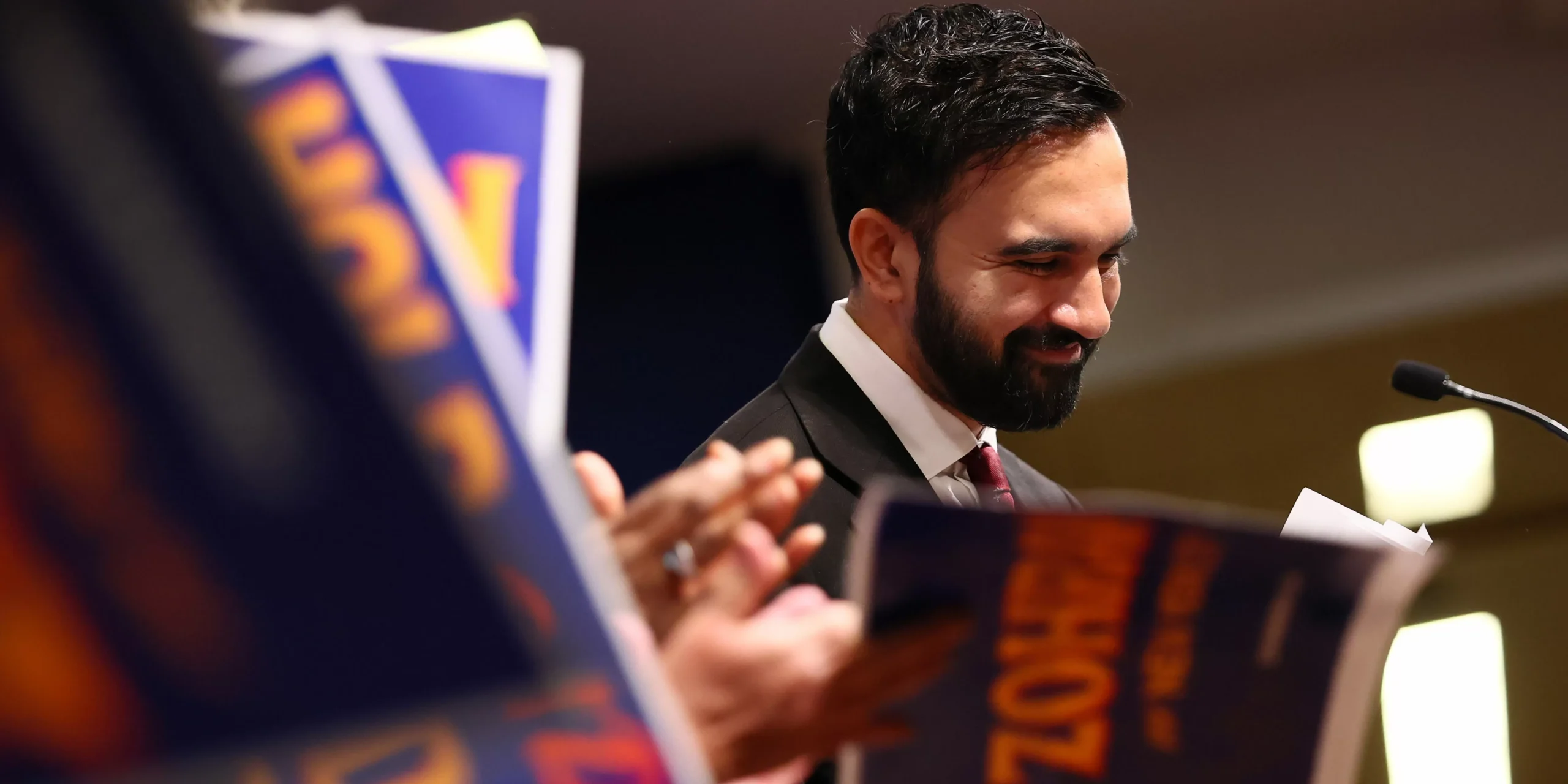
In a recent interview with The Intercept, Zohran Mamdani, a newly elected Democratic state assemblyman in New York, made a bold statement that has sparked controversy and debate. Mamdani, who is of Ugandan and Indian descent, refused to back down on his use of the phrase “globalize the intifada” in a tweet, despite facing backlash from pro-Israel groups and fellow Democrats. This move by Mamdani has not only shown his unwavering commitment to his beliefs, but also rejected a long-standing tradition of demonizing the Arabic language.
For those unfamiliar with the term, “intifada” is an Arabic word that translates to “uprising” or “resistance.” It has been used to describe the Palestinian struggle against Israeli occupation and oppression. The phrase “globalize the intifada” was first coined by Palestinian activist and scholar, Dr. Hatem Bazian, in 2001. It calls for international solidarity and support for the Palestinian cause, and has been used by activists and scholars alike to highlight the interconnectedness of struggles against oppression and injustice around the world.
However, the phrase has been met with criticism and condemnation by pro-Israel groups, who have labeled it as anti-Semitic and inciting violence. This is not a new tactic, as the Arabic language and its symbols have long been demonized and associated with terrorism and extremism in Western media and politics. This demonization has not only perpetuated harmful stereotypes, but also silenced and marginalized the voices of those who use the language to express their struggles and resistance.
Mamdani’s refusal to capitulate on the use of this phrase is a powerful statement against this demonization. By standing firm in his beliefs and not succumbing to pressure, he has shown that he will not be silenced or intimidated. This is a refreshing change from the usual political rhetoric, where politicians often backtrack or apologize for their statements in order to appease certain groups or maintain their image.
Moreover, Mamdani’s stance has also exposed the hypocrisy of the Democratic Party, which prides itself on being progressive and inclusive. Despite this, the party has a long history of silencing and marginalizing voices that challenge the status quo, especially when it comes to issues related to Palestine and the Middle East. Mamdani’s refusal to back down has shown that the party still has a long way to go in truly embracing diversity and inclusivity.
In a time where the Palestinian struggle is often ignored or misrepresented in mainstream media and politics, Mamdani’s use of the phrase “globalize the intifada” has sparked much-needed conversations and debates. It has also brought attention to the ongoing human rights violations and injustices faced by Palestinians, and the need for international solidarity and support.
Mamdani’s bold stance has not only shown Democrats how not to take the bait, but also how to stand up for what they believe in and challenge the status quo. It is a reminder that in order to bring about real change and progress, we must be willing to challenge and question the dominant narratives and systems of oppression. And by rejecting the demonization of the Arabic language, Mamdani has taken a step towards creating a more inclusive and just society for all.