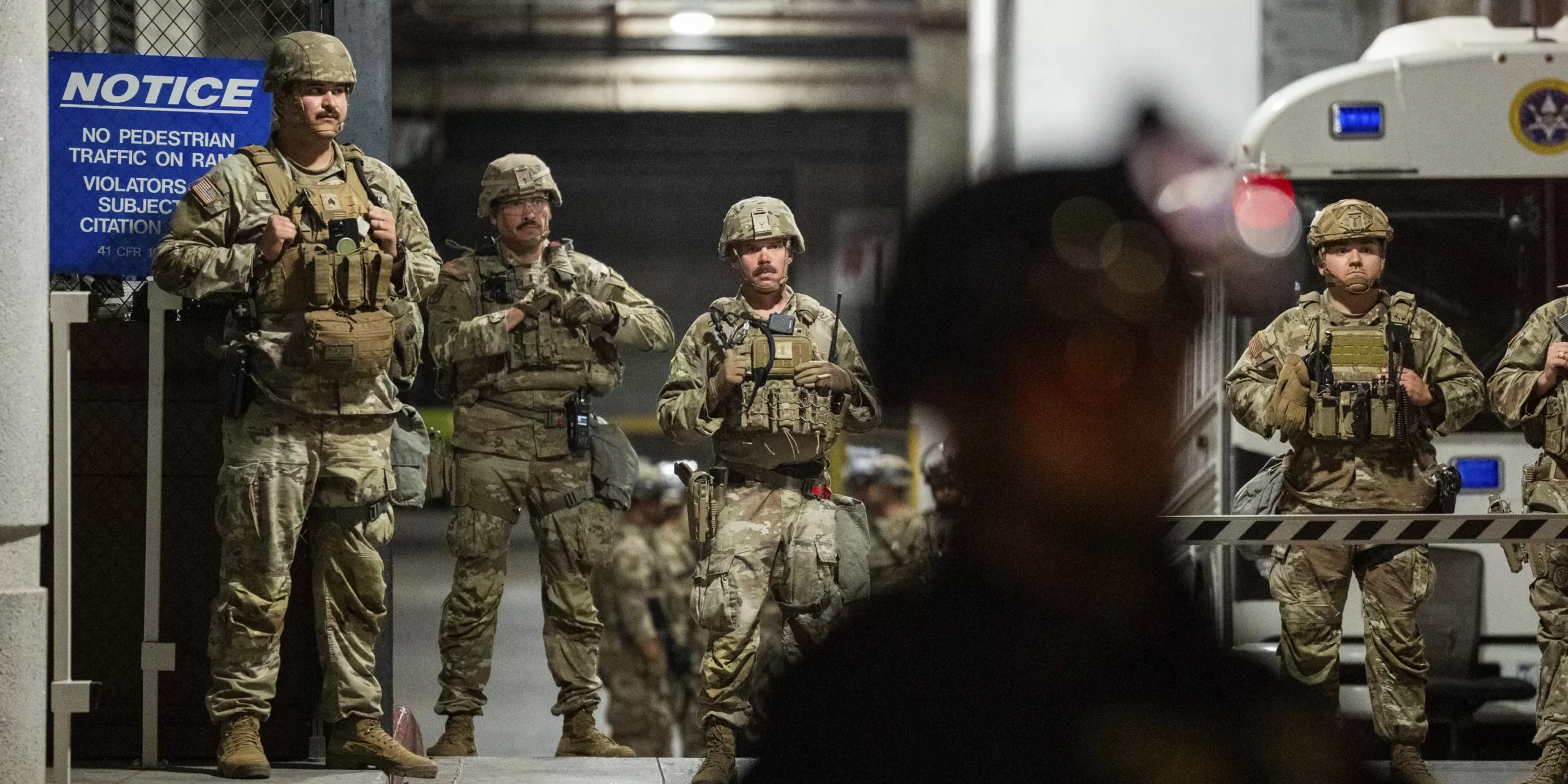
In a recent move by the Trump administration, the National Guard has been deployed to immigration facilities in 20 states to assist with paperwork for Immigration and Customs Enforcement (ICE). This decision has sparked controversy and raised concerns about the blurring line between military and law enforcement.
The deployment of the National Guard to immigration facilities is a clear indication of the Trump administration’s aggressive stance on immigration. This move not only sends a message of hostility towards immigrants, but it also raises questions about the role of the military in domestic affairs.
The National Guard is a reserve military force that is primarily used for domestic emergencies and natural disasters. Their role is to provide support to local law enforcement agencies and assist in maintaining public order. However, the recent deployment of the National Guard to immigration facilities goes beyond their intended purpose and raises concerns about the militarization of immigration enforcement.
The decision to deploy the National Guard to immigration facilities is a direct result of the Trump administration’s zero-tolerance policy on immigration. This policy has led to a surge in the number of immigrants being detained and has put a strain on the already overwhelmed immigration system. As a result, ICE has been struggling to keep up with the paperwork and processing of these detainees.
In an attempt to alleviate this burden, the Trump administration has turned to the National Guard for assistance. However, this move has been met with criticism from both sides of the political spectrum. Many argue that the National Guard’s role should be limited to national emergencies and natural disasters, and that involving them in immigration enforcement blurs the line between military and law enforcement.
Furthermore, the deployment of the National Guard to immigration facilities raises concerns about the treatment of immigrants. The National Guard is not trained in immigration law or procedures, and their involvement in the processing of detainees could lead to mistakes and violations of their rights. This is especially concerning given the reports of inhumane conditions and mistreatment of immigrants in detention centers.
The decision to deploy the National Guard to immigration facilities also has financial implications. The cost of mobilizing the National Guard for this purpose is estimated to be in the millions, which raises questions about the allocation of resources and the effectiveness of this approach. Instead of addressing the root causes of the immigration crisis, the Trump administration is using the military as a band-aid solution, which could have long-term consequences.
Moreover, the deployment of the National Guard to immigration facilities sends a message of hostility towards immigrants. It reinforces the narrative that immigrants are a threat to national security and need to be dealt with using military force. This is not only harmful to the immigrant community, but it also goes against the values of a country built by immigrants.
In conclusion, the deployment of the National Guard to immigration facilities is a concerning development that blurs the line between military and law enforcement. It raises questions about the role of the military in domestic affairs and the treatment of immigrants. Instead of addressing the root causes of the immigration crisis, the Trump administration is using the military as a quick fix, which could have long-term consequences. It is time for our leaders to find humane and effective solutions to the immigration issue, rather than resorting to militarization and fear-mongering.