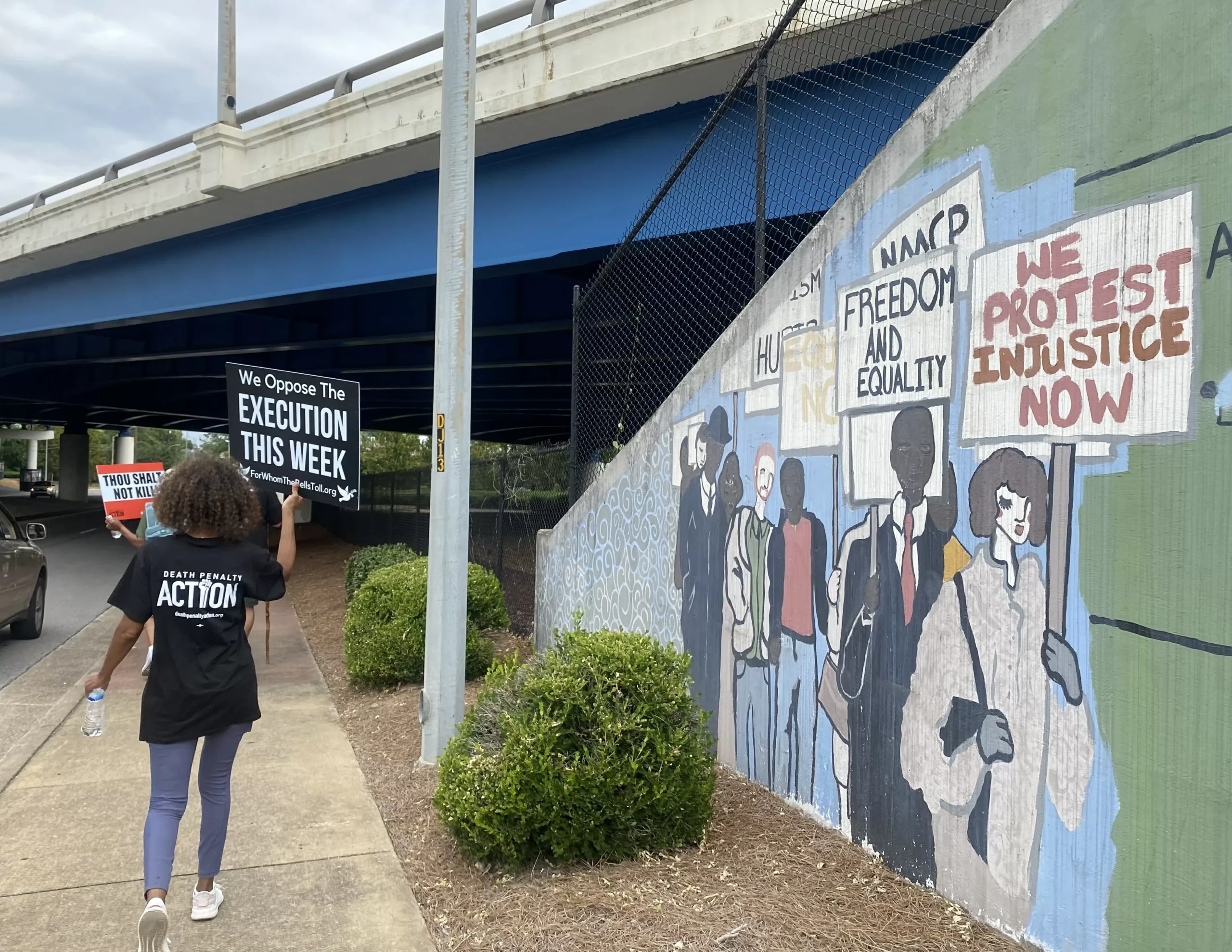
Decades after being sentenced to death row, Byron Black, a man with an intellectual disability, is still fighting for his life. Despite the admission from Nashville prosecutors that he should not be executed, the state of Tennessee is still planning to carry out his execution. This case highlights the flaws in the justice system and the urgent need for reform.
Byron Black was convicted of murder in 1988 and has been on death row for over 30 years. However, new evidence has emerged that shows Black has an intellectual disability, which should have excluded him from the death penalty. The Supreme Court has ruled that it is unconstitutional to execute individuals with intellectual disabilities, as it goes against the Eighth Amendment’s prohibition of cruel and unusual punishment.
Despite this ruling, Tennessee is still determined to execute Black. This decision is not only a violation of the Constitution but also a blatant disregard for human rights. It is a clear example of the flaws in the justice system, where individuals with disabilities are not given the same protections as others.
The case of Byron Black is not an isolated incident. In fact, it is just one of many cases where individuals with intellectual disabilities have been wrongfully sentenced to death. According to the American Bar Association, at least 30 individuals with intellectual disabilities have been executed in the United States since the reinstatement of the death penalty in 1976. This is a shocking statistic that highlights the need for reform in the justice system.
One of the main issues in Black’s case is the lack of proper evaluation of his intellectual disability. The prosecution’s argument was that Black had an IQ of 76, which is above the threshold for intellectual disability. However, this number does not accurately reflect Black’s true intellectual functioning. In fact, a recent evaluation by a neuropsychologist found that Black’s IQ is actually between 66 and 70, which falls within the range of intellectual disability.
This new evidence should have been enough to overturn Black’s death sentence. However, the state of Tennessee has refused to acknowledge it and is still moving forward with his execution. This is a grave injustice and a violation of Black’s rights.
The case of Byron Black also highlights the racial disparities in the death penalty system. Black is a Black man, and studies have shown that individuals of color are more likely to receive the death penalty than white individuals. This is a disturbing trend that cannot be ignored. It is a clear indication of systemic racism within the justice system.
It is also important to note that Black’s case is not just about him. It is about the larger issue of the death penalty and its flaws. The death penalty is a deeply flawed and broken system that disproportionately affects marginalized communities. It is time for us to reevaluate its use and consider alternative forms of punishment that do not involve taking a life.
Furthermore, the execution of individuals with intellectual disabilities goes against the principles of human rights and dignity. These individuals often have limited understanding of their actions and are not fully capable of comprehending the consequences of their actions. It is cruel and inhumane to execute someone who does not have the mental capacity to fully understand the severity of their crime.
The case of Byron Black has garnered national attention, with many organizations and individuals advocating for his sentence to be commuted to life in prison. The American Bar Association, the American Psychological Association, and the National Alliance on Mental Illness have all called for Black’s execution to be stopped. Even the prosecutor who originally sought the death penalty for Black has now stated that he should not be executed.
It is time for the state of Tennessee to listen to these voices and do the right thing. The execution of Byron Black would be a grave injustice and a failure of the justice system. It is time for us to acknowledge the flaws in the death penalty system and work towards reform. We cannot continue to allow the execution of individuals with intellectual disabilities, and we must ensure that justice is served fairly and justly for all.
In conclusion, the case of Byron Black is a tragic example of the flaws in the justice system. It is a clear violation of human rights and a failure of the system to protect the most vulnerable. The state of Tennessee must stop the execution of Byron Black and work towards reforming the death penalty system. We must ensure that individuals with intellectual disabilities are given the same protections as others and that justice is served fairly and justly for all.