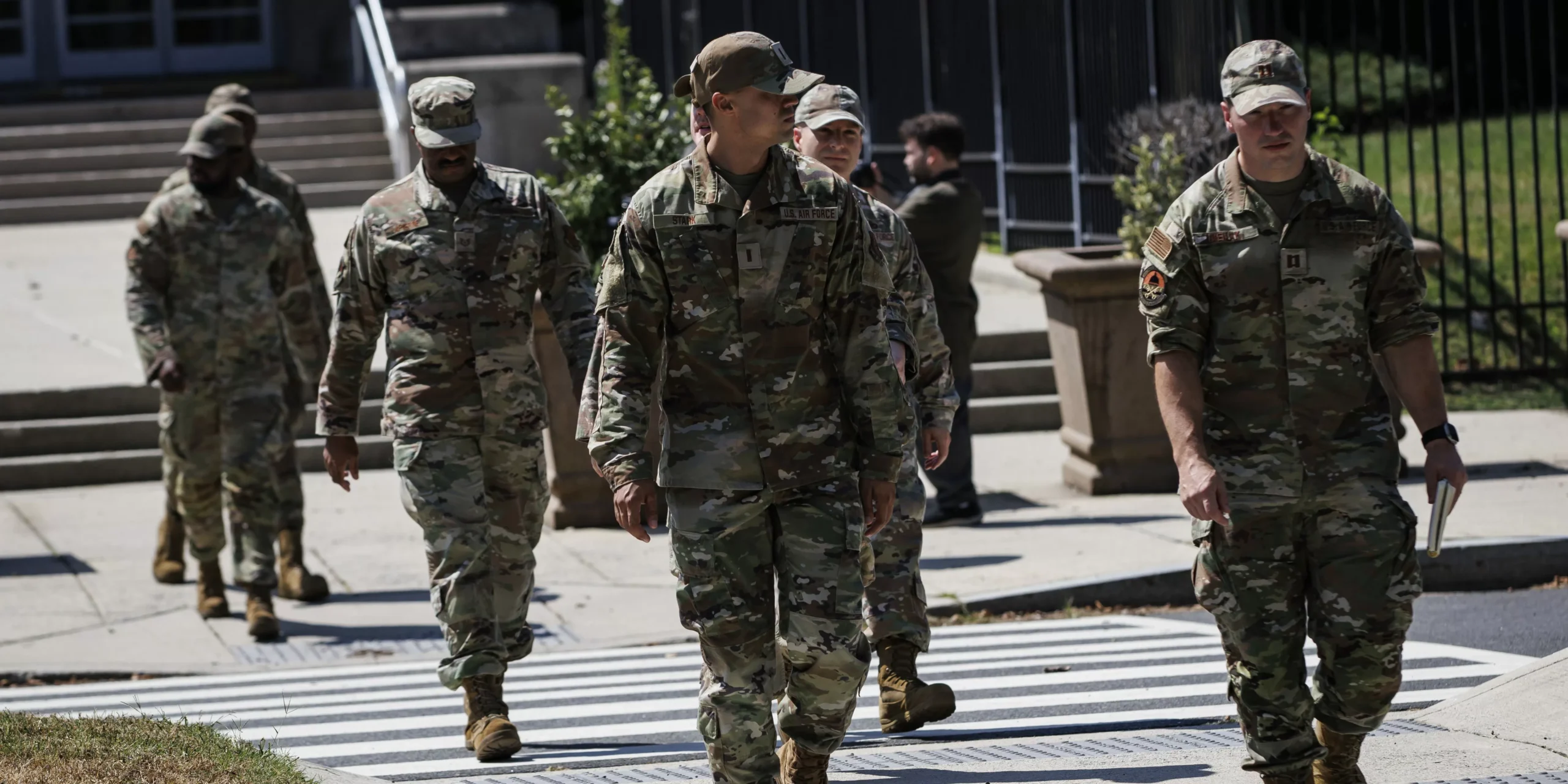
The use of military forces for domestic policing has always been a controversial topic in the United States. The idea of having soldiers patrolling the streets of American cities goes against the principles of a democratic society and has often been associated with authoritarian regimes. However, with the recent actions of President Trump, this practice has become more prevalent than ever before.
In an interview with The Intercept, former Defense Secretary William Cohen stated, “The ability to use the military anywhere, anytime, for any purpose – it’s absolutely unprecedented.” This statement perfectly captures the current state of affairs in the United States, where the president has been using the military to quell protests and enforce his policies.
The use of military forces for domestic purposes is not a new concept in the United States. In fact, it has a long history dating back to the colonial era. However, it was not until the 20th century that the use of military forces for domestic policing became a common practice. This was mainly due to the Posse Comitatus Act of 1878, which prohibited the use of the military for law enforcement purposes unless authorized by Congress.
But with the rise of President Trump, the lines between the military and domestic policing have become increasingly blurred. The president has repeatedly used the military to enforce his policies, from deploying troops to the southern border to deal with immigration issues, to using the National Guard to control protests in cities like Portland and Washington D.C.
This trend is alarming, as it goes against the principles of a democratic society. The military’s primary role is to defend the nation against external threats, not to be used as a tool for domestic law enforcement. The use of the military for policing can have serious consequences, such as the violation of citizens’ rights and the erosion of trust between the government and its people.
Moreover, the use of the military for domestic policing can have a detrimental effect on the military itself. The military is trained to handle external threats, not to deal with civilian protests. The use of force against civilians can lead to severe consequences, both for the military’s image and for the soldiers themselves. It can also divert resources and attention away from their primary mission, putting the nation’s security at risk.
President Trump’s actions have been compared to those of a king, as he has been using the military to enforce his policies without any checks and balances. This is a dangerous precedent that goes against the principles of a democratic society. The president’s actions have been met with criticism and condemnation from both Democrats and Republicans, as well as from military leaders.
In a letter to Congress, former Defense Secretary James Mattis stated, “We must reject any thinking of our cities as a ‘battlespace’ that our uniformed military is called upon to ‘dominate’.” This sentiment was echoed by many other military leaders, who have expressed their concern over the use of the military for domestic policing.
The use of the military for domestic policing is a slippery slope that can lead to the erosion of democracy. It sets a dangerous precedent and goes against the principles of checks and balances that are essential for a functioning democracy. The United States is a country that prides itself on its democratic values, and the use of the military for domestic policing goes against everything that this nation stands for.
In conclusion, the use of the military for domestic policing has become increasingly prevalent under the Trump administration. This practice goes against the principles of a democratic society and can have serious consequences for both the military and the nation. It is essential that we stand against this trend and uphold the values of democracy that are the foundation of our nation. As citizens, we must demand accountability and ensure that the military is used only for its intended purpose – to defend our nation against external threats.