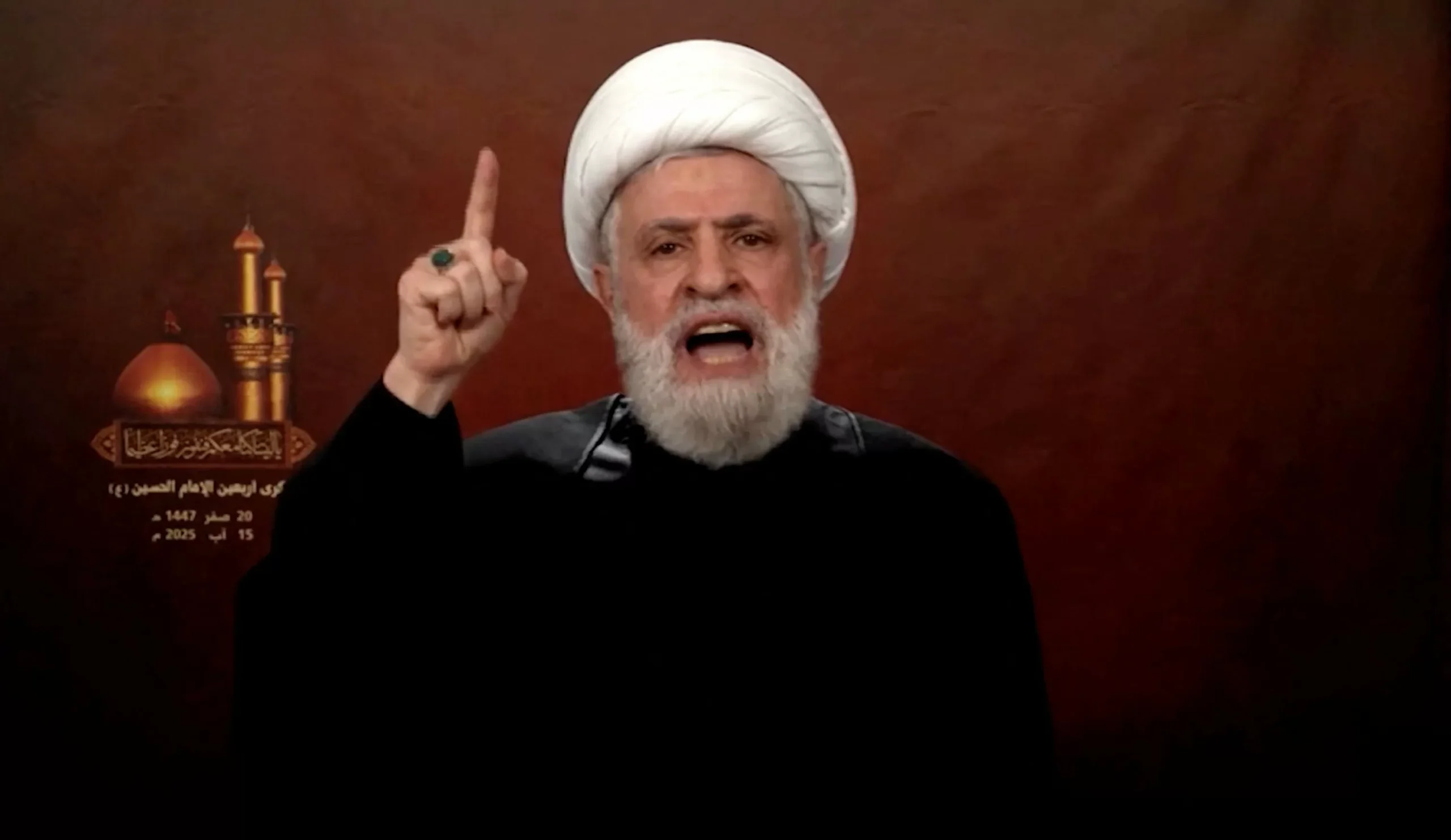
Hezbollah leader Naim Qassem has issued a warning to the Lebanese government, stating that their plan to disarm his Iran-backed group could potentially lead to a new civil war in the country. This statement comes after the government’s decision to task the army with taking control of Hezbollah’s weapons, as part of a larger plan to strengthen state control and stability in Lebanon.
In a recent interview, Qassem expressed his concerns about the government’s intentions, stating that disarming Hezbollah would leave the country vulnerable to external threats and could potentially lead to chaos and instability. He also emphasized that Hezbollah’s weapons are necessary for the protection of Lebanon and its people, especially in the face of ongoing conflicts in the region.
The government’s plan to disarm Hezbollah is part of a larger effort to strengthen state control and reduce the influence of armed groups in the country. However, Qassem argues that Hezbollah’s weapons are not a threat to the state, but rather a means of defense against external aggression. He also pointed out that Hezbollah has been an integral part of the Lebanese resistance against Israeli occupation and has played a crucial role in defending the country’s sovereignty.
Qassem’s warning about a potential civil war is not to be taken lightly. Lebanon has a history of political and sectarian tensions, and any attempt to disarm a powerful group like Hezbollah could potentially reignite these conflicts. The country is still recovering from the devastating civil war that lasted from 1975 to 1990, and the last thing it needs is another round of violence and bloodshed.
Hezbollah, which means “Party of God” in Arabic, is a Shia Islamist political and military organization that was formed in the 1980s to resist the Israeli occupation of Lebanon. It has since evolved into a powerful political force in the country, with a significant presence in the government and parliament. The group also has a strong military wing, which is considered a terrorist organization by the United States and several other countries.
Qassem’s warning has sparked a debate in Lebanon, with some supporting the government’s plan to disarm Hezbollah and others expressing concerns about the potential consequences. Many fear that disarming Hezbollah could lead to a power vacuum, which could be exploited by other armed groups or foreign powers. Others argue that Hezbollah’s weapons are necessary for the country’s defense and that the government should focus on strengthening state institutions instead of disarming the group.
The government, on the other hand, maintains that its plan is in the best interest of the country and its people. Prime Minister Saad Hariri has stated that the government’s goal is to strengthen state institutions and ensure that the country is not controlled by any armed group. He also emphasized that the plan is not targeted at any specific group, but rather a step towards achieving stability and security in Lebanon.
It is crucial for the government to carefully consider all aspects of this plan before taking any action. Disarming Hezbollah is a delicate matter that requires a comprehensive and inclusive approach. The government must engage in dialogue with all parties involved, including Hezbollah, to find a peaceful and sustainable solution that does not jeopardize the country’s stability.
In the meantime, it is essential for all Lebanese citizens to remain united and avoid any actions that could lead to further divisions and conflicts. The country has already suffered enough from years of war and political instability, and it is time for all parties to put their differences aside and work towards a common goal – a peaceful and prosperous Lebanon.
In conclusion, Naim Qassem’s warning about a potential civil war in Lebanon should not be taken lightly. The government must carefully consider all aspects of its plan to disarm Hezbollah and ensure that it does not lead to further instability and violence. It is also crucial for all Lebanese citizens to remain united and work towards a peaceful and prosperous future for their country. Only through dialogue and cooperation can Lebanon overcome its challenges and build a better tomorrow for its people.