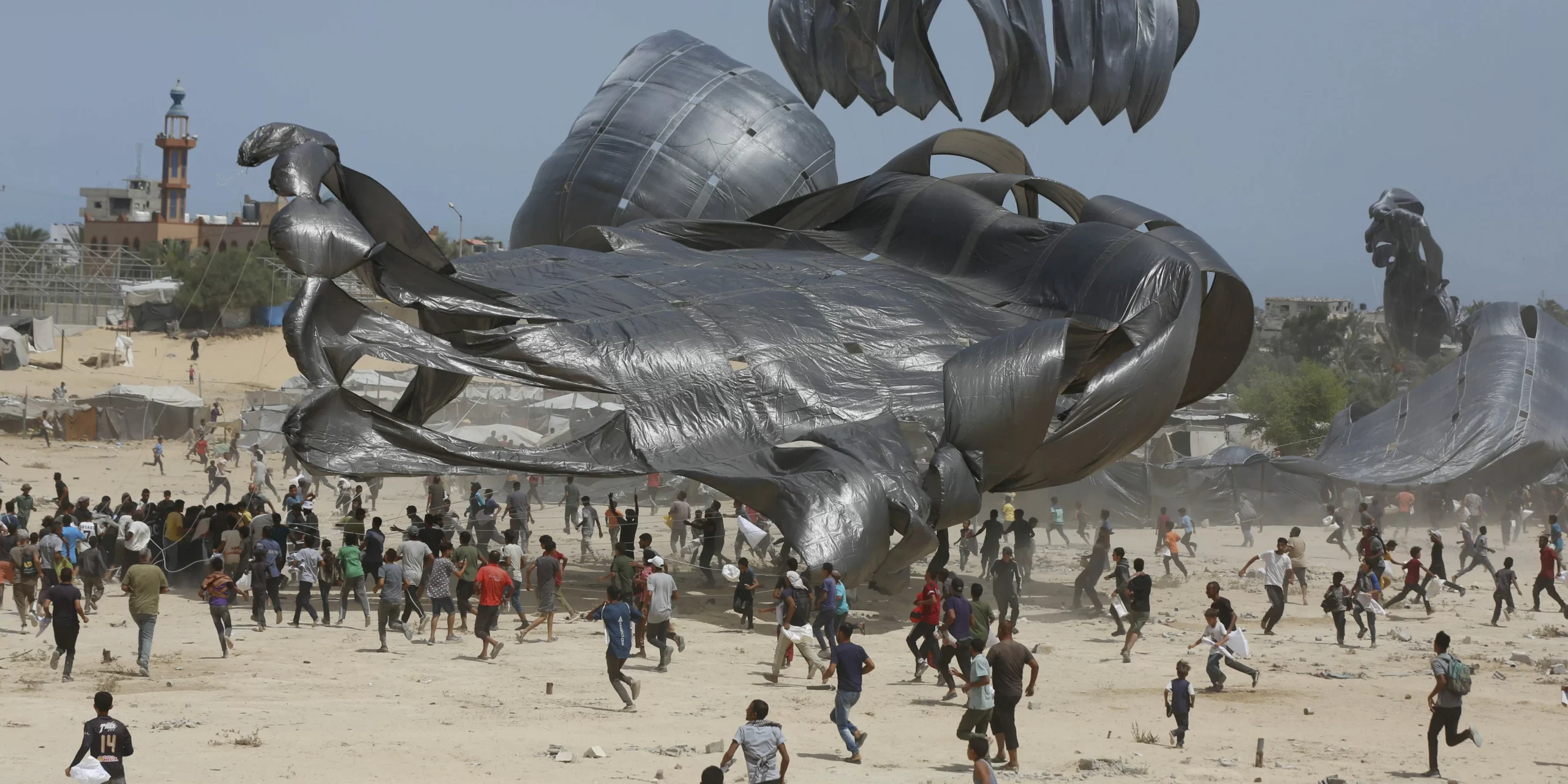
In the midst of the ongoing conflict between Israel and Palestine, the issue of providing aid to the people of Gaza has become a contentious topic. Human rights groups have long stressed the importance of providing aid by land, as it is considered a safer and more effective method. However, Israel’s recent decision to airdrop aid to Gaza has sparked outrage and condemnation from these groups, as it is causing more harm than good.
The situation in Gaza is dire, with the people facing extreme poverty, food insecurity, and limited access to basic necessities. The ongoing blockade by Israel has only exacerbated the situation, leaving the people of Gaza in a state of desperation. In such a dire situation, any form of aid is crucial in providing relief to the suffering population. However, the recent airdropping of aid by Israel has only added to the suffering of the people.
The idea of airdropping aid may seem like a quick and efficient solution, but in reality, it is causing more harm than good. The airdropped aid is often scattered over a wide area, making it difficult for the people to access it. In addition, the packages are dropped from a high altitude, making it dangerous for the people to retrieve them. This has resulted in injuries and even deaths, as people scramble to collect the aid. The airdropped aid is also often damaged or destroyed upon impact, rendering it useless.
Moreover, the airdropped aid is not tailored to the specific needs of the people of Gaza. The packages often contain non-essential items, such as toys and sweets, which do not address the urgent needs of the people. This is a clear indication that the aid is not being provided with the best interests of the people in mind. Instead, it is being used as a political tool to showcase Israel’s supposed generosity and divert attention from the ongoing atrocities being committed against the people of Gaza.
The airdropping of aid also undermines the efforts of local aid organizations and volunteers who have been tirelessly working to provide aid to the people of Gaza. These organizations have a better understanding of the needs of the people and are better equipped to distribute aid effectively. However, with the airdropping of aid, their efforts are being overshadowed and their resources are going to waste.
The airdropping of aid is not only causing harm to the people of Gaza but also perpetuating the cycle of dependence. By providing aid in such a haphazard and ineffective manner, the people of Gaza are not being empowered to become self-sufficient. Instead, they are becoming reliant on aid, which only serves to further their suffering and strip them of their dignity.
It is clear that the airdropping of aid is not a viable solution to the humanitarian crisis in Gaza. It is causing more harm than good and is not addressing the root causes of the issue. The people of Gaza deserve better. They deserve to be treated with dignity and respect, and their needs must be addressed in a more effective and sustainable manner.
In conclusion, the recent airdropping of aid by Israel in Gaza is a misguided and harmful approach to providing aid. It is causing more harm than good and is not addressing the urgent needs of the people. Human rights groups have stressed that providing aid by land is a safer and more effective method, and it is high time that Israel heeds their advice. The people of Gaza deserve to receive aid in a dignified and respectful manner, and it is the responsibility of the international community to ensure that this happens. Only then can we truly make a positive impact on the lives of the people of Gaza.