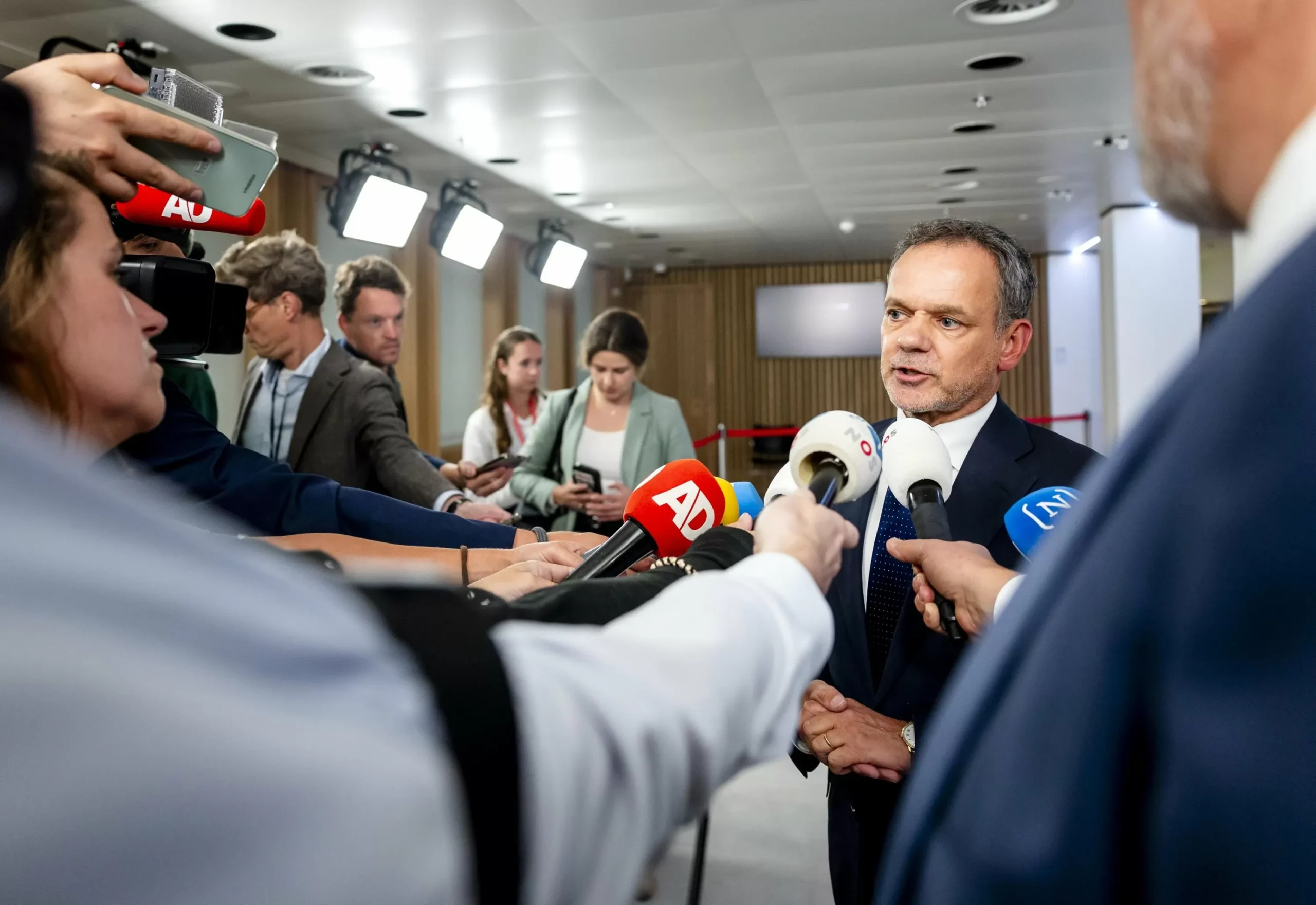
The political landscape in the Netherlands was rocked this week as Dutch Foreign Minister Caspar Veldkamp announced his resignation. This decision came after his coalition partners blocked his efforts to implement tougher measures against Israel in response to the ongoing crises in the region. In a statement, Veldkamp expressed his disappointment and frustration, but also his determination to do more to address the situation.
The crises in Israel and Palestine have been ongoing for decades, with no clear resolution in sight. The recent escalation of violence has only added to the urgency for action. As a member of the international community, the Netherlands has a responsibility to play a role in finding a peaceful and just solution to this long-standing conflict. However, Veldkamp’s attempts to take a stronger stance against Israel were met with resistance from his coalition partners, ultimately leading to his resignation.
In his resignation speech, Veldkamp made it clear that he could not continue in his role as Foreign Minister while feeling limited in his ability to take necessary action. He stated, “As a representative of the Netherlands, I cannot sit idly by while innocent lives are lost and human rights are violated. I strongly believe that we must do more to address the crises in Israel and Palestine, and I am disappointed that my coalition partners do not share this belief.”
Veldkamp’s resignation has sparked debate and divided opinions within the Dutch government and society. Some are applauding his courage and determination to stand up for what he believes is right, while others criticize his decision as being too rash. However, one thing is clear – Veldkamp’s resignation has shed light on the urgent need for the Netherlands to take a stronger stance on the Israel-Palestine conflict.
The Dutch government has long been a vocal supporter of a two-state solution, with both Israel and Palestine living side by side in peace and security. However, many argue that these words have not been backed up by action. Veldkamp’s resignation has brought this issue to the forefront and ignited a national conversation about the Netherlands’ role in the conflict.
It is important to note that Veldkamp’s resignation does not mean the end of the Netherlands’ involvement in the Israel-Palestine conflict. On the contrary, it has opened up an opportunity for the Dutch government to re-evaluate its approach and take a more proactive stance. As Veldkamp himself stated, “This is not the end, but a new beginning. I hope that my resignation will spark a much-needed debate and lead to concrete actions being taken to address the crises in Israel and Palestine.”
The Dutch government must now come together and find a way to effectively address the crises in Israel and Palestine. This may involve taking a tougher stance against Israel, but it is crucial that any actions taken are in line with international law and human rights principles. The Netherlands has always been a champion of these values, and it is important that they continue to guide the country’s actions in this situation.
In the midst of this turmoil, it is also important to remember the innocent lives that have been lost and the suffering of those living in the region. The Netherlands must continue to provide humanitarian aid and support to those affected by the crises. It is also essential that the Dutch government works with its international partners to find a lasting and peaceful solution to the conflict.
In conclusion, while Dutch Foreign Minister Caspar Veldkamp’s resignation has caused a stir in the political arena, it has also brought much-needed attention to the crises in Israel and Palestine. It is now up to the Dutch government to seize this moment and take concrete actions to address the situation. We must not forget the importance of standing up for what is right and just, and Veldkamp’s resignation serves as a reminder of this. Let us hope that this will be the beginning of a new chapter in the Netherlands’ involvement in the Israel-Palestine conflict.