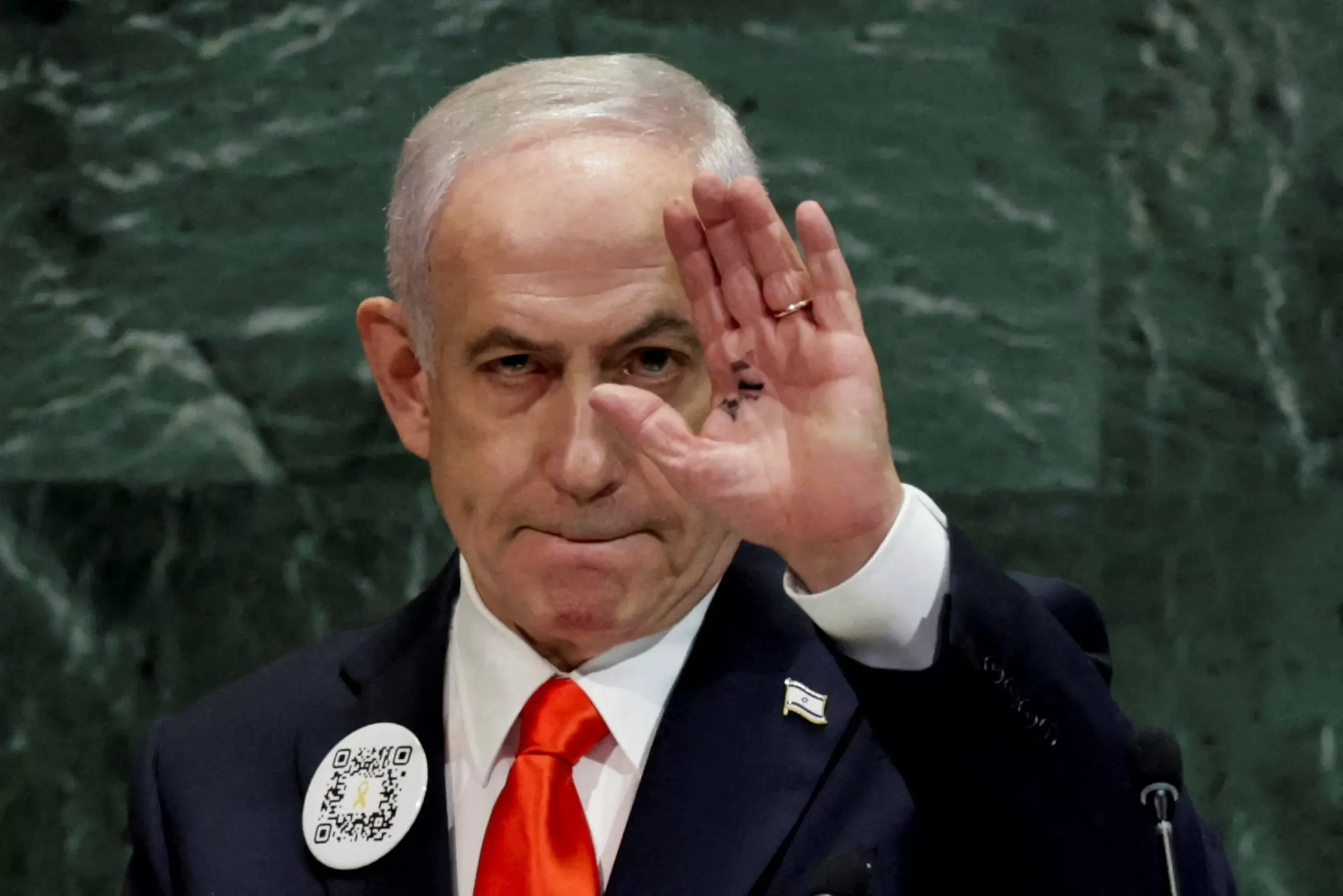
The United Nations General Assembly was filled with anticipation as leaders from around the world took to the podium to share their perspectives and visions for a better future. Among those leaders, Israeli Prime Minister Benjamin Netanyahu delivered a powerful speech that sought to address the current state of affairs in the Middle East.
However, while Netanyahu’s speech was met with enthusiasm by some, it was heavily criticized by the Palestinian delegation. A senior Palestinian foreign ministry official, in particular, went as far as to say that the speech was “saturated with lies and falsifications.” This statement is a strong and bold accusation, and it raises questions about the validity of the Prime Minister’s words.
In his address, Netanyahu touched upon a range of important topics, from regional security to the Israeli-Palestinian conflict. He highlighted the achievements of Israel in various fields, including technology, economy, and human rights. He also emphasized the common values shared by Israel and other democratic nations, such as freedom and tolerance.
One of the main points of contention for the Palestinian official was Netanyahu’s claim that the Arab-Israeli conflict is not rooted in the Israeli-Palestinian conflict but rather the hostility towards Israel as a Jewish state. However, this statement is not far from the truth. The ongoing tension and violence in the region have deep-rooted historical and political complexities, and Netanyahu’s speech sought to shed light on this issue and promote a more comprehensive understanding of the situation.
Netanyahu also highlighted the threat posed by Iran and its ongoing pursuit of nuclear weapons. This is not the first time that the Prime Minister has sounded the alarm about the dangers of a nuclear Iran. In his speech, he stressed that Iran’s nuclear ambitions are not just a threat to Israel but to the entire world. He called upon the international community to take decisive action to prevent Iran from obtaining nuclear weapons, and he pledged that Israel would do everything in its power to defend itself against this threat.
The Palestinian delegation was also quick to criticize Netanyahu’s reaffirmation of Israel’s commitment to a peaceful resolution of the Israeli-Palestinian conflict. However, it is clear that Israel has taken numerous steps towards peace, including the withdrawal from the Gaza Strip and various offers for a two-state solution. It is also worth noting that it takes two willing parties to reach a lasting peace agreement, and unfortunately, the Palestinian leadership has not shown the same level of commitment to finding a solution.
Despite the criticism from the Palestinian official, Netanyahu’s speech was met with great enthusiasm by many world leaders, who praised his strong leadership and commitment to peace and security. His speech highlighted the importance of cooperation and solidarity in the face of shared challenges, such as terrorism and extremism.
Furthermore, the Israeli Prime Minister’s speech was a reminder of the importance of standing up for what is right, even in the face of strong opposition. Netanyahu is well aware of the criticism and hostility towards Israel from some members of the international community, but he remains steadfast in his convictions and his determination to protect the safety and well-being of the Israeli people.
In conclusion, it is clear that the Palestinian delegation’s accusations of lies and falsifications in Netanyahu’s U.N. address are unfounded. His speech was a sincere and honest representation of the current state of affairs in the Middle East and the challenges facing the region. Rather than criticizing, it is time for all parties to come together and work towards finding a lasting solution to the conflict, one that will bring peace, stability, and prosperity to all those living in the region.