U.S. President Donald Trump recently announced a ceasefire deal between Turkey and Kurdish forces in Syria, marking what he called “a wonderful day for everybody.” While this news brings a glimmer of hope for peace in the region, it cannot erase the two years of devastation and genocide that have plagued Syria.
The conflict in Syria has been ongoing for eight years, with the Syrian government led by President Bashar al-Assad fighting against rebel groups seeking to overthrow his regime. In 2014, the Islamic State of Iraq and Syria (ISIS) also emerged as a major player in the conflict, further complicating the situation. Amidst this chaos, the Kurdish forces, who have long been seeking autonomy, have also been fighting for their own rights and territory.
In 2017, the U.S. joined the fight against ISIS by supporting the Kurdish-led Syrian Democratic Forces (SDF). This alliance proved to be successful in driving out ISIS from their strongholds, but it also created tension between the U.S. and Turkey, who view the Kurdish forces as a terrorist group. This tension came to a head when President Trump announced the withdrawal of U.S. troops from Syria, leaving the Kurdish forces vulnerable to attacks from Turkey.
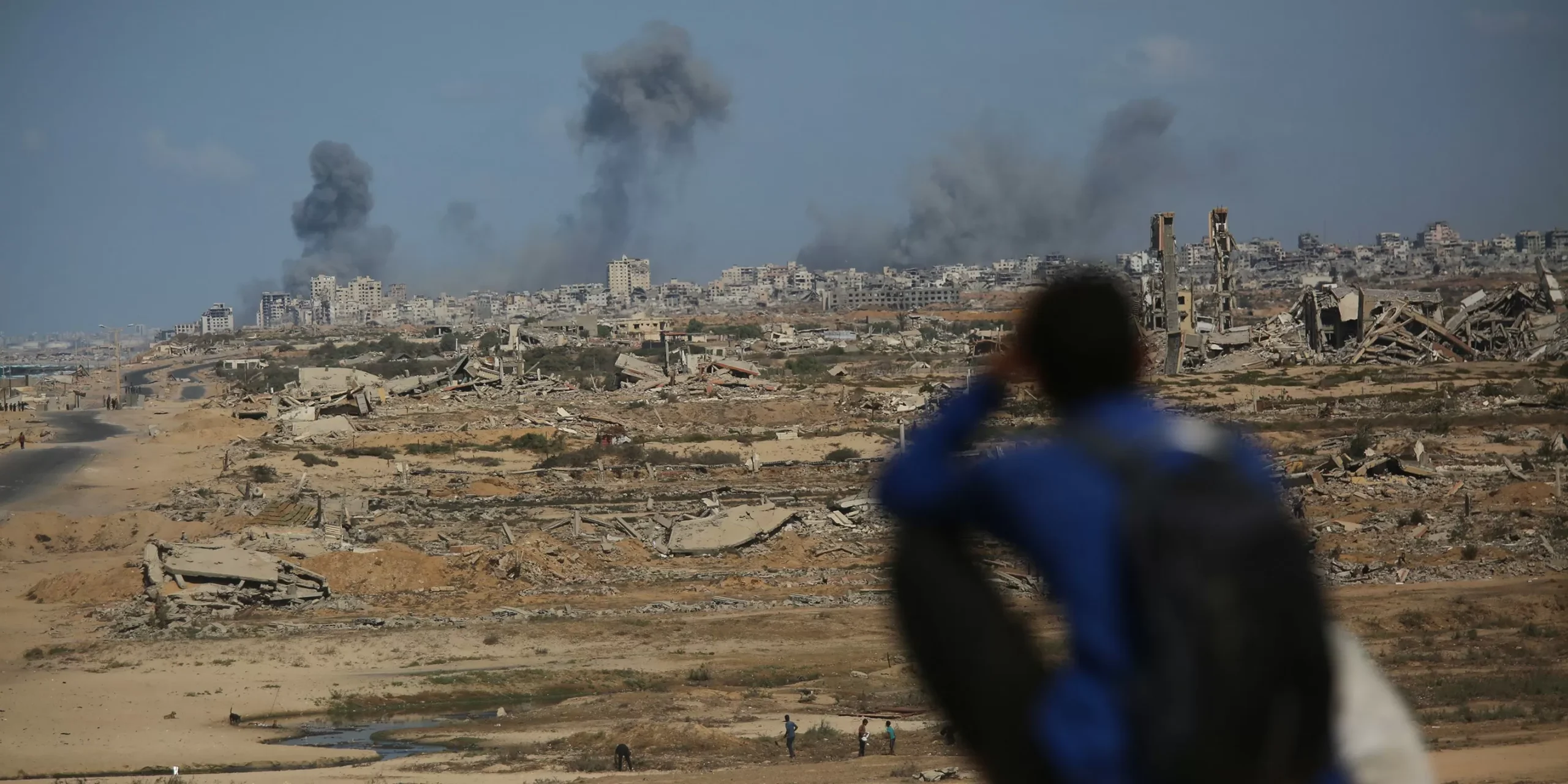
The Turkish invasion into Syria, which began on October 9, 2019, has resulted in a humanitarian crisis and widespread violence. The Kurdish forces, who were once allies of the U.S., were left to fend for themselves against the Turkish military, causing thousands of deaths and displacing over 300,000 people. The situation was further complicated by the involvement of Russia, who supported the Syrian government, and the withdrawal of U.S. troops.
Amidst this chaos, the U.S. brokered a ceasefire deal between Turkey and the Kurdish forces, which was met with mixed reactions. While some see it as a step towards peace, others are skeptical of Turkey’s commitment to the deal. President Trump himself has faced criticism for his handling of the situation, with many accusing him of abandoning the Kurdish forces and allowing Turkey to carry out their military operation.
So why did it take two years for this ceasefire deal to arrive? The answer lies in the complex dynamics of the conflict and the involvement of multiple players. The U.S. had to balance its alliance with the Kurdish forces and its relationship with Turkey, a NATO ally. The withdrawal of U.S. troops also created a power vacuum, which was quickly filled by Russia and the Syrian government. It took time for the U.S. to negotiate a deal that would satisfy all parties involved and bring an end to the violence.
While the ceasefire deal is a step in the right direction, it cannot undo the damage that has been done in the past two years. The Kurdish forces have suffered immense losses, both in terms of lives and territory. The displacement of hundreds of thousands of people has also created a humanitarian crisis that will take years to resolve. The scars of this conflict will remain for a long time, and it will take a collective effort from the international community to help rebuild and heal the region.
As we celebrate this ceasefire deal, we must not forget the atrocities that have been committed in the past two years. We must hold those responsible for the violence and genocide accountable and work towards a lasting peace in Syria. The U.S. has a responsibility to ensure the safety and well-being of its former allies, the Kurdish forces, and to support them in their fight for autonomy.
In conclusion, while the ceasefire deal may bring a temporary respite from the violence, it cannot erase the pain and suffering that has been inflicted on the people of Syria. It is a reminder that conflicts cannot be solved through military interventions and that innocent lives are always caught in the crossfire. Let us hope that this ceasefire is a step towards a lasting peace in Syria and that the international community will continue to work towards a resolution that benefits all parties involved.