

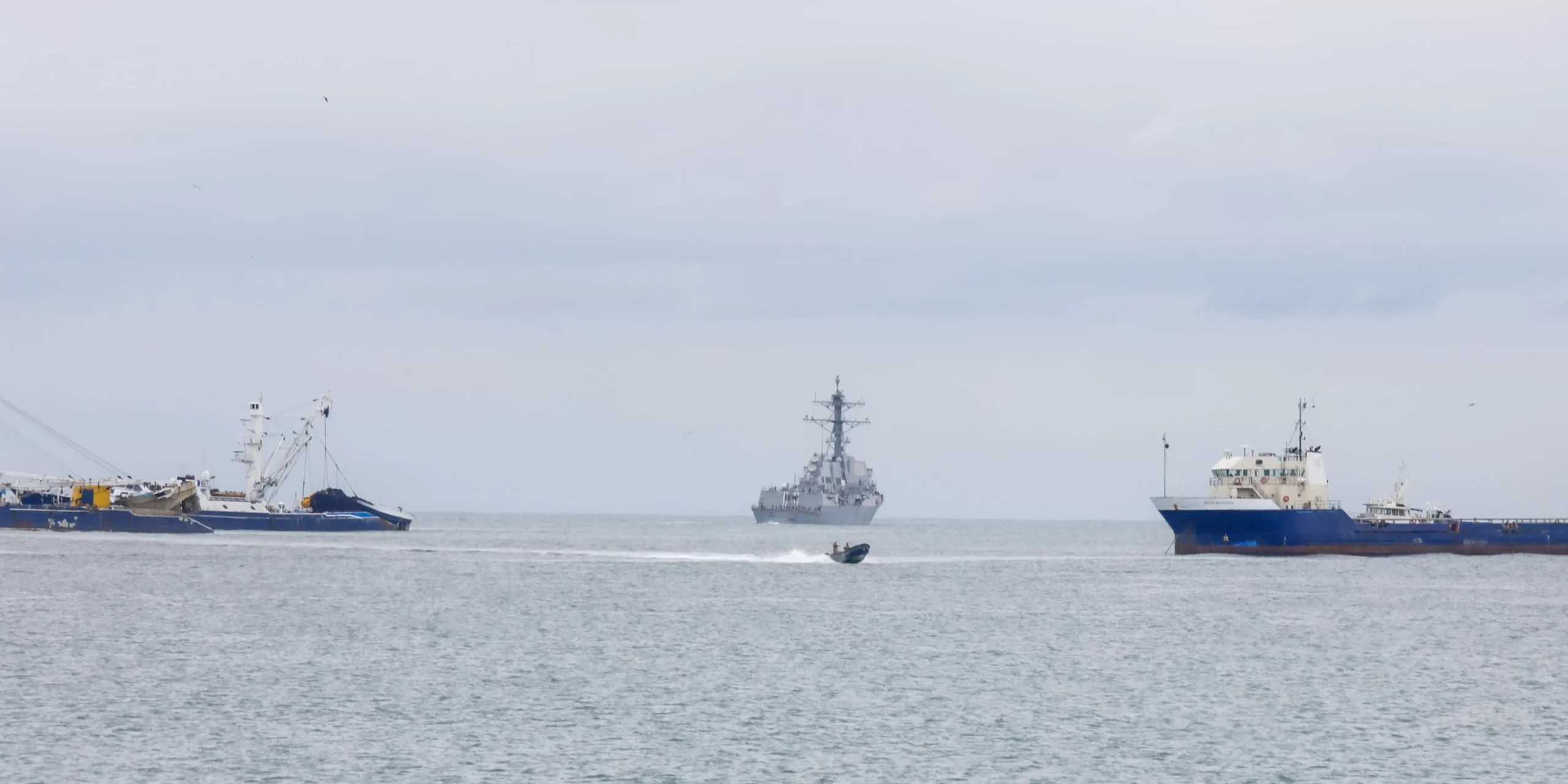
The recent attack on a boat in the Caribbean by the United States has left two survivors, who are now being held on a Navy warship. This incident has sparked controversy and raised questions about the actions of the U.S. government in the region. The two survivors are now the first known prisoners in President Trump’s war on “narcoterrorists”. This move has drawn criticism from various groups, who are concerned about the implications of the government’s actions. Let us take a closer look at the situation and its potential impact.
The attack on the boat, which was carrying drugs, took place in the Caribbean Sea. It was carried out by the U.S. Coast Guard, with the support of the Navy. The operation was part of the government’s efforts to combat drug trafficking in the region. While the intention behind the attack may have been noble, the consequences have been severe. The two survivors, who were on board the boat, have now become the first known prisoners in President Trump’s war on “narcoterrorists”.
The survivors, who are believed to be Colombian nationals, were rescued by the U.S. Coast Guard after the boat was sunk during the attack. They were then transferred to a Navy warship, where they are currently being held. The U.S. government has stated that the survivors will be treated humanely and will be provided with necessary medical care. However, the fact remains that they are now prisoners in a foreign country, without any legal representation or access to their families.
The incident has sparked outrage from human rights organizations and activists, who are concerned about the treatment of the survivors. They argue that the U.S. government’s actions are a violation of international law and human rights. The survivors are not combatants, and therefore, should not be treated as prisoners of war. They were simply on a boat carrying drugs, which does not justify their detention and treatment as “narcoterrorists”.
The U.S. government, on the other hand, defends its actions by stating that the survivors were part of a drug trafficking operation and therefore, are considered as “narcoterrorists”. This term, coined by President Trump, has been used to justify the government’s aggressive approach towards combating drug trafficking. However, this approach has been criticized for being overly broad and potentially targeting innocent individuals.
The survivors’ detention on a Navy warship also raises concerns about the lack of due process and transparency in the government’s actions. They are being held without any charges being brought against them, and it is unclear how long they will be detained. This raises questions about the legality of the government’s actions and the protection of the survivors’ rights.
Moreover, the incident has also sparked concern about the U.S.’s role in the region and its impact on the local communities. The Caribbean has been a hotspot for drug trafficking, and the U.S. government’s aggressive approach may have unintended consequences. It could lead to further destabilization of the region and harm the local communities, who are often caught in the crossfire of the drug war.
In conclusion, the two survivors of the U.S. attack on a boat in the Caribbean have now become the first known prisoners in President Trump’s war on “narcoterrorists”. This incident has raised concerns about the government’s actions and their impact on human rights and due process. It is crucial for the U.S. government to ensure that the survivors’ rights are protected and that they are treated humanely. Furthermore, the government must also consider the potential consequences of its actions on the region and its people. The war on drugs is a complex issue, and it requires a comprehensive and humane approach, rather than aggressive and potentially harmful tactics.



