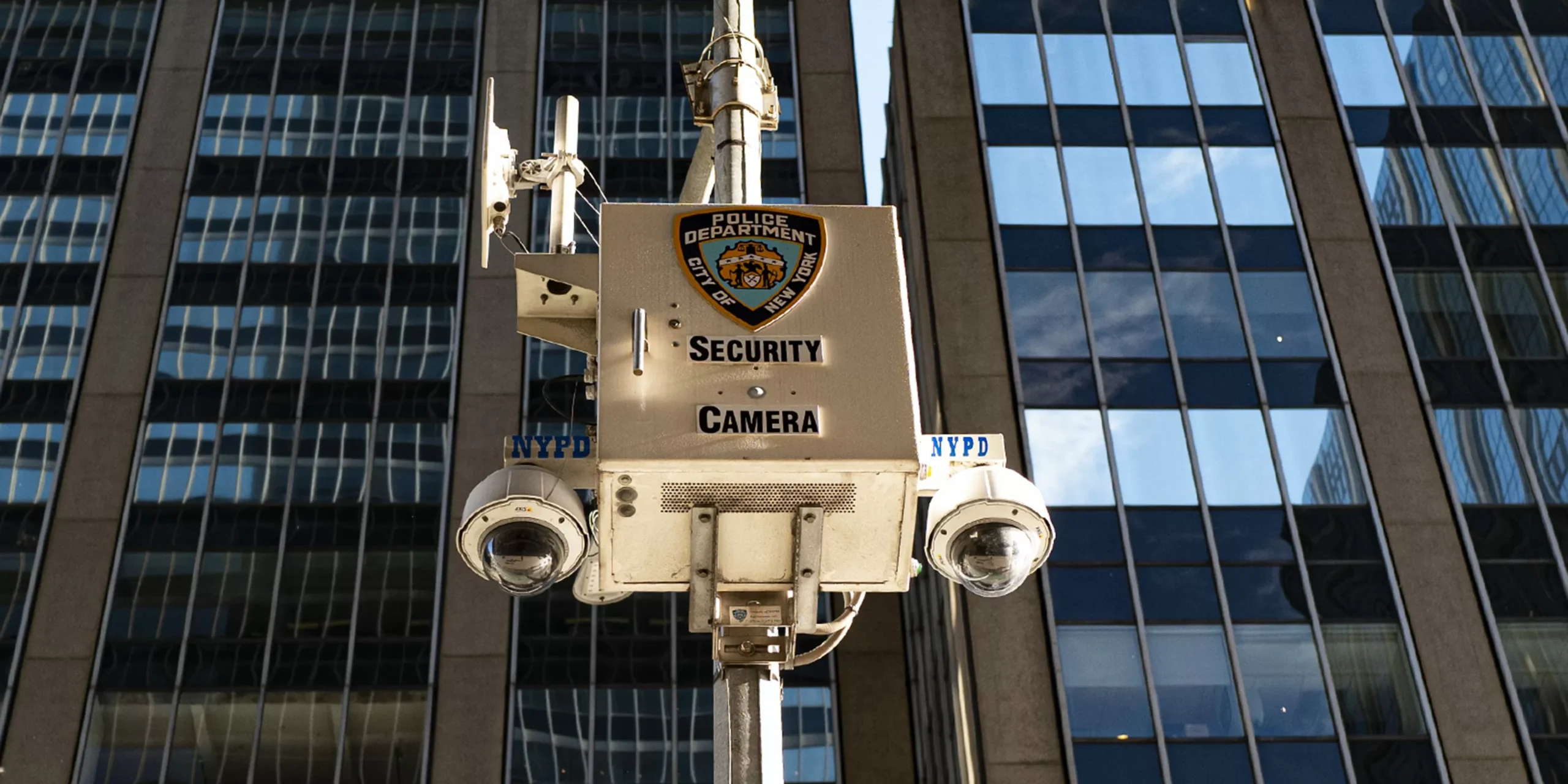
The New York City Police Department (NYPD) has come under fire once again, this time for their invasive surveillance tactics. A recent lawsuit, filed by a Brooklyn couple, is the first of its kind to challenge the NYPD’s surveillance machine and the violation of New Yorkers’ constitutional rights.
The lawsuit centers around an incident that occurred in the bedroom of Adam and Elizabeth Adams. The couple, who live in the Flatbush neighborhood of Brooklyn, discovered a camera pointing directly into their bedroom from the adjacent building. The camera was installed by the NYPD as part of their extensive surveillance program, which utilizes thousands of cameras around the city. Adam and Elizabeth are now taking legal action against the city, seeking to hold the NYPD accountable for their violation of privacy and constitutional rights.
This is not the first time the NYPD has faced criticism for their use of surveillance technology. In recent years, the department has faced backlash for their use of facial recognition software, social media monitoring, and other tactics that many deem as invasive and unconstitutional. However, this lawsuit marks a significant step in challenging the NYPD’s surveillance practices and holding them accountable.
The Adams’ lawsuit, filed by the American Civil Liberties Union (ACLU), argues that the NYPD’s use of surveillance technology is a violation of the Fourth Amendment, which protects against unreasonable searches and seizures. The couple also claims that the camera’s placement directly into their bedroom, a private space, is a violation of their right to privacy. The suit also alleges that the NYPD did not have a warrant or probable cause to install the camera, making it an unlawful intrusion into the couple’s home.
The ACLU has also highlighted the racial disparities in the NYPD’s surveillance practices. The department has a history of targeting communities of color, and this lawsuit brings attention to the disproportionate impact these tactics have on marginalized communities. The Adams’ are a Black couple living in a predominantly Black neighborhood, which raises concerns about racial profiling and discriminatory surveillance practices.
The consequences of the NYPD’s surveillance program go beyond just invasion of privacy. It has also been linked to the criminalization of everyday activities, such as peaceful protests, and the violation of First Amendment rights. The widespread use of surveillance also has a chilling effect on free speech and expression, with individuals feeling like they are constantly being watched and monitored.
The Adams’ case is just one example of the far-reaching impact of the NYPD’s surveillance tactics. As the lawsuit proceeds, it has the potential to set a precedent for challenging the legality and constitutionality of the department’s surveillance practices. It also sends a strong message to the NYPD that New Yorkers will not stand for their rights being violated in the name of security.
In response to the lawsuit, the NYPD has defended their use of surveillance technology, claiming that it is necessary for public safety and crime prevention. However, civil rights groups have argued that there are more effective and less invasive ways to ensure public safety without infringing on individuals’ rights.
The outcome of this lawsuit will have significant implications not just for the Adams’ and their community but for all New Yorkers. It is a reminder that in our pursuit of security, we must not sacrifice our basic constitutional rights. The NYPD’s surveillance program must be held accountable, and individuals’ rights must be protected.
In the meantime, the Adams’ are standing up for their rights and the rights of all New Yorkers. As Adam Adams states, “No one should have to live under the constant surveillance of the government in their own home. It’s a gross violation of our privacy and our constitutional rights.” This lawsuit is a courageous step towards challenging the NYPD’s surveillance machine and fighting for the protection of our rights. Let us hope that it brings about much-needed change and accountability in the way the NYPD conducts its surveillance practices.