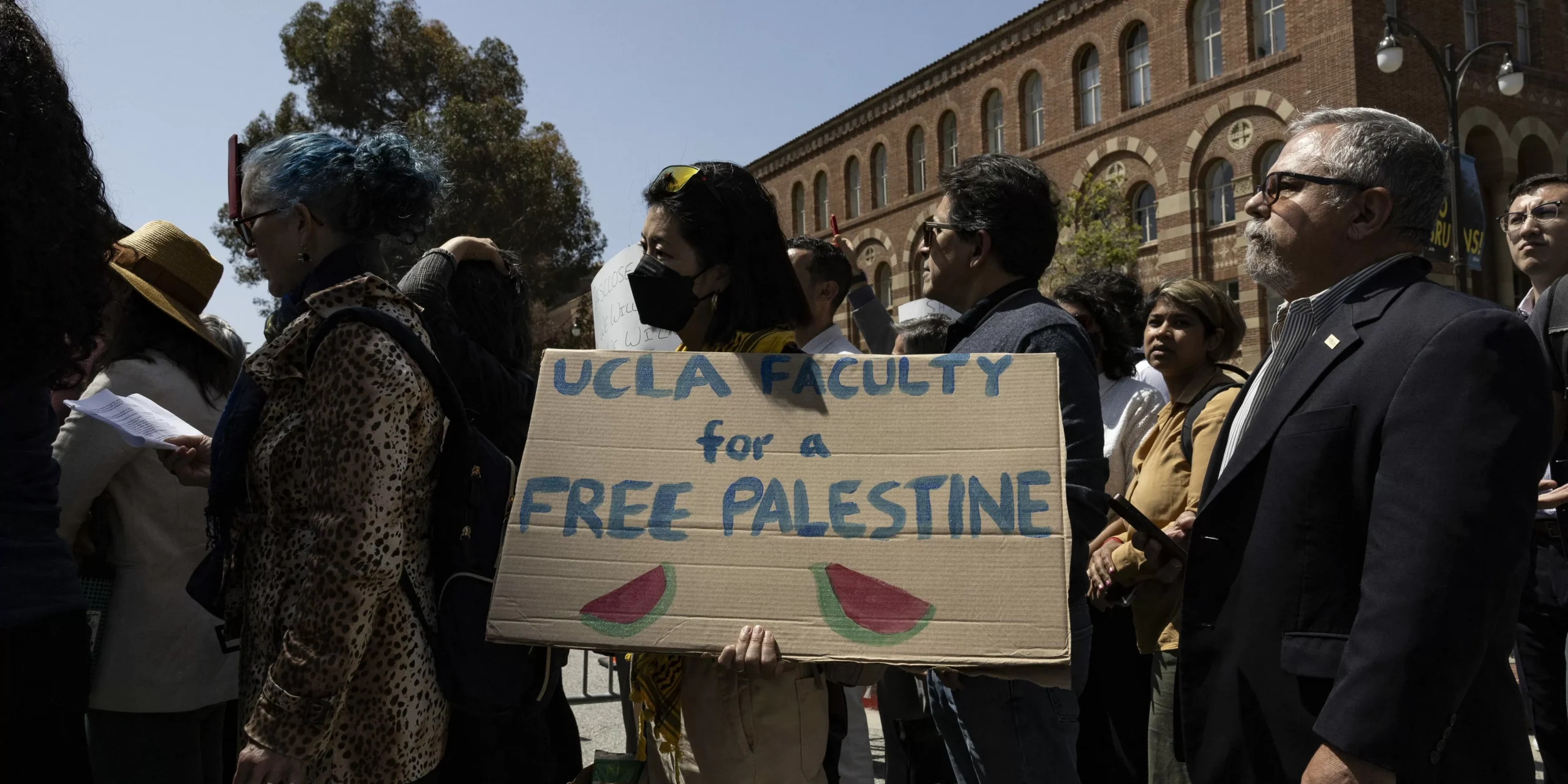
Nationwide, faculty and students are coming together to fight against President Trump’s unyielding assault on higher education. Despite the controversial policies and actions being implemented by the current administration, inspiring acts of resistance in the academic community have emerged.
Recently, a judge made a ruling that could potentially safeguard higher education institutions from some of the destructive cuts proposed by the Trump administration. The verdict stated that Trump cannot reduce funds for the University of California (UC) system. However, while this judgment brings some relief, it also highlights a concerning trend where administrators tend to capitulate to the demands of the White House, rather than standing up for the core values and principles of higher education.
The verdict was made in response to a lawsuit filed by the University of California system against the Trump administration’s efforts to cut grants that support research and other critical projects. These grants are essential for the functioning and growth of universities, and without them, the academic landscape would suffer greatly. However, instead of standing up for the importance of these grants, UC administrators chose to engage in settlement negotiations with the government.
This decision has sparked backlash from faculty and students who feel that UC leaders are not doing enough to protect the sanctity of higher education. They argue that the fight against the Trump administration’s attacks on higher education should not be compromised by behind-the-scenes negotiations.
The UC system is not alone in its struggle against the Trump administration. Across the country, universities are facing similar challenges as the President seems determined to undermine the very foundation of higher education. From cutting funding for critical research to proposing restrictive immigration policies that prevent students and faculty from entering the country, Trump’s actions have far-reaching implications for the academic community.
In the face of these challenges, faculty and students have joined forces to protect the principles of academic freedom and the pursuit of knowledge. They have organized rallies, protests, and campaigns to raise awareness about the importance of higher education and the consequences of Trump’s policies. Their efforts have been met with support from the public, who recognize the significant role of universities in shaping society and creating opportunities for future generations.
However, as much as these acts of resistance are commendable, they also reveal a concerning fact: that university administrators are not standing up for the values and principles they are supposed to uphold. While they may claim to have the best interests of their institutions at heart, their actions suggest otherwise. Their willingness to negotiate and potentially compromise the progress made in the lawsuit against the Trump administration sends a worrisome message.
As the fight to protect the sanctity of higher education continues, it is imperative that administrators prioritize the needs and values of their institutions above all else. It is their responsibility to advocate for the academic community and ensure that it remains a bastion of knowledge and progress, free from political interference.
In conclusion, the recent ruling by a judge that Trump cannot cut UC funding serves as a glimmer of hope for the higher education community. It proves that when faculty and students stand united, they can make a real difference in the face of adversity. However, it also highlights the need for university administrators to step up and prioritize the fight against the Trump administration’s assault on higher education. Only then can we ensure the protection and advancement of the values and principles that have shaped the academic landscape for centuries.