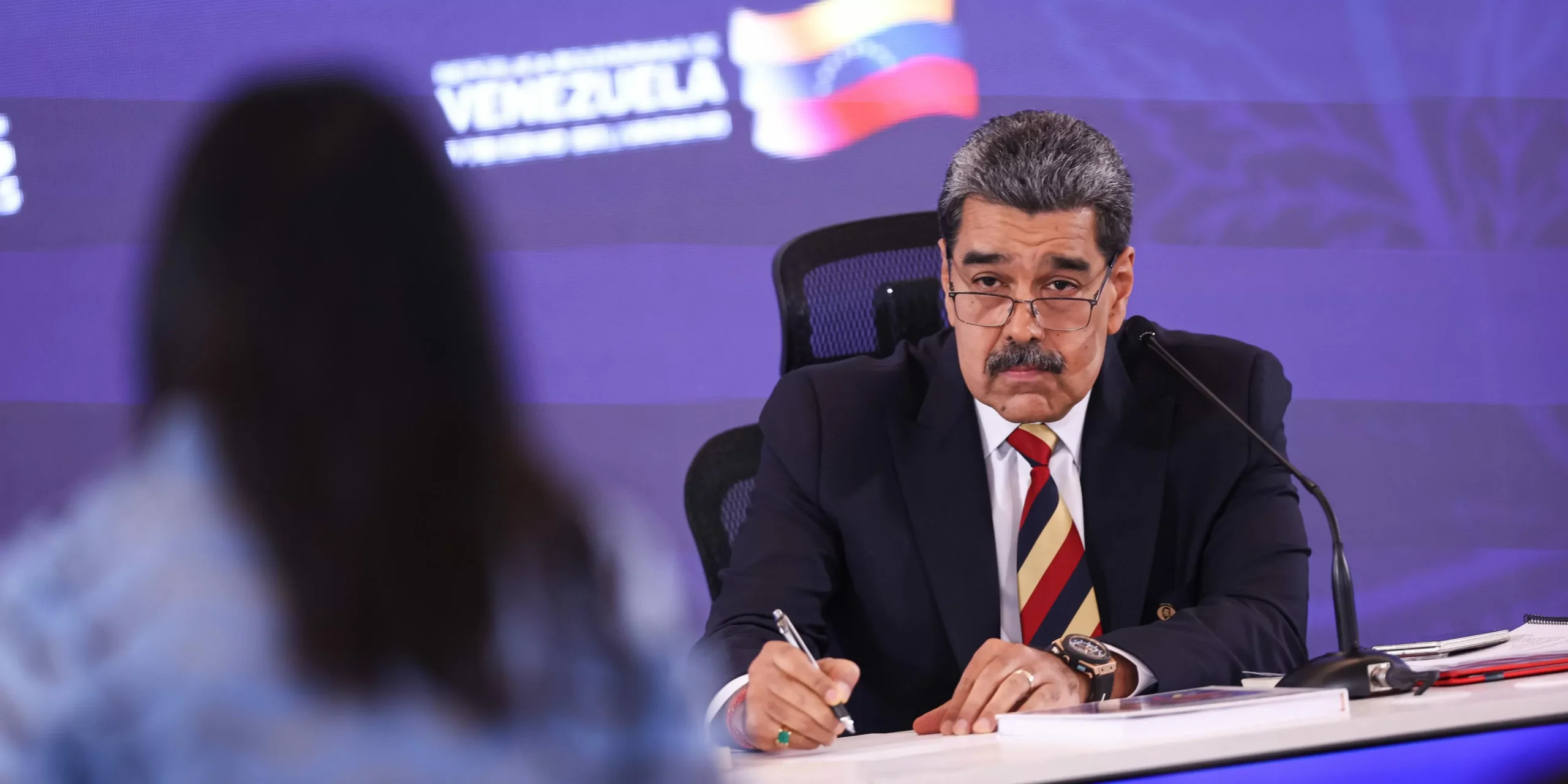
The Trump administration has been ramping up its efforts to push for war on Venezuela, with one of its latest tactics being the allegation that President Nicolas Maduro controls a government-run “narcoterrorist” conspiracy. This claim was recently echoed by Senator Marco Rubio, who declared Maduro as the “terrorist-in-chief” of Venezuela’s infamous “Cártel de los Soles.” But is this group even real, or is it just another ploy to justify intervention in Venezuela?
The term “Cártel de los Soles” translates to “Cartel of the Suns” and refers to a supposed drug trafficking organization made up of high-ranking Venezuelan military officials. The name is derived from the sun insignia that is worn on the uniforms of these officials. The group is alleged to have been involved in the trafficking of drugs, weapons, and other illicit activities, with Maduro at the helm.
But the question remains, is this group even real? The answer is not as clear-cut as the Trump administration would like us to believe. While there have been reports of corruption and drug trafficking within the Venezuelan military, there is no concrete evidence to suggest the existence of a unified and organized group known as the “Cártel de los Soles.”
In fact, many experts and analysts have dismissed the idea of a cohesive cartel within the Venezuelan military. They argue that the term is being used as a political tool to demonize Maduro and his government, and to justify intervention in the country. This tactic is not new, as we have seen similar claims being made in the past to justify U.S. intervention in other countries.
Furthermore, the U.S. has a long history of using the war on drugs as a pretext for intervention in Latin American countries. This has often resulted in disastrous consequences, with the U.S. supporting corrupt and authoritarian regimes in the name of fighting drug trafficking. It is important to question the motives behind these allegations and to not blindly accept them as fact.
It is also worth noting that the U.S. has a vested interest in destabilizing Venezuela. The country has the largest oil reserves in the world, and the U.S. has been eyeing these resources for years. By painting Maduro as a “terrorist-in-chief,” the U.S. is attempting to create a narrative that justifies their intervention in the country’s affairs.
Moreover, the timing of these allegations is highly suspicious. They come at a time when the U.S. is facing mounting criticism for its mishandling of the COVID-19 pandemic and its own internal issues. By shifting the focus to Venezuela, the Trump administration is attempting to divert attention away from its failures and rally support for its aggressive foreign policy.
It is also important to consider the impact of these allegations on the people of Venezuela. The country is already facing a severe economic crisis, and the threat of war and intervention will only exacerbate the situation. The people of Venezuela do not need more suffering and instability, they need support and assistance to overcome their challenges.
In conclusion, the claim that Maduro controls a government-run “narcoterrorist” conspiracy is highly questionable and lacks concrete evidence. It is being used as a political tool to justify intervention in Venezuela and serves the interests of the U.S. rather than the people of Venezuela. As responsible citizens, it is our duty to question these allegations and not fall prey to propaganda. The people of Venezuela deserve peace and stability, not more chaos and intervention.