In the aftermath of the tragic events of 9/11, universities across the United States were faced with the challenge of balancing the need for security with the protection of civil liberties. In response, a network was established for intelligence sharing between universities and law enforcement agencies, with the goal of preventing future terrorist attacks. However, recent revelations have shown that this network has been used to surveil and target students who are peacefully protesting against genocide.
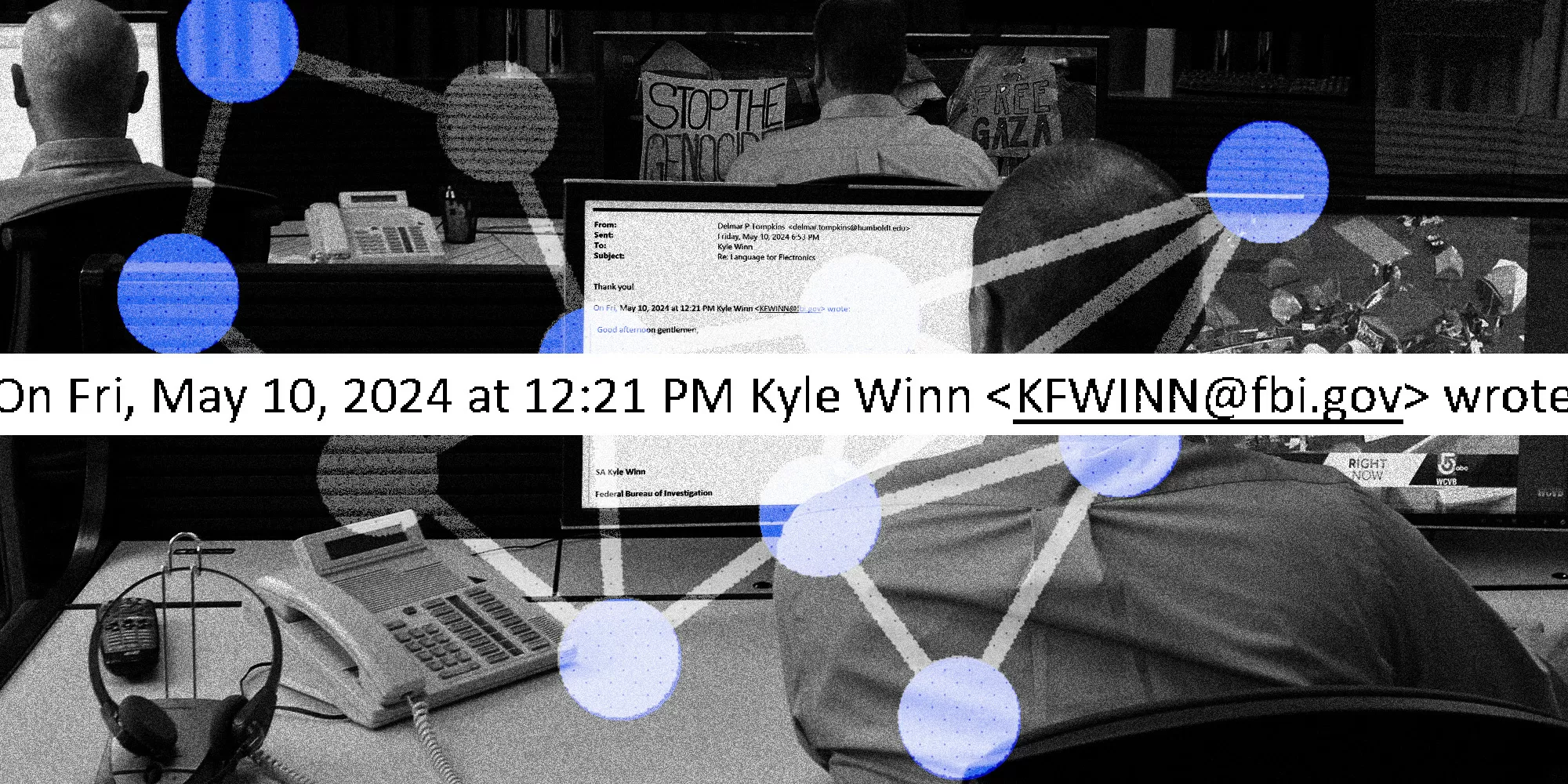
Internal university communications have revealed how this network, originally intended for counterterrorism efforts, has been turned against students advocating for Palestinian rights. The Intercept has obtained documents that show how universities have used these intelligence-sharing hubs to monitor and track pro-Palestine student groups, raising serious concerns about the violation of students’ rights and the misuse of this network.
The documents reveal that the University of California, Los Angeles (UCLA) has been actively participating in this intelligence-sharing network, known as the “Los Angeles Joint Regional Intelligence Center” (LAJRIC). This center, which includes representatives from local law enforcement agencies, was created in the aftermath of 9/11 to share information and coordinate efforts to prevent terrorist attacks. However, the documents show that LAJRIC has been used to monitor and track students who are involved in pro-Palestine activism.
One document, dated 2014, shows that UCLA’s police department was actively monitoring a student group called “Students for Justice in Palestine” (SJP). The document states that the group was planning a protest against the Israeli government’s actions in Gaza, and that the police department was monitoring their social media accounts and online activities. This raises serious concerns about the violation of students’ privacy and their right to peaceful protest.
Another document, from 2016, shows that UCLA’s police department was working closely with the FBI to monitor a conference organized by SJP. The conference, titled “Palestine: Apartheid, Settler Colonialism, and Resistance,” was attended by students, academics, and activists from around the country. The document reveals that the FBI was providing intelligence to the UCLA police department about the conference, and that the police department was actively monitoring the attendees.
These revelations have sparked outrage among students and civil rights organizations, who argue that this surveillance is a clear violation of students’ rights and a misuse of the intelligence-sharing network. The American Civil Liberties Union (ACLU) has condemned the surveillance, stating that it “raises serious concerns about the chilling effect it has on students’ rights to free speech and association.”
The use of this intelligence-sharing network to monitor and target students who are peacefully advocating for Palestinian rights is not only a violation of their rights, but also a dangerous precedent. It sets a dangerous precedent for the surveillance and targeting of other student groups who may be advocating for other causes that are deemed “controversial” by the government.
Furthermore, this surveillance is not only a violation of students’ rights, but also a waste of resources. The documents obtained by The Intercept show that universities are spending significant amounts of money and resources on monitoring and tracking students, instead of focusing on their core mission of education.
In response to these revelations, students and civil rights organizations have called for universities to end their participation in this intelligence-sharing network and to respect students’ rights to free speech and peaceful protest. They have also called for greater transparency and accountability from universities regarding their involvement in this network.
It is time for universities to prioritize the protection of students’ rights and the promotion of a safe and inclusive learning environment, rather than participating in a network that is being used to target and surveil students. As institutions of higher education, universities have a responsibility to uphold the values of free speech and academic freedom, and to protect the rights of their students.
In conclusion, the use of the intelligence-sharing network to surveil and target students who are peacefully advocating for Palestinian rights is a clear violation of their rights and a misuse of resources. It is time for universities to take a stand and prioritize the protection of students’ rights and the promotion of a safe and inclusive learning environment. Let us work towards a future where students can freely express their opinions and advocate for causes they believe in, without fear of being monitored and targeted by their own universities.