
Burnham Attributes UK Decline to Brexit and Thatcher in Debut PM Speech
Andy Burnham blames Brexit and Margaret Thatcher for UK low growth in his first Commons speech as Prime Minister, pledging optimism and substantial policy chang...
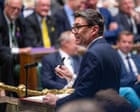
Prime Minister Burnham Addresses Parliament on Economic Challenges
In his inaugural parliamentary address since assuming office six weeks prior, Prime Minister Andy Burnham presented a candid assessment of Britain's economic trajectory, directly attributing decades of underperformance to Burnham Brexit Thatcher policies. The Prime Minister emphasized that the nation must confront uncomfortable truths regarding the trajectory of UK politics over the preceding four decades, particularly focusing on decisions that have contributed to sustained periods of minimal economic expansion.
Burnham articulated a vision centered on restoring public confidence and optimism, declaring to assembled MPs that strategic course corrections would enable the country to forge a more prosperous future. His remarks reflected a determination to break from established patterns, suggesting that honest evaluation of past mistakes represents the foundation for renewed growth and national improvement.
Defence Commitment and Military Spending Priorities
The Prime Minister signalled an unwavering commitment to strengthening Britain's defence capabilities, hinting at a significant policy announcement regarding military expenditure. Burnham indicated that the government would work toward allocating three percent of gross domestic product toward defence investments by 2030, positioning this objective as central to national security strategy.
This commitment materialized through the appointment of John Healey as Chancellor, a selection deliberately made to advance the administration's military spending agenda. The appointment underscores Burnham's prioritization of defence modernization and reflects confidence in Healey's capacity to manage fiscal resources aligned with security imperatives. The three percent target represents an substantial increase from current levels and demonstrates the government's resolve to invest in armed forces capabilities.
Water Industry Overhaul and Privatisation Review
Among the most notable policy signals, Burnham expressed openness toward reconsidering the privatisation framework that has governed Britain's water sector. The Prime Minister characterised the current water infrastructure as a "leaking monument" to the failures of market-driven management, employing vivid language to underscore systemic inefficiencies.
The administration is reportedly examining all viable options for sector reform, with renationalisation emerging as a potentially serious consideration. This willingness to revisit foundational privatisation decisions reflects broader concerns about service quality, infrastructure investment, and public accountability within utilities management. The water industry has faced sustained criticism regarding investment shortfalls and environmental governance, concerns that apparently resonate within the new government's policy framework.
Electoral Reform and Democratic Modernisation
Burnham has initiated discussions regarding potential electoral system reforms, suggesting that Labour's forthcoming manifesto will incorporate commitments to democratic modernisation. The Prime Minister emphasized that meaningful electoral change requires public mandate, achieved through electoral consensus rather than imposed through parliamentary procedure.
While acknowledging diverse perspectives within Parliament regarding reform mechanisms, Burnham indicated willingness to pursue transformative changes should future elections demonstrate sufficient popular support. This cautious but forward-looking approach suggests the government recognises electoral reform as legitimate policy terrain, contingent upon securing clear democratic endorsement from the electorate during the next general election campaign.
Climate Policy and Energy Strategy Balance
Addressing environmental commitments, Burnham confirmed his attendance at the Cop31 climate summit scheduled in Turkey, reaffirming the government's dedication to green energy advancement. However, the Prime Minister advocated for pragmatic approaches to energy supply, suggesting the administration will not adopt rigid ideological positions on fossil fuel extraction.
Burnham specifically indicated that approval of the Jackdaw gasfield remains under consideration, framing energy policy as requiring balanced integration of renewable expansion and conventional resource development. The Prime Minister rejected binary framings that characterise climate action and energy security as mutually exclusive objectives, instead promoting comprehensive strategies that accommodate both environmental stewardship and practical energy provision requirements.
His statement that "the truth is, it's going to have to be both" captures the government's apparent conviction that sustainable development requires pragmatic resource management rather than ideologically pure positions. This approach suggests willingness to navigate contentious energy debates through nuanced policy calibration rather than categorical commitments to particular fuel sources.
Looking Forward: Government Agenda and Policy Direction
Collectively, Burnham's inaugural Commons appearance sketched a government agenda positioned between comprehensive reform and practical governance. The Prime Minister's diagnosis of Britain's challenges through the lens of Burnham Brexit Thatcher era decisions establishes a historical framework for understanding present difficulties while legitimizing forward-looking policy interventions.
The emphasis on honesty, optimism, and pragmatism across defence, utilities, democracy, and energy domains suggests a government attempting to chart distinctive direction while managing competing policy priorities. Subsequent weeks and months will reveal the extent to which these parliamentary signals translate into concrete legislative and administrative action.