
Canada Must Confront Trade Challenge as US Deadline Approaches
Manitoba Premier Wab Kinew urges Canada to take strong stance on US trade negotiations. Prime Minister Mark Carney faces critical deadline and securing public s...
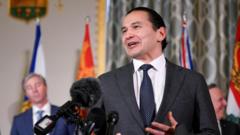
Canada Faces Critical US Trade Deadline
The US trade deadline is rapidly approaching, and Canada's political leadership is sending increasingly forceful messages about how the nation should respond. Manitoba Premier Wab Kinew has publicly stated that Canada should adopt a combative approach to upcoming trade negotiations with the United States, signaling that provincial leaders are preparing for what many anticipate will be a challenging negotiation period.
Premier Kinew's recent statements emphasize the need for a unified Canadian response to protect national interests as the clock ticks toward the crucial deadline. His remarks reflect growing concern among provincial governments about the potential consequences of any trade agreement that does not adequately safeguard Canadian industries and workers.
Prime Minister Mark Carney's Political Challenge
Prime Minister Mark Carney faces an increasingly difficult political landscape as he attempts to build consensus around potential trade arrangements with the United States. The comments from Premier Kinew underscore a fundamental challenge confronting Carney's administration: securing meaningful buy-in from the Canadian public and provincial leaders before finalizing any deal.
The Prime Minister must navigate competing interests across Canada's provinces and territories while simultaneously managing public expectations about trade outcomes. This delicate balancing act requires both diplomatic skill and clear communication about what Canadian negotiators are attempting to achieve in discussions with American counterparts.
Provincial Leadership and Trade Negotiations
Provincial premiers are increasingly vocal about trade matters that directly impact their economies. Wab Kinew's aggressive stance reflects a broader pattern of provincial engagement in federal trade policy discussions. Provinces such as Manitoba have significant economic interests tied to cross-border commerce, including agriculture, manufacturing, and natural resources.
When provincial leaders speak publicly about trade negotiations, their words carry weight with both voters and federal negotiators. Premier Kinew's call for Canada to fight suggests that he believes the nation's negotiating position may be weakened by excessive compromise or insufficient assertiveness in demanding favorable terms.
Timeline Pressures and Strategic Considerations
The approaching US trade deadline creates urgency that shapes negotiating dynamics on both sides of the border. Time constraints can either strengthen or weaken a negotiating position, depending on how effectively each side manages public expectations and political pressure.
For Canada, the deadline means that decisions must be made relatively quickly, leaving limited time for extensive consultations with all stakeholders. This reality increases pressure on Prime Minister Carney to demonstrate that his government is adequately representing Canadian interests without appearing either reckless or overly cautious.
Public Opinion and Democratic Legitimacy
Any major trade agreement requires public support to be politically sustainable. Mark Carney's government cannot simply impose trade arrangements without ensuring that Canadians understand and accept the terms. Premier Kinew's public comments may reflect polling data or consultations suggesting that Canadians expect their government to take a tougher negotiating stance.
Building public consensus around trade deals is particularly challenging when the consequences are complex and affect different regions differently. Manufacturing communities may have distinct interests from agricultural regions, and these competing demands make the political consensus-building process more complicated for federal leadership.
Historical Context of Canada-US Trade Relations
Canada and the United States have a long history of trade relationships, including NAFTA and its successor USMCA. These agreements have shaped economic relationships across numerous industries and sectors. Any new trade arrangement will be compared against this existing framework and evaluated for whether it represents an improvement or deterioration in Canadian terms.
Understanding this historical context helps explain why provincial leaders and the public scrutinize trade negotiations carefully. Previous agreements have had measurable impacts on employment, prices, and economic growth, and stakeholders want assurance that negotiators are adequately protecting Canadian interests.
Looking Forward: The Road Ahead
As the US trade deadline approaches, Canadian political leaders must balance firmness with pragmatism. Premier Wab Kinew's call for Canada to fight reflects legitimate concerns about negotiating outcomes, while Prime Minister Mark Carney must demonstrate that his government is both protecting national interests and pursuing realistic opportunities for beneficial trade relationships.
The coming weeks will reveal whether federal and provincial leaders can develop a coordinated strategy and whether Canadian negotiators can achieve terms that generate sufficient public support. The outcome will shape Canada's economic relationships and political landscape for years to come.