
France's Air Conditioning Debate Heats Up Amid Record Temperatures
France faces heated political divisions over air conditioning adoption following the country's hottest day on record. Discover why this cooling solution sparks...
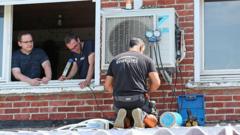
France Grapples with Air Conditioning Dilemma During Extreme Heat Crisis
The issue of air conditioning in France has become far more than a simple household comfort decision—it now represents a significant political and cultural battleground. Following the nation's hottest day on record, France's traditional resistance to widespread cooling systems is being fundamentally questioned. This shift in perspective highlights how extreme weather events are forcing policymakers and citizens alike to reconsider long-held environmental and philosophical positions regarding air conditioning deployment across residential and commercial sectors.
Breaking with Tradition: France's Historical Stance on Cooling
For decades, France maintained a skeptical approach toward air conditioning, viewing it as an unnecessary luxury associated with excessive energy consumption and environmental degradation. Unlike neighboring countries such as Spain, Italy, and the United States, where cooling systems became standard fixtures, French culture emphasized natural ventilation, architectural design adapted to climate conditions, and conservative attitudes toward energy usage. This philosophical stance was deeply ingrained in French society, supported by relatively moderate temperatures historically experienced in most regions and a strong commitment to reducing carbon emissions.
The French perspective was reinforced by environmental advocates and policymakers who argued that widespread air conditioning adoption would increase electricity demand, necessitate expanded infrastructure, and contribute to greenhouse gas emissions. Urban planning regulations reflected this ideology, with building codes emphasizing passive cooling methods and energy efficiency rather than mechanical cooling solutions.
Record-Breaking Temperatures Force National Reassessment
The occurrence of France's hottest day on record has dramatically altered this perspective. Unprecedented heat waves have exposed vulnerabilities in the existing infrastructure and raised serious public health concerns, particularly affecting vulnerable populations including elderly citizens, young children, and individuals with chronic medical conditions. Hospital admissions surge during extreme heat events, mortality rates increase, and entire regions face challenges maintaining essential services when ambient temperatures reach dangerous levels.
This crisis has prompted a fundamental shift in how French society views air conditioning. What was once dismissed as an extravagance is increasingly recognized as a legitimate adaptation strategy in response to climate change. The political divide that has emerged reflects competing priorities: environmental concerns versus immediate public health imperatives, long-term sustainability versus short-term survival needs, and cultural identity versus practical necessity.
Political Dimensions of the Air Conditioning Question
The debate surrounding air conditioning in France has splintered along ideological lines. Progressive environmental advocates argue that energy-efficient cooling technologies, particularly those powered by renewable sources, can meet legitimate comfort and safety needs while maintaining commitments to carbon reduction. They point to innovations in air conditioning technology that significantly reduce power consumption compared to older models, and emphasize the potential for integration with solar energy systems and smart grid technologies.
Conversely, some environmental purists contend that normalizing air conditioning represents capitulation to consumption patterns that have created the climate crisis. They advocate instead for comprehensive urban redesign, enhanced public transportation, and behavioral changes to reduce heat generation in cities. This perspective emphasizes that accepting air conditioning as a solution perpetuates the very systems that generated the problem initially.
Public Health Imperatives and Infrastructure Challenges
Beyond ideological debates, France faces genuine public health challenges that transcend political preferences. Medical professionals emphasize that during extreme heat events, air conditioning becomes essential life-saving infrastructure, comparable to heating systems during winter cold waves. The French healthcare system, already strained by existing demands, faces mounting pressure to accommodate heat-related illnesses that could be prevented through adequate environmental controls.
The infrastructure implications are equally substantial. Expanding air conditioning adoption would require upgraded electrical generation capacity, potentially creating bottlenecks during peak demand periods. Energy providers must evaluate whether existing systems can accommodate increased consumption without compromising reliability or requiring investment in expensive new infrastructure.
Moving Forward: Policy Responses and Future Strategies
French policymakers are now developing nuanced responses to reconcile environmental commitments with public health necessities. These include promoting energy-efficient cooling systems, incentivizing renewable-powered air conditioning installations, and implementing smart building technologies that minimize overall energy consumption. Building codes are being revised to permit cooling systems while maintaining stringent efficiency standards that exceed those in many European nations.
The air conditioning debate in France ultimately reflects broader global challenges in adapting to climate change. Nations must balance immediate survival requirements with long-term sustainability goals, and France's evolving approach may provide important lessons for other countries facing similar dilemmas.