
Hamas Disarmament Plan Offers Hope Amid Gaza Obstacles
A comprehensive disarmament plan for Hamas faces significant political challenges in Gaza, yet provides a rare pathway toward peace and reconstruction in the re...
Hamas Disarmament Plan Offers Rare Hope Amid Gaza Obstacles
A ambitious Hamas disarmament plan has emerged as a potential breakthrough in efforts to stabilize Gaza, despite facing formidable political and practical challenges that threaten its implementation. The proposal represents one of the few tangible pathways toward lasting peace in a region devastated by conflict and loss.
The Complex Reality of Political Negotiations
Achieving any meaningful agreement regarding Hamas disarmament requires navigating an intricate landscape of political considerations. The breakdown of trust among key stakeholders, combined with decades of animosity and competing territorial claims, creates substantial impediments to successful dialogue. Political leaders on all sides must overcome deeply entrenched positions and historical grievances that have characterized the Palestinian-Israeli conflict for generations.
The aftermath of recent military operations has left populations emotionally fractured and economically devastated. Both Palestinian and Israeli societies harbor legitimate security concerns that complicate diplomatic discussions. Any disarmament framework must address these underlying anxieties while establishing credible mechanisms for verification and compliance.
The Human Cost and Its Impact on Peace Efforts
The thousands of lives lost throughout the conflict have created immense humanitarian challenges that directly influence peace negotiations. Families grieving lost relatives and communities rebuilding from destruction face profound barriers to reconciliation. These human dimensions cannot be overlooked when discussing Gaza peace agreements, as they shape public opinion and political feasibility on both sides.
The scale of civilian casualties and displacement demands that any disarmament plan incorporate comprehensive provisions for accountability, victim support, and transitional justice mechanisms. Without addressing these critical needs, proposed agreements risk rejection from populations seeking recognition of their suffering and assurances of non-recurrence.
Physical Destruction and Reconstruction Challenges
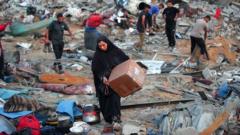
Gaza's infrastructure lies in ruins, with residential areas, hospitals, schools, and essential services severely damaged or destroyed. The scale of destruction fundamentally complicates any disarmament initiative, as it requires simultaneous planning for post-war Gaza reconstruction. Economic rehabilitation must proceed alongside security arrangement establishment, creating interdependent processes that demand coordinated international support.
International donors face pressure to fund reconstruction efforts, yet remain hesitant without assurances of sustainable peace and effective governance. This creates a circular dependency where security arrangements depend on reconstruction resources, while reconstruction requires political stability first.
Building Trust in a Zero-Trust Environment
Perhaps the greatest obstacle involves overcoming the profound absence of trust among negotiating parties. Years of broken agreements, security breaches, and conflicting narratives have created a zero-trust dynamic where verification becomes as crucial as the agreements themselves. Any Hamas disarmament plan must incorporate unprecedented transparency mechanisms and international oversight to ensure compliance.
Establishing credible monitoring systems requires agreement on inspection protocols, weapons storage locations, and verification timelines. These technical details become loaded with political significance when trust remains absent. Third-party observers and international institutions may need to assume substantial verification responsibilities to build confidence among skeptical parties.
The Path Forward for Palestinian Reconciliation
Despite these formidable obstacles, the disarmament proposal offers genuine hope by proposing a structured pathway toward sustainable peace. Palestinian reconciliation depends on channeling military capabilities into civilian governance structures and economic development initiatives. This transformation requires not only weapons removal but fundamental shifts in organizational priorities and resource allocation.
The plan contemplates incorporating armed group members into reformed security forces accountable to civilian authorities, providing pathways for reintegration without complete dissolution of organizational structures. This phased approach acknowledges political realities while advancing toward sustainable disarmament objectives.
International Support and Regional Implications
The viability of any Middle East conflict resolution framework depends substantially on regional and international backing. Neighboring countries, major powers, and international organizations must demonstrate unified commitment to implementation and enforcement. Financial incentives, security guarantees, and development assistance become essential components of successful execution.
Successful implementation could establish precedents for addressing armed group integration across the broader Middle East, potentially reducing destabilizing proxy conflicts throughout the region. The stakes extend beyond Gaza's borders, influencing broader security architecture in an already volatile geopolitical environment.
Conclusion: Hope Among Uncertainty
While obstacles to implementing a comprehensive Hamas disarmament plan remain substantial and multifaceted, the proposal itself demonstrates that viable alternatives to endless conflict exist. Progress requires sustained commitment, substantial international engagement, and willingness from all parties to prioritize peaceful coexistence over perpetual confrontation. The coming months will prove decisive in determining whether this rare opportunity for meaningful change can overcome the powerful forces arrayed against it.