
Helium-3 Mining on the Moon: Future Energy Solution
Discover how Helium-3 from the moon could revolutionize energy production. Learn about this rare isotope, its applications, and lunar mining prospects.
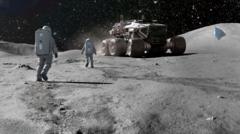
Understanding Helium-3 as a Strategic Resource
Helium-3 moon mining represents one of the most ambitious energy initiatives of the 21st century. This rare isotope, virtually absent in Earth's atmosphere, exists in substantial quantities beneath the lunar surface, making it an increasingly valuable commodity for future technological advancement and energy production worldwide.
Helium-3 is an isotope of helium containing two protons and one neutron, distinguished from the more common Helium-4 found naturally on Earth. Its scarcity on our planet stems from its loss to space over millions of years, as the lightweight isotope gradually escapes into the upper atmosphere. The moon, however, has accumulated significant deposits through billions of years of solar wind bombardment, embedding this precious element into regolith and lunar dust.
Why Helium-3 Matters for Global Energy Markets
The potential demand for Helium-3 continues to escalate as scientists and energy sectors recognize its extraordinary applications. Current forecasts suggest that demand will surge dramatically in coming decades, driven by revolutionary technologies that require this isotope for optimal performance.
The primary appeal of Helium-3 lies in its fusion properties. Unlike traditional deuterium-tritium fusion reactions, Helium-3 fusion produces fewer neutrons and minimal radioactive byproducts, making it an exceptionally clean energy source. This characteristic makes it invaluable for next-generation fusion reactors designed to provide safe, abundant, and sustainable power with minimal environmental impact.
Beyond energy production, Helium-3 serves critical functions in scientific research, medical imaging, and advanced technological applications. Its utility spans from cryogenic cooling systems to neutron detection instruments used in medical diagnostics and industrial monitoring. As demand expands across multiple sectors, the value proposition for lunar acquisition becomes increasingly compelling.
Current Market Challenges and Pricing
The expense associated with Helium-3 currently limits its widespread adoption. Terrestrial production cannot meet projected needs, as natural occurring reserves are minimal and extraction costs remain prohibitively high. This scarcity-driven pricing creates economic constraints that hinder development of technologies dependent on this isotope.
Estimates suggest that a single kilogram of Helium-3 commands prices exceeding several billion dollars when available through conventional channels. Such extraordinary costs have prompted visionary organizations and private enterprises to explore alternative acquisition methods, particularly focusing on extraterrestrial sources where abundance appears significantly greater.
The Lunar Mining Vision
Several organizations and space agencies have developed serious proposals for establishing lunar mining operations dedicated to Helium-3 extraction. These ambitious plans acknowledge the technical and logistical challenges while emphasizing long-term economic viability and strategic advantages.
Lunar regolith contains estimated reserves of Helium-3 sufficient to address global energy demands for centuries, according to scientific assessments. The concentration of this isotope in moon dust remains relatively consistent across the lunar surface, suggesting that multiple mining sites could be developed for optimized resource extraction operations.
Technical Challenges in Lunar Extraction
Successfully implementing Helium-3 moon mining requires overcoming substantial engineering obstacles. Current technology permits identification and preliminary extraction methods, yet scaling operations to commercial viability demands innovations in automation, transportation, and processing infrastructure.
Extraction technology involves heating lunar regolith to temperatures exceeding one thousand degrees Celsius, causing Helium-3 and other volatiles to vaporize. Subsequent cooling and separation processes isolate Helium-3 from companion elements, producing purified isotope suitable for terrestrial transport and industrial application.
Transportation represents another critical challenge. Moving extracted Helium-3 from the lunar surface to Earth requires reliable spacecraft capable of operating in the harsh environment while safely containing pressurized containers of the extracted isotope. Developing cost-effective transport solutions remains essential for making lunar mining economically competitive.
Future Prospects and Development Timeline
Industry analysts suggest that preliminary Helium-3 moon mining operations could commence within 15-25 years, contingent upon continued investment in space infrastructure and fusion technology advancement. Early operations would likely focus on relatively modest extraction volumes while operational techniques are refined and perfected.
International cooperation appears increasingly probable for lunar mining initiatives, as the scale and expense of such operations exceed typical single-nation capabilities. Collaborative frameworks could accelerate development timelines while distributing costs and risks across multiple stakeholders with shared interests in securing Helium-3 supplies.
The convergence of advancing fusion technology, growing energy demand, and decreased space transportation costs creates unprecedented opportunities for realizing Helium-3 moon mining as a practical reality rather than speculative science fiction.