
Himalayan Glacier Collapse Triggered Catastrophic Floods in Nepal-Tibet Region
Scientists confirm that a collapsed Himalayan glacier caused devastating floods affecting Nepal and Tibet. Discover how rapid ice melting threatens the region's...
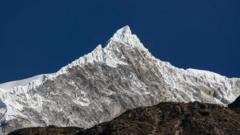
Himalayan Glacier Collapse: The Root Cause of Recent Flooding
A comprehensive Himalayan glacier collapse has been identified as the primary trigger behind the destructive floods that recently swept through Nepal and Tibet, according to findings from leading scientific research teams. The incident underscores the escalating environmental crisis posed by accelerating ice loss across the world's highest mountain range.
Initial field investigations and geological surveys conducted by renowned researchers have established compelling evidence linking the catastrophic water surge directly to the structural failure of a major glacier system in the region. This discovery marks another alarming chapter in the story of Himalayan glacier collapse events, which have become increasingly frequent as global temperatures continue to rise.
Understanding the Glacier Failure Mechanism
The mechanism behind this particular glacier failure involves several interconnected factors that scientists are working to understand fully. When glaciers accumulate excessive meltwater within their structure during warmer seasons, the internal pressure and weakened ice cohesion can trigger sudden collapses. This scenario appears consistent with what occurred in the Nepal-Tibet border region.
Researchers emphasize that the speed at which these events unfold makes prediction and early warning systems challenging. The sudden release of millions of tons of ice, rock, and meltwater can generate massive debris flows that travel at tremendous velocities, overwhelming downstream communities with minimal warning time.
The Broader Pattern of Melting Himalayan Ice
This event is not an isolated incident but rather symptomatic of a larger pattern affecting the Himalayan mountain system. The Himalayan region contains approximately 15,000 glaciers that collectively represent a vital freshwater resource for nearly two billion people across South Asia. However, these glaciers are retreating at alarming rates due to climate change impacts.
The rapid decline in Himalayan ice coverage has intensified concerns among climatologists and environmental researchers worldwide. Temperature increases in mountain regions have been documented at rates twice the global average, a phenomenon known as elevation-dependent warming. This accelerated warming directly translates to faster glacier retreat and increased instability of remaining ice masses.
Climate Change and Accelerated Glacier Retreat
The connection between climate change Asia and glacier dynamics has never been more apparent. Rising atmospheric temperatures trigger both surface melting and changes in internal glacier structure. Scientists have documented that Himalayan glaciers are losing mass at unprecedented rates, with some regions experiencing retreat of several meters annually.
This accelerating pattern of ice loss creates a cascading effect throughout the ecosystem. Reduced glacier volume means altered seasonal water availability for irrigation and hydroelectric power generation. Additionally, the destabilization of remaining ice masses increases the probability of sudden, catastrophic events like the recent collapse.
Regional Vulnerability and Impact Assessment
Nepal and Tibet occupy particularly vulnerable positions relative to Himalayan glacier systems. Communities situated in glacier-fed river valleys face compounded risks from both gradual environmental change and sudden catastrophic events. The recent flooding has prompted emergency officials to reassess disaster preparedness strategies across the region.
Local populations who depend on consistent glacier-fed water supplies now face unpredictable conditions. Hydroelectric facilities that generate power from mountain rivers require stable water flow patterns, yet glacier instability now threatens this reliability. Agricultural sectors dependent on glacier-fed irrigation systems confront significant uncertainty about future water availability.
Scientific Response and Research Initiatives
In response to this incident, scientific institutions have intensified their monitoring of remaining glacier systems throughout the Himalayan range. Advanced satellite technology and ground-based sensors now provide continuous surveillance of glacier stability, internal meltwater accumulation, and structural integrity.
Research teams are working to develop improved forecasting models that might predict future collapses before they occur. However, experts acknowledge that the complexity of glacial systems means that perfect prediction remains elusive. The interaction between climate, ice physics, and geological factors creates inherent limitations in current predictive capabilities.
Looking Forward: Adaptation and Mitigation Strategies
As the evidence for continued glacier deterioration mounts, policymakers and scientists acknowledge that both adaptation and mitigation strategies are necessary. Mitigation efforts focus on reducing greenhouse gas emissions to limit future warming. Adaptation strategies involve developing early warning systems, implementing community relocation programs where necessary, and investing in disaster-resilient infrastructure.
The Himalayan glacier collapse that triggered recent flooding serves as a powerful reminder that climate change poses immediate, tangible threats to vulnerable populations. International cooperation and coordinated research efforts will be essential for understanding and responding to this evolving crisis affecting millions of people across South Asia.