
Ice Pyramids Protect India's Mountain Villages from Water Scarcity
Discover how artificial ice pyramids are revolutionizing water supply in India's Himalayan villages, ensuring sustainable irrigation for spring crops.
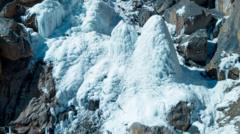
Artificial Ice Pyramids: A Lifeline for Himalayan Communities
In the remote mountains of India, communities are implementing an innovative solution to combat seasonal water shortages through the strategic construction of artificial ice pyramids. These remarkable engineering structures represent a breakthrough approach to water resource management in high-altitude regions, directly addressing the challenges faced by farmers who depend on reliable spring water for crop cultivation.
The artificial ice pyramids function as natural water reservoirs that store frozen precipitation during winter months and gradually release meltwater during the critical spring planting season. This ingenious system ensures that agricultural communities have consistent access to irrigation water when they need it most, transforming survival into sustainability across vulnerable mountain settlements.
Understanding the Technology Behind Ice Pyramid Construction
The creation of artificial ice pyramids involves a sophisticated yet practical process adapted to Himalayan terrain. Engineers and local specialists design these structures to maximize ice accumulation and minimize melting until the appropriate season arrives. The pyramidal shape specifically enhances structural integrity and optimizes surface area for controlled thawing.
Water is strategically diverted from natural mountain springs during winter months into specially prepared channels and reservoirs. As temperatures plummet in the high-altitude environment, this water freezes into substantial ice formations. The pyramid architecture serves a dual purpose: it provides stability to the frozen mass while controlling the rate of seasonal melting, ensuring water availability matches agricultural demand.
The Crisis That Sparked Innovation in Mountain Villages
Himalayan villages have historically struggled with unpredictable water cycles that threaten agricultural productivity. Climate patterns increasingly fail to align with farming calendars, leaving crops vulnerable during critical growth periods. Farmers found themselves unable to irrigate fields precisely when seedlings required water most urgently, resulting in failed harvests and economic hardship.
Traditional water management systems proved inadequate for villages at extreme elevations where conventional irrigation infrastructure couldn't function. This resource scarcity forced communities to develop alternative solutions, ultimately leading to the discovery and refinement of artificial ice pyramid technology as a practical approach to water conservation.
How Artificial Ice Pyramids Transform Spring Farming
When spring arrives and temperatures rise, the carefully constructed ice pyramids begin their gradual transformation. Controlled melting releases precisely calibrated quantities of fresh water directly into irrigation channels that farmers have prepared throughout the preceding seasons. This synchronized release pattern ensures that crop fields receive adequate moisture during germination and early growth stages.
The ice pyramid system essentially extends the region's effective water season, converting harsh winter conditions into agricultural advantages. Farmers can now plan plantings with confidence, knowing that essential irrigation will be available when nature traditionally provides insufficient moisture. This predictability enables crop diversification and increased yields across mountain communities.
Community Benefits and Economic Impact
Villages implementing artificial ice pyramids have experienced measurable improvements in food security and agricultural output. Farmers can expand cultivation areas and experiment with more water-intensive crops that previously seemed impossible in their climate. Increased productivity translates directly into improved household incomes and economic resilience for entire communities.
Beyond immediate agricultural gains, the artificial ice pyramid system strengthens community self-reliance and reduces dependence on external water resources or government assistance programs. Young people increasingly see viable futures in mountain agriculture, reversing rural exodus trends that plagued these regions for decades.
Environmental Sustainability and Climate Adaptation
The development of artificial ice pyramids represents a climate-smart adaptation strategy tailored specifically to Himalayan conditions. Unlike energy-intensive alternatives, this technology leverages existing environmental conditions and requires minimal technological infrastructure. The approach aligns perfectly with sustainability principles while addressing genuine environmental challenges.
As climate change continues affecting precipitation patterns and seasonal timing, artificial ice pyramid systems provide insurance against unpredictable weather. Communities gain adaptive capacity to manage water resources intelligently despite increasingly erratic natural conditions that characterize contemporary mountain environments.
Future Expansion and Regional Applications
Success in pioneering villages has generated interest across the broader Himalayan region and similar high-altitude areas worldwide. Agricultural experts recognize that artificial ice pyramid technology offers scalable solutions applicable to multiple mountain communities facing analogous water security challenges. Research initiatives now focus on optimizing pyramid design and refining construction methodologies for different elevations and climate zones.
Government agencies increasingly support artificial ice pyramid projects through technical assistance and partial funding, recognizing their potential to strengthen regional food security and economic stability. Training programs now teach construction and maintenance techniques to communities eager to implement these systems independently, fostering technological transfer and local expertise development.