
Lindsey Graham: From Trump Critic to MAGA Ally and Political Survivor
Lindsey Graham transformed from Trump critic to loyal ally, demonstrating political survival skills during the MAGA era. Discover his remarkable journey.
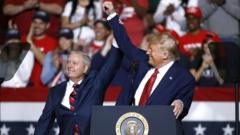
Lindsey Graham's Extraordinary Political Evolution
Throughout his decades-long career in American politics, few figures have demonstrated the remarkable adaptability seen in Lindsey Graham's relationship with Donald Trump and the broader MAGA movement. The veteran senator's transformation from outspoken Trump critic to one of his most steadfast allies represents one of the most significant political pivots in contemporary American history, showcasing his extraordinary ability to navigate the turbulent and increasingly polarized landscape of modern American politics.
From Skeptic to Supporter: The Early Years of Opposition
Senator Graham's initial stance toward the Trump phenomenon was characterized by considerable skepticism and public criticism. During the 2016 presidential campaign and the early months of the Trump administration, Graham emerged as a notable voice questioning many of the president's policies and controversial statements. His willingness to challenge Trump stood in sharp contrast to many within his own party, positioning him as an independent thinker willing to cross party lines when he believed circumstances warranted such action.
The senator's early criticism of Trump reflected genuine concerns about the direction of Republican politics and American leadership. Graham articulated these concerns through multiple media appearances and Senate floor statements, demonstrating that partisan loyalty need not override personal conviction. During this period, his political identity remained firmly rooted in traditional Republican conservatism, which included skepticism toward Trump's unconventional political style and approach to governance.
The Catalyst for Change and Gradual Alignment
The transition from critic to ally did not occur overnight but rather evolved gradually as circumstances shifted and personal relationships developed. Graham's pragmatic approach to politics led him to recognize the enduring influence of Trump within Republican ranks and among the party's core voter base. Rather than remaining isolated as a critic, the senator began engaging more directly with the Trump administration on matters of shared interest, particularly regarding judicial appointments, military policy, and conservative economic principles.
This calculated realignment reflected Graham's fundamental political instinct: survival and influence. As a seasoned politician who had witnessed numerous shifts in American political fortune, Graham understood that political viability required adapting to new realities while maintaining core principles where possible. His gradual warming toward Trump represented a strategic acknowledgment that the MAGA movement had become the dominant force within Republican politics, and effective senators must work within prevailing political currents rather than against them.
The MAGA Era and Graham's Role
By the latter part of Trump's presidency and continuing through subsequent years, Lindsey Graham had fully emerged as one of Trump's most visible and vocal supporters in the Senate. This transformation was evident in his voting record, his public statements, and his personal relationship with the former president. Graham became a frequent visitor to Mar-a-Lago and a consistent defender of Trump's policies and actions, even when such positions diverged from his earlier stated principles.
The senator's adaptation to MAGA-era politics demonstrated his understanding of electoral realities within his home state of South Carolina. As Republican primary voters increasingly aligned with Trump's political vision, Graham recognized that resistance to this movement would jeopardize his political future. His ability to reinvent himself while maintaining sufficient conservative credibility allowed him to remain relevant and influential during a period when many traditional Republicans found themselves increasingly marginalized.
Political Survival Through Strategic Flexibility
Lindsey Graham's career trajectory reveals important lessons about survival in contemporary American politics. His willingness to adapt to dramatically changing political circumstances, while maintaining connections across different factions within the Republican Party, enabled him to preserve his senatorial seat and influence. Unlike some of his colleagues who either doubled down on opposing Trump or attempted to remain neutral, Graham chose engagement and gradual alignment.
This strategic flexibility extended beyond his relationship with Trump to encompass broader policy positions. Graham demonstrated an ability to shift emphasis on various issues—from immigration to foreign policy to judicial appointments—in ways that kept him aligned with evolving Republican priorities while allowing him to claim consistency with his long-standing conservative principles. Such maneuvers required considerable political skill and a deep understanding of both national and South Carolina political dynamics.
The Broader Implications for Republican Politics
Graham's transformation from Trump critic to ally illustrates the profound reshaping of Republican politics during the MAGA era. His journey reflects how even seasoned, independent-minded politicians found themselves adapting to new political realities. The senator's evolution demonstrates that in an era of intense partisan polarization and shifting voter preferences, political survival often depends less on unchanging principle and more on strategic adaptation to prevailing forces.
The example of Lindsey Graham provides important context for understanding how American political parties evolve and how individual politicians navigate periods of significant transformation. His career suggests that political survival in contemporary America requires not only ideological consistency but also pragmatic flexibility and the ability to recognize and adapt to fundamental shifts in political power and voter sentiment. Graham's relationship with Trump and the MAGA movement became defining characteristics of his later career, demonstrating the enduring power of political adaptation in modern American politics.