
Navy Opts for Drone-Equipped Warships Over Destroyer Replacement
The Navy shifts strategy to invest in modern drone-equipped vessels instead of replacing aging destroyers in the upcoming defence investment plan.
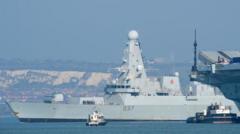
Navy Prioritizes Drone-Equipped Warships in Defence Strategy
The Royal Navy has announced a significant shift in its military procurement strategy, choosing to invest in innovative drone-equipped warships rather than pursuing the traditional approach of replacing ageing destroyers. This decision, outlined in the upcoming defence investment plan, represents a fundamental change in how maritime forces will be equipped and deployed in future operations.
Government defence officials have confirmed that drone-equipped warships will form a central component of the Navy's modernization efforts. This strategic pivot reflects broader trends in military technology, where unmanned systems are increasingly becoming essential assets for naval operations. The emphasis on drone-equipped warships indicates a commitment to leveraging cutting-edge technology to maintain maritime superiority while adapting to evolving global security challenges.
Strategic Rationale Behind the Decision
The selection of drone-equipped warships over traditional destroyer replacement programmes stems from several key considerations. Military planners recognize that unmanned naval platforms offer enhanced operational flexibility, reduced crew requirements, and the ability to undertake high-risk missions without endangering personnel. These advantages make drone-equipped warships an attractive investment compared to conventional vessel construction programmes.
The upcoming defence investment plan allocates substantial resources toward developing and acquiring these advanced platforms. By focusing on drone technology integration, the Navy aims to maximize operational effectiveness while addressing budgetary constraints that have historically limited large-scale warship construction programmes. This approach allows for the deployment of multiple unmanned systems that collectively provide superior surveillance, reconnaissance, and strike capabilities compared to traditional destroyer vessels.
Implications for Naval Modernization
The decision to prioritize drone-equipped warships has significant implications for the Navy's future operational structure. Rather than maintaining the previous focus on heavily-armed, multi-purpose destroyers, the maritime force will increasingly rely on distributed networks of unmanned platforms capable of coordinated operations. This shift necessitates investments in command and control infrastructure, communication systems, and personnel training to effectively manage autonomous and semi-autonomous naval systems.
Modern drone-equipped warships represent a departure from traditional naval architecture and warfare doctrine. These vessels can operate with reduced crews, incorporate advanced artificial intelligence systems, and execute complex missions with minimal human intervention. The transition toward this model reflects recognition that future naval conflicts may differ fundamentally from conventional surface warfare scenarios that shaped destroyer design for decades.
Financial and Operational Benefits
Defence investment planners have highlighted substantial cost advantages associated with drone-equipped warships compared to conventional destroyer programmes. The per-unit cost of unmanned platforms typically remains significantly lower than traditional warships, enabling the Navy to acquire greater numbers of vessels within existing budgetary allocations. This quantitative advantage translates into enhanced coverage capabilities and improved operational resilience through asset redundancy.
Additionally, drone-equipped warships reduce personnel expenditure while expanding operational reach. Crews for unmanned vessels number substantially fewer than those required for traditional destroyers, reducing long-term maintenance costs and training requirements. These financial efficiencies allow the defence investment plan to allocate resources toward additional technological capabilities, including advanced sensor systems, networking infrastructure, and payload development.
Future Naval Operations and Defence Strategy
The embrace of drone-equipped warships signals the Navy's commitment to developing capabilities aligned with contemporary security threats. Modern maritime security increasingly involves counters to asymmetric threats, piracy, and surveillance operations where unmanned systems excel. Drone-equipped warships can patrol extensive areas, gather intelligence, and respond rapidly to emerging threats without exposing traditional crewed vessels to unnecessary risk.
The defence investment plan acknowledges that naval warfare and security operations continue evolving. Adversaries increasingly employ unmanned systems and distributed tactics that favour flexible, technologically advanced responses. By investing in drone-equipped warships now, the Navy positions itself to effectively counter emerging threats while maintaining technological advantage over potential adversaries.
Implementation and Timeline
The transition toward drone-equipped warships will occur progressively over the forthcoming defence investment period. The Navy will develop comprehensive acquisition strategies, establish production timelines, and implement testing programmes to ensure these platforms meet operational requirements. Personnel across the naval service will receive training in managing and deploying unmanned systems as the modernization initiative advances.
This strategic decision reflects confidence in unmanned naval technology and commitment to maintaining maritime security through innovative means. As the defence investment plan unfolds, drone-equipped warships will increasingly become visible elements of the Navy's operational arsenal, embodying the service's evolution toward twenty-first century maritime capabilities.